FPV drone shot
Also calledFPV shot, drone dive, immersive drone shot, racing drone shot
An FPV drone shot is a first-person view flight captured on a small racing drone and recorded straight from the pilot's goggles feed. It drops the viewer into a fast, physical path through space, banking, diving and threading gaps in a way no handheld or crane move can reproduce.
What it tells
Directors reach for FPV when a scene needs raw kinetic energy rather than coverage: a chase, an escape, a reveal that should feel dangerous. Because the camera moves like a body in flight rather than an observer, it collapses the distance between the audience and the action. The slight instability and constant banking read as adrenaline, not error, which is exactly the point.
How it is shot
A pilot flies a palm-sized quadcopter in acro mode while wearing video goggles fed by an onboard analog or digital transmitter, so the frame moves exactly as fast as the thumbs do. The camera sits on a fixed forward tilt (often 30 to 45 degrees nose down) behind a wide, slightly fisheye lens (roughly 145 to 160 degrees) recording at 60 to 120 fps for smooth playback and motion blur control. Footage is stabilized in software (commonly ReelSteady), color matched to the rest of the scene, and often speed ramped in the edit. Multiple takes are flown because a single stray obstacle ends the shot.
When to use it
- Opening or closing a chase sequence where the camera should feel like a participant, not an observer
- Revealing scale by flying through, around, or over an environment in one continuous move
- Building adrenaline in an action beat that needs speed no dolly or gimbal can deliver
- Threading tight architectural gaps, doorways, or crowds to show a space's density and texture
Not to be confused with
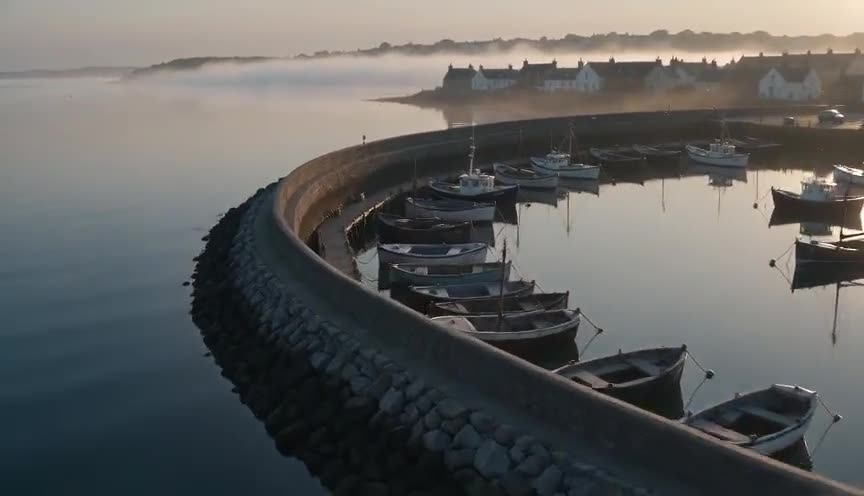
An aerial shot is typically a stable, distant view from a larger drone or helicopter, built for scale and geography. FPV stays low, close, and fast, built for speed and immersion rather than orientation.
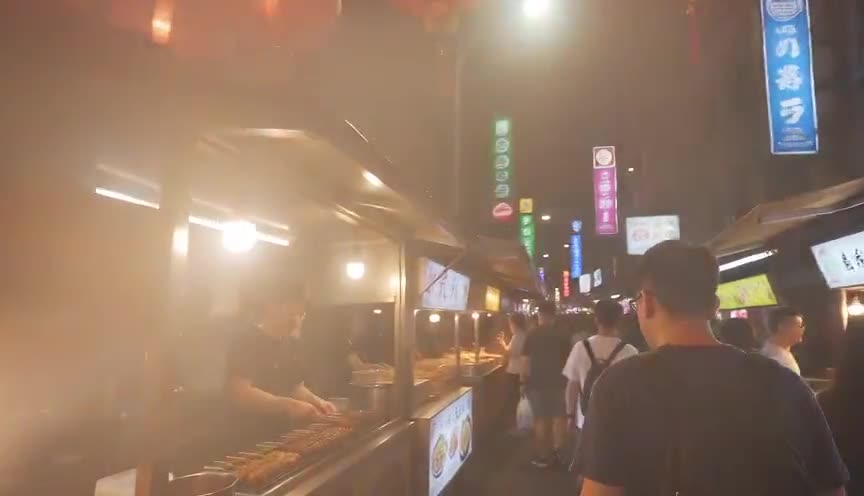
A pass-through moves the camera through a single opening or object for a reveal. FPV can include pass-throughs but sustains that velocity across an entire continuous route, not just one threshold.
In film
6 Underground (2019)
Michael Bay used extensive FPV racing drone footage to fly through Florence streets and rooftops during the opening chase, documented in behind-the-scenes coverage.
Ambulance (2022)
Michael Bay used FPV racing drones for high-speed Los Angeles action, including plunging dives down buildings and fast passes around vehicles during chase sequences.
The prompt
Name the rig explicitly: FPV racing drone, first-person flight, goggles-view. Describe the flight path as one unbroken route (dive, bank left, thread the gap, climb) rather than a series of framings, and specify a forward tilt or nose-down attitude plus a wide, slightly fisheye lens. Mention speed and motion blur so the model does not default to a smooth, slow gimbal move. Avoid words like steady, calm, or locked, which push the result toward a static or tripod look.
The exact prompt that rendered the video on this page. Keep the description of the move, change the subject and the setting.
FPV drone shot, first-person racing drone flying nose-down through a neon arcade at high speed, wide fisheye lens exaggerating the rows of glowing cabinets rushing past on both sides. The camera banks hard left to thread a narrow gap between two players, dips low under a hanging sign, then climbs and rolls slightly right toward a bright pink exit doorway, motion blur streaking the neon signage, continuous unbroken flight, no cuts. No text.
Common mistakes
Too smooth
Over-stabilizing the footage until it reads like a gimbal or Steadicam move erases the acrobatic feel that makes FPV distinct from every other moving shot.
Missing sense of speed
Skipping motion blur, a wide lens, or a forward tilt leaves the frame looking calm and orderly, which undercuts the adrenaline the technique is meant to deliver.
Cluttered or unreadable path
Weaving through too many objects without a clear route confuses the eye; the viewer needs to sense direction and destination even while everything blurs past.
Frequently asked questions
What is an FPV drone shot?
It is a shot captured on a small quadcopter and flown by a pilot watching a live first-person video feed through goggles, so the footage matches the drone's own flight path in real time rather than a remote operator's wide view.
How is FPV different from a regular drone shot?
A regular aerial drone shot is usually flown line-of-sight or on autopilot at a stable, moderate altitude for scenic coverage. FPV is flown fast and close, often through gaps and low to the ground, for an immersive rather than observational feel.
What gear do you need to shoot FPV?
A racing quadcopter with a fixed forward camera tilt, an analog or digital video transmitter, FPV goggles for the pilot, and stabilization software in post such as ReelSteady to smooth out the raw acro-mode footage.
Can an AI video model generate an FPV drone shot?
Yes. Naming the rig, the forward tilt, the wide lens, and a single continuous fast path through the scene gives tools on platforms like Imaginode enough physical detail to render a convincing FPV move instead of a generic camera pan.