Crane down
Also calledDescending crane shot, Boom down, Crane-down move
A crane down is a camera movement in which the camera descends vertically, typically mounted on a crane or jib arm, moving from a high position to a lower one while the shot continues uninterrupted. It draws the viewer down into a scene, often shifting the sense of scale from vast and impersonal to intimate and human.
What it tells
Directors use the crane down to move an audience from an overview to an emotional close-up without cutting, letting the eye follow gravity itself. The descent often mirrors a narrative shift: from the world to the individual, from context to feeling, from distance to intimacy. Because the movement is continuous, it builds anticipation as the frame narrows toward a face, a hand, or an object of importance. It can also signal arrival, as if the camera itself is landing beside the subject, grounding the story in a specific, human moment after establishing its larger surroundings.
How it is shot
The camera rides a crane, jib, or telescoping arm capable of vertical travel, usually from 6 to 20 feet up down to eye level or lower. A grip or remote head operator lowers the arm at a controlled, even speed, often 3 to 8 seconds for the full move, while a separate operator or the camera operator adjusts tilt to keep the subject framed. Wide to normal lenses, 24mm to 50mm, keep the background legible during the descent and avoid excessive parallax. Focus may need a slight pull if the distance to subject changes. On a budget, a slider on a vertical column, a drone descending, or a stabilized handheld lower-and-tilt can approximate the effect for short drops.
When to use it
- Opening a scene that starts wide and needs to settle on one specific character or detail.
- Revealing scale first, then bringing the audience down into a crowd, field, or set piece.
- Marking an arrival, as if the camera is descending to meet a subject on the ground.
- Transitioning from an establishing aerial view into an intimate two-shot without a cut.
Not to be confused with
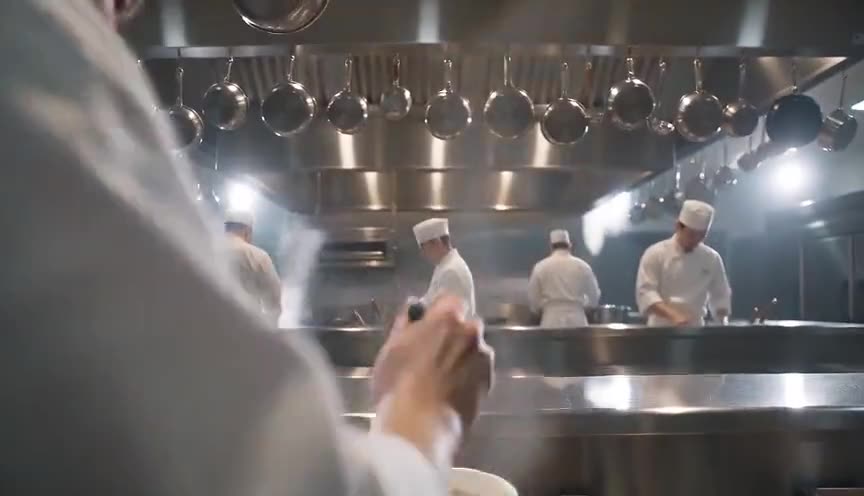
Crane up moves the camera from low to high, the opposite direction, usually used to reveal scale or let a subject go, while crane down brings the audience closer to a subject.
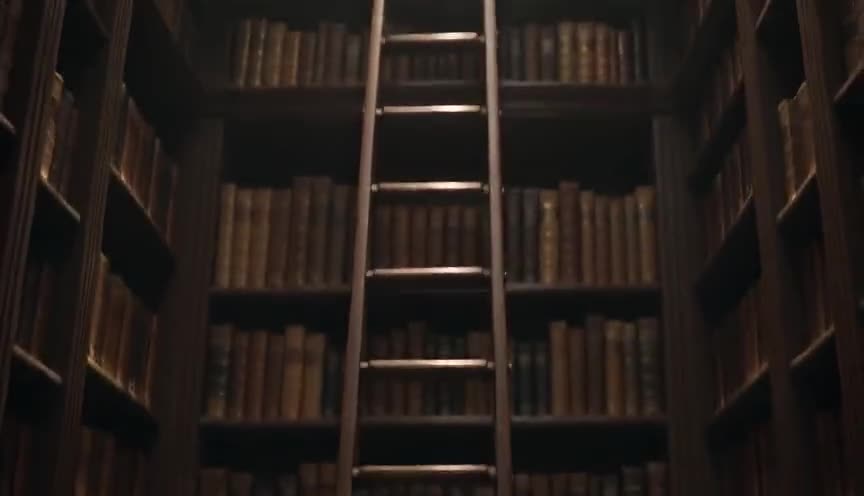
A pedestal shot also moves the camera vertically, but on a straight column rather than an arcing crane arm, and typically travels a shorter distance without the sweeping perspective change of a crane down.
In film
Notorious (1946)
A famous crane shot descends from a wide ballroom view down to an extreme close-up of a hidden key in Ingrid Bergman's hand.
Boogie Nights (1997)
The opening long take starts high on the nightclub sign, cranes down to the street, then glides inside through the crowded disco.
The prompt
Name the move directly: crane down, boom down, or descending camera. Specify the start height and end height, the speed of descent in seconds, and what stays centered in frame. State that the camera moves smoothly on a vertical arc, not a cut, and use a wide or normal lens to keep the ground and horizon legible. Avoid vague words like 'cinematic' alone; describe the physical descent, the changing distance to the subject, and any tilt needed to hold framing.
The exact prompt that rendered the video on this page. Keep the description of the move, change the subject and the setting.
Crane down: the camera starts high above a sunflower field at golden hour, showing rows of yellow blooms stretching to the horizon, then descends smoothly on a vertical arc over four seconds while tilting down to keep a woman in her thirties centered as she walks between the rows. The camera settles at eye level as she looks up toward the light, wide lens keeping her face sharp and the field soft behind her. The horizon stays level, the motion is continuous and even, no cuts. No text.
Common mistakes
Descending too fast
A quick drop reads as a swoop or a mistake rather than a deliberate reveal. Keep the speed even and let the frame settle before cutting away or ending the scene.
Letting the horizon tilt
If the horizon line drifts or wobbles during the move, the shot looks unstable instead of controlled. Lock the tilt to the descent so the horizon stays level throughout.
No landing point
A crane down needs something to arrive at, a face, an object, or a doorway. Without a clear destination the movement feels aimless and the audience loses the point of the shot.
Frequently asked questions
What is a crane down shot?
A crane down shot is a camera move where the camera descends from a high position to a lower one while the shot keeps rolling, usually on a crane or jib arm. It shifts the frame from a wide overview to a closer view of the subject, often used to open a scene or mark an arrival.
What equipment do you need to shoot a crane down?
A crane or jib arm with enough vertical travel is standard, operated by a grip or remote head. Smaller productions can approximate the move with a drone, a vertical slider, or a stabilized handheld lower with a matching tilt.
Can I get a crane down shot from an AI video generator?
Yes. Describe the start height, the end height, the speed of descent, and what should stay in frame, and most AI video tools, including Imaginode, can render a smooth vertical camera move without a cut.
How long should a crane down move take?
Most crane down moves run 3 to 8 seconds for a natural, controlled feel. Shorter moves can feel abrupt, while longer ones risk losing the audience's attention before the camera reaches its destination.