Follow shot
Also calledFollowing shot, Walk-with shot, Chase framing
A follow shot is a camera movement in which the camera travels alongside or behind a subject, keeping a constant distance and framing as they move through space. It ties the viewer's attention to the subject's pace and momentum, turning the surrounding environment into something discovered rather than shown.
What it tells
Directors reach for the follow shot when they want the audience to move through the story physically, not just watch it. Because the frame stays locked to one person, their hesitation, urgency or curiosity becomes the viewer's own rhythm. It builds intimacy without a word of dialogue, and it lets a location reveal itself gradually, the way a character actually experiences it, rather than being explained in a cut.
How it is shot
The camera sits roughly 4 to 6 feet from the subject, usually behind the shoulder or slightly to one side, and moves at the exact walking speed of the performer so the framing never drifts. Operators use a steadicam or gimbal for smooth results, or handheld for a rawer feel. Lenses in the 24mm to 35mm range keep the subject sharp while background elements pass quickly, adding a sense of speed and depth. Focus stays locked on the subject; the environment is left to blur or flicker at the edges. These shots are often held as long takes, sometimes for a full scene, requiring rehearsed blocking and a clear path for the operator.
When to use it
- A character enters an unfamiliar space and the audience should discover it through their eyes.
- Building tension as someone walks toward a confrontation they cannot yet see coming.
- Following a person through a crowd to convey urgency, purpose, or being followed.
- Connecting two locations in one continuous move to preserve real-time momentum.
Not to be confused with
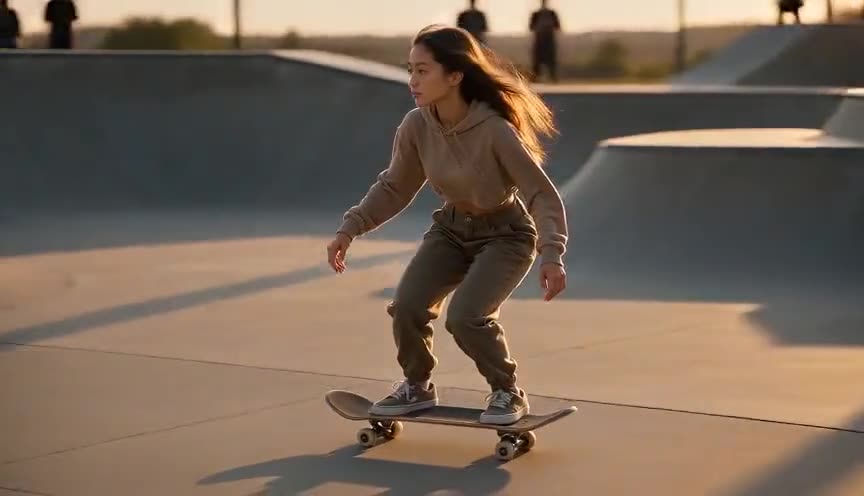
Tracking shot is the broader category of camera-on-the-move shots, including lateral or forward movement that is not tied to a specific person; a follow shot is a tracking shot dedicated to staying with one subject's path.
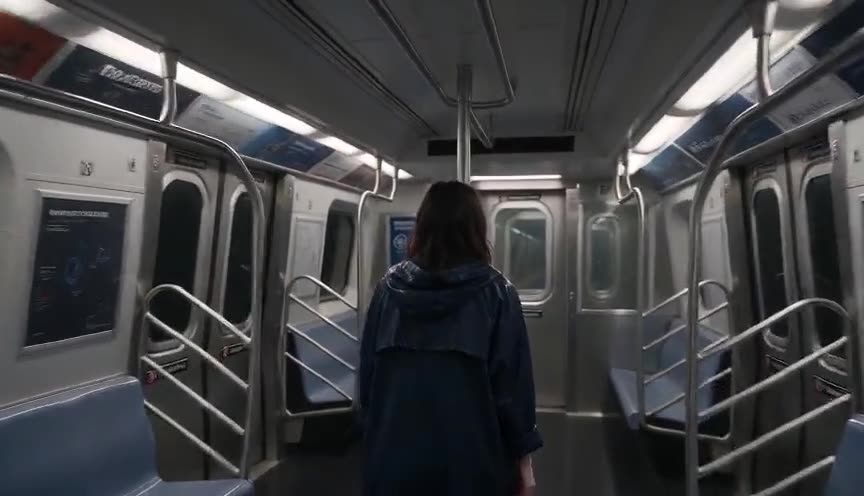
Steadicam is the stabilizing rig, not the technique itself; a follow shot describes what the camera does (stays with the subject), while steadicam is one common tool used to execute it smoothly.
In film
Goodfellas (1990)
The Copacabana steadicam sequence follows a character through kitchen corridors and into the club floor in one unbroken move.
Children of Men (2006)
Extended follow shots track characters through combat and chaos, keeping the camera locked to their movement for minutes at a time.
Birdman (2014)
The film's stitched-together long takes rely heavily on follow shots through theater corridors to simulate one continuous journey.
The prompt
Name the follow shot explicitly and describe the camera's position relative to the subject (behind, over the shoulder, beside), the fixed distance it holds, and the lens. State that the framing does not change even as the background moves. Avoid vague words like 'dynamic camera'; instead specify walking pace, lens focal length, and what stays sharp versus what blurs. Do not ask for cuts or angle changes within the same shot.
The exact prompt that rendered the video on this page. Keep the description of the move, change the subject and the setting.
Follow shot: the camera moves steadily behind a woman in her thirties as she walks down a narrow aisle in a flower shop, positioned about five feet behind her shoulders at chest height, matching her walking pace exactly so the framing never changes. Shot on a 28mm lens that keeps her figure sharp while buckets of tulips and roses blur past on both sides. The camera holds this fixed distance for the full four seconds with no cuts, ending as she reaches a counter and pauses, her back still filling the same portion of frame. No text.
Common mistakes
Letting the distance drift
If the operator speeds up or slows down relative to the subject, the framing wobbles and breaks the sense of being tethered to them, which is the whole point of the shot.
Wrong lens choice
A very wide lens flattens the background so nothing seems to pass by, killing the sense of movement; a lens that is too long compresses the space and makes walking look static.
Cutting away too soon
The follow shot earns its power through duration; cutting after a second or two turns it into a generic tracking shot and loses the immersive, real-time feeling.
Frequently asked questions
What is a follow shot?
It is a camera movement where the camera travels with a subject, keeping a consistent distance and framing as they move, so the audience experiences the journey alongside them rather than watching it from a fixed position.
What equipment is used for a follow shot?
Steadicams and gimbals are the most common choices because they smooth out the operator's footsteps, but handheld rigs are also used when a rougher, more immediate feel is wanted.
How is a follow shot different from a tracking shot?
A tracking shot is any shot where the camera physically moves, in any direction; a follow shot is specifically a tracking shot that stays locked to one subject's path and pace.
Can AI video tools generate a follow shot?
Yes. Describing the camera's fixed distance from the subject, the direction of travel, and the lens gives platforms like Imaginode enough physical detail to render a convincing follow shot in a short clip.