Steadicam shot
Also calledSteadicam, stabilized walking shot, body-mounted stabilizer shot
A Steadicam shot is a moving camera shot filmed with a body-mounted stabilizing rig that isolates the camera from the operator's footsteps, producing smooth, floating motion even while walking, running, or climbing stairs. It lets the camera travel through real, uneven space without the bounce of handheld or the constraints of dolly track.
What it tells
Directors reach for a Steadicam when they want the fluidity of a crane or dolly move but need to go where wheels can't: through doorways, up stairs, around furniture, into crowds. The result reads as an active, almost bodily presence, a camera that moves like a person but never stumbles like one. It pulls the audience physically into a space, building tension in a hallway or intimacy in a walk-and-talk, without calling attention to the mechanics behind it.
How it is shot
The camera mounts on a vest-and-arm rig worn by the operator: a spring-loaded articulating arm absorbs vertical bounce, while a gimbal handle lets the sled swing freely so gyroscopic inertia smooths pans and tilts. Operators train for years to walk with bent knees and a rolling gait, effectively becoming the dolly grip, camera operator, and track all at once. A monitor mounted low on the rig lets the operator see the frame without looking through the eyepiece. Shots often run long, sometimes several minutes, requiring blocking rehearsals with actors, marked floor paths, and a focus puller pulling remotely since the operator's hands are on the rig, not the lens.
When to use it
- Following a character continuously through multiple rooms or floors without visible cuts.
- Building tension as a character walks down a corridor toward an unknown threat.
- Shooting a long, unbroken walk-and-talk scene between two moving characters.
- Replacing dolly track in locations too tight, uneven, or crowded for wheels.
Not to be confused with
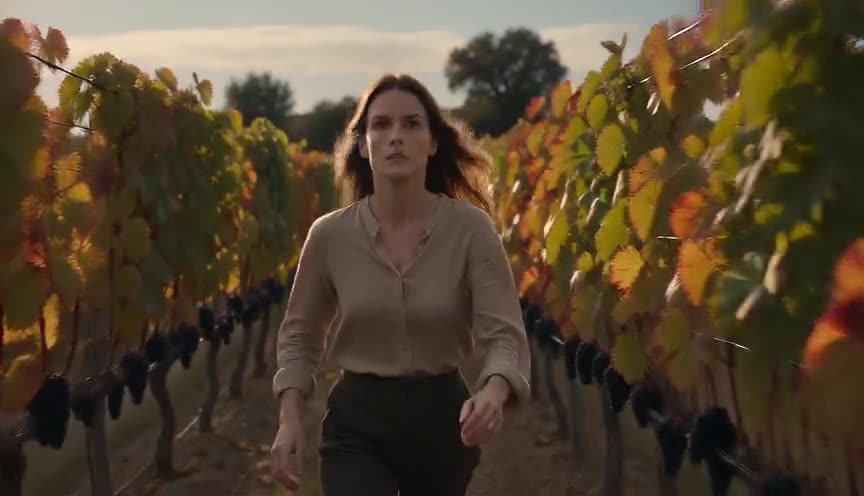
Handheld keeps the camera's tremor and footfall visible, reading as raw and subjective. A Steadicam removes that tremor entirely, so the same walk feels controlled and cinematic rather than urgent or chaotic.
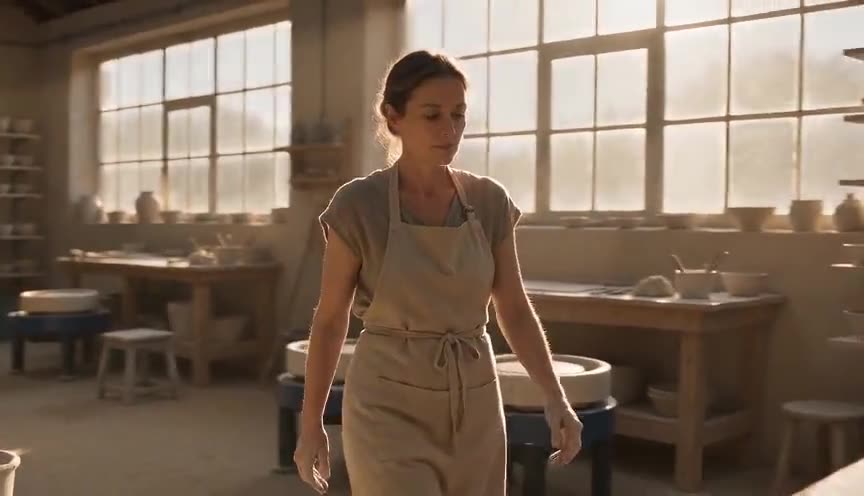
A gimbal is motorized stabilization, often lighter and used solo without a body vest, and it can drift oddly on quick direction changes. Steadicam relies on a trained operator's counterbalance, giving it more organic, weighted motion over long, complex paths.
In film
The Shining (1980)
Steadicam inventor Garrett Brown operated the low, child's-eye tracking shots through the hotel's hallways, a benchmark for sustained horror tension.
Goodfellas (1990)
The Copacabana entrance follows Henry and Karen in a long Steadicam take through back corridors, kitchens, and crowds, making access feel effortless.
Boogie Nights (1997)
The opening Hot Traxx shot uses Steadicam after a crane move, gliding through the nightclub to introduce the ensemble in continuous motion.
The prompt
Name the rig behavior, not just the shot: say the camera floats, glides, or hovers with no vertical bounce, and describe a specific path (through a door, around a pole, down a corridor). Specify a consistent following distance and height so the model doesn't drift into a static or handheld feel. Avoid words like shaky or jittery, which push the model toward handheld instead. Keep the path physically simple enough to render in four seconds: one turn or one obstacle, not a full building traverse.
The exact prompt that rendered the video on this page. Keep the description of the move, change the subject and the setting.
Steadicam shot moving through a nearly empty subway car at night, following a woman in a rain-damp coat as she walks from one end of the car toward the doors. The camera glides at chest height with no vertical bounce, drifting slightly side to side as it clears a metal pole and passes empty seats. Fluorescent light flickers overhead and the dark tunnel streaks past the windows. The camera holds a steady six-foot distance behind her, then arcs gently around her shoulder as she reaches the doors. No text.
Common mistakes
Confusing it with handheld
Describing shake or jitter defeats the point of a Steadicam. The whole value of the technique is the absence of bounce, so the prompt or the operator's footwork must protect that smoothness.
Overcomplicating the path
Real Steadicam operators rehearse routes and mark floor tape for good reason. Asking for too many turns, stairs, or obstacles in one short take produces awkward, physically implausible camera behavior.
Ignoring focus
On a real set a dedicated focus puller tracks the moving subject; skip this and faces drift soft as distance changes. In a prompt, state that the subject stays sharp throughout the move.
Frequently asked questions
What is a Steadicam shot?
It is a camera move filmed on a body-worn stabilizing rig that removes the operator's walking bounce, so the shot glides smoothly through real space, following action through doors, stairs, and crowds that a dolly or crane could never reach.
How is a Steadicam different from a gimbal?
A Steadicam is a full-body vest-and-arm system operated by a trained person, producing weighted, organic motion over long complex paths. A gimbal is a smaller, often handheld or drone-mounted motorized stabilizer, lighter but sometimes less steady on sudden turns.
Why do directors use Steadicam instead of dolly track?
Track has to be laid in a straight or curved line and takes time to set up in tight or uneven locations. A Steadicam operator can walk anywhere, through doorways and up stairs, keeping the shot unbroken across spaces track cannot cover.
Can AI video tools generate a convincing Steadicam shot?
Yes, tools on Imaginode such as Kling, Veo, and Seedance can produce a floating, bounce-free tracking move if the prompt clearly describes steady height, consistent following distance, and a simple physical path for the camera to travel.