Walk and talk
Also calledWalking dialogue shot, Moving two-shot, Sorkin walk
A walk and talk is a shot in which the camera travels continuously alongside or ahead of characters who are having a conversation while walking. It keeps dialogue scenes visually alive, letting performance, blocking and setting unfold in real time without a single cut.
What it tells
Directors reach for the walk and talk to turn exposition into momentum. A conversation shot on a locked-off two-shot can feel like a lecture; the same lines delivered on the move feel urgent, alive, tied to a place and a purpose. The moving frame also lets a director show relationships shifting through pace, distance and who leads or lags, and it fills corridors, streets and lobbies with the texture of a working world instead of a studio set.
How it is shot
The camera rides a Steadicam, wheeled dolly, wheelchair rig or handheld gimbal, moving backward, sideways or ahead of the actors at their exact walking speed. An operator (often walking backward, guided by an assistant watching for obstacles and cables) keeps a consistent frame distance, usually 4 to 8 feet, holding both actors in a two-shot with a 24mm to 35mm lens for depth and some background context. Focus is pulled continuously as spacing changes. Actors rehearse blocking against marked turns, doors and set dressing so lines land on specific steps. Sound comes from booms just out of frame or hidden lavs, since a boom operator usually cannot keep pace indoors.
When to use it
- Two characters need to cover exposition without the scene feeling static or talky.
- You want to show status or urgency through who sets the pace of the walk.
- The location itself (office, street, corridor) adds meaning to the conversation.
- You need to move a scene from one story beat or set piece into the next seamlessly.
Not to be confused with
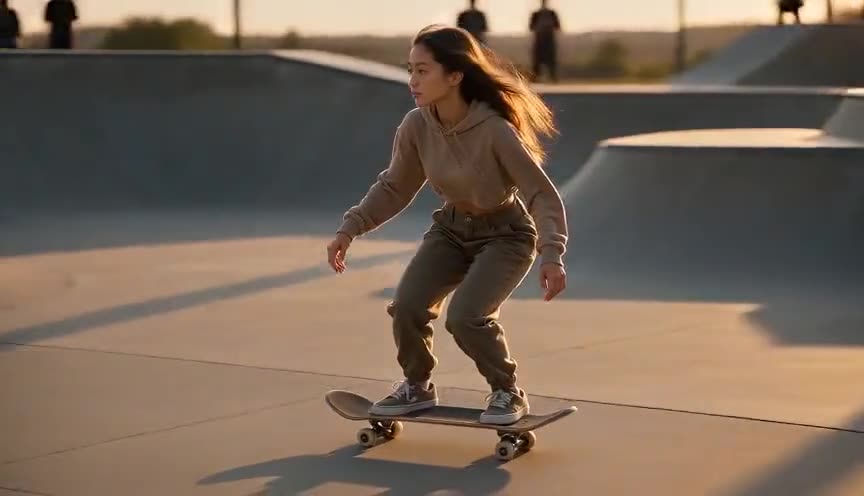
A tracking shot is the broader camera movement technique of following any moving subject. Walk and talk is a specific application of tracking built around dialogue between walking characters, with framing tuned to hold both faces and gestures.
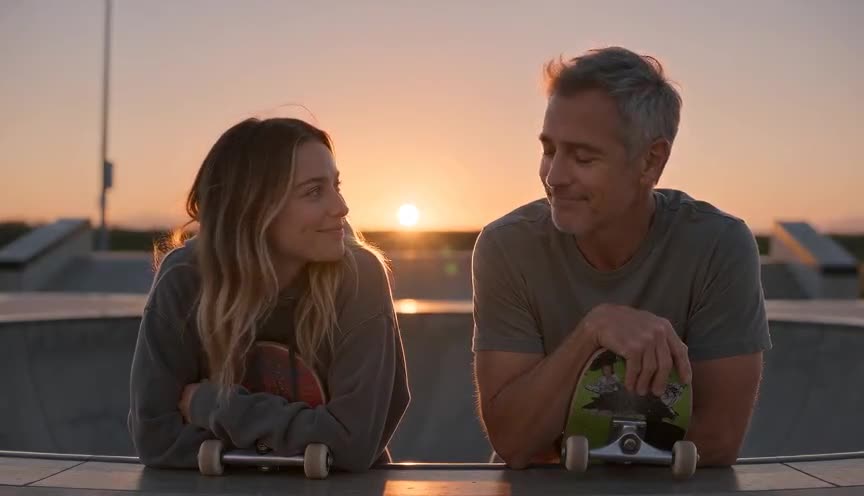
A two-shot is a framing choice that can be static or moving. Walk and talk always adds continuous movement to that framing, matching the camera's pace to footsteps to keep the conversation kinetic rather than posed.
In film
Birdman (2014)
Long unbroken takes follow actors through backstage hallways mid-conversation, using walk and talk to disguise cuts and sustain pressure.
The Social Network (2010)
Campus and office walk and talks keep rapid-fire dialogue scenes moving forward physically as well as verbally.
The prompt
Name the camera rig (Steadicam, gimbal, dolly) and its exact relationship to the actors: distance, side or backward movement, and speed matched to a walking pace. Describe the frame as a moving two-shot so the model keeps both characters visible and roughly the same size across the clip. Mention the floor or ground staying level and smooth to signal stabilized movement rather than handheld shake. Avoid asking for multiple angles or cuts; this is one continuous take.
The exact prompt that rendered the video on this page. Keep the description of the move, change the subject and the setting.
Walk and talk: a steadicam camera moves backward at a steady walking pace through a grand 1930s hotel lobby, staying centered on a well-dressed man and woman in mid-conversation, gesturing as they walk side by side across a checkered marble floor. The camera holds a consistent five-foot distance, framing both figures in a moving two-shot, while art deco chandeliers and bellhops drift softly out of focus in the background. The floor and architecture stay level and smooth, no shake, one continuous take. No text.
Common mistakes
Speed mismatch
If the camera drifts faster or slower than the actors' footsteps, the frame gains or loses space awkwardly, breaking the illusion of a single fluid move.
No rehearsed blocking
Without marked turns, doors and pace changes, actors hit obstacles, miss their marks, or lines land in the wrong spot relative to the frame.
Frame too tight
Cropping too close on faces cuts off hand gestures and body language that make the walking conversation feel physical rather than posed.
Frequently asked questions
What is a walk and talk shot?
It is a moving shot, usually a two-shot, where the camera travels with characters as they walk and converse, keeping the conversation visually dynamic instead of static and locked off.
Why do directors use walk and talk scenes?
They turn exposition-heavy dialogue into forward momentum, use the setting to add subtext, and let status, urgency or intimacy show through pace and physical distance between characters.
What gear do you need to shoot a walk and talk?
A Steadicam, gimbal, wheelchair dolly or skilled handheld operator, plus a second person (usually) guiding the operator backward, hidden lavalier mics or a boom kept just out of frame, and a wide enough lens (24 to 35mm) to hold both actors.
Can AI video tools generate a walk and talk shot?
Yes. Describing the rig, the fixed frame distance and the matched walking speed gives models like those on Imaginode enough physical detail to render a believable continuous moving two-shot.