Handheld camera
Also calledHandheld shot, Shaky cam, Handheld cinematography
Handheld camera is a technique where the operator holds the camera on the body instead of mounting it on a tripod, dolly or stabilizer, letting natural micro-movements and breathing enter the frame. It puts the viewer inside the scene's physical space, making the image feel urgent, subjective and alive rather than composed.
What it tells
Handheld camera signals that something is unscripted, dangerous or emotionally raw. Directors reach for it when they want the audience to feel present in the room rather than observing from a comfortable distance: a fight, a breakdown, a chase, a documentary interview. The instability mirrors a character's loss of control or the chaos of the moment, and it strips away the polish of a locked-off frame so the scene reads as truth rather than staging. It is a texture of urgency, not decoration.
How it is shot
The operator carries the camera on the shoulder, in both hands or on a harness, without a tripod, dolly or gimbal to absorb motion. Breathing, footsteps and small weight shifts translate directly into the frame, producing irregular drift, bounce and roll. Shorter lenses (24mm to 50mm) are common because they forgive small framing errors and keep more of the scene in focus; a wide lens also lets the operator move close to the action. Shutter speed usually stays close to twice the frame rate for natural motion blur, and a slightly higher ISO lets the operator work without a heavy rig. Some productions add a shoulder rig or a light stabilizing vest to control the shake without eliminating it, keeping the frame lively but still readable.
When to use it
- A tense confrontation or fight scene where the audience should feel the danger, not admire the framing.
- A documentary-style interview or verite sequence that needs to feel unrehearsed and immediate.
- A character's panic, disorientation or breakdown, when instability should mirror their emotional state.
- A chase or pursuit through tight spaces where a rig or dolly could not physically follow.
Not to be confused with
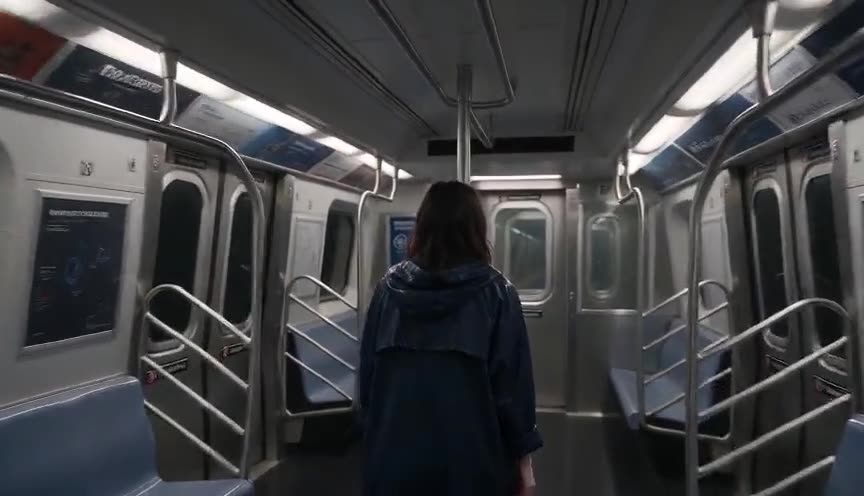
A Steadicam shot also moves with the operator's body, but a mechanical arm and vest isolate the camera from footsteps and sway, producing smooth motion. Handheld keeps that sway, trading smoothness for rawness.
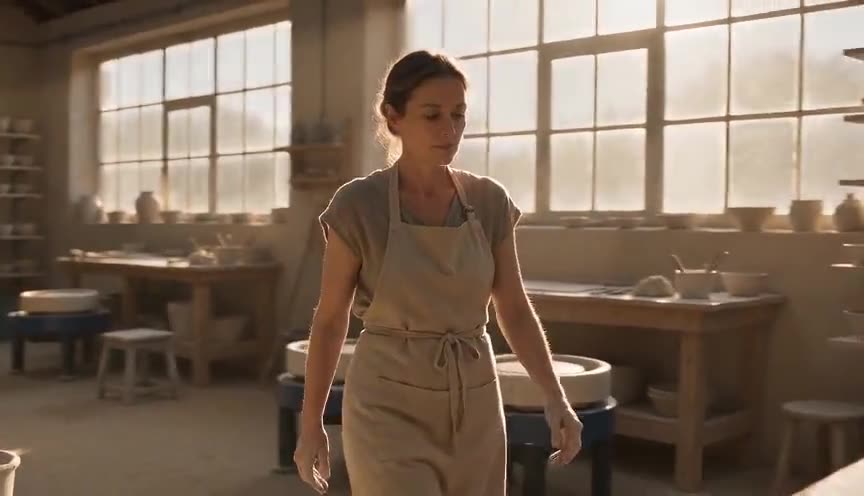
A gimbal shot uses motors to cancel out shake almost completely, giving a floating, controlled feel even while walking fast. Handheld camera embraces the shake instead of correcting it, favoring immediacy over polish.
In film
Saving Private Ryan (1998)
The Omaha Beach landing uses handheld camera to throw the viewer into the physical chaos and terror of combat.
The Blair Witch Project (1999)
The entire film is shot handheld to sell its found-footage premise and build dread through unstable, unrehearsed-feeling images.
Children of Men (2006)
Long handheld takes follow characters through danger without a cut, keeping the camera physically implicated in the violence.
The prompt
Name the rig explicitly: say 'handheld camera' and describe the specific motion, small vertical bounce, slight drift, occasional micro-shake from footsteps, rather than just 'shaky'. Keep the subject and background doing normal action so the instability reads as camera behavior, not a glitch. Avoid words like 'earthquake' or 'violent shake', which push models into exaggerated, unusable motion. Mention a believable focal length (24mm to 50mm) and natural light so the model does not default to a locked, tripod-smooth render.
The exact prompt that rendered the video on this page. Keep the description of the move, change the subject and the setting.
Handheld camera follows a woman in her thirties walking briskly between rows of autumn vines heavy with dark grapes, the frame bouncing slightly with each of her footsteps and drifting a little side to side as the operator keeps pace beside her. Shot on a 35mm lens in warm late afternoon light, the horizon tilts and levels naturally, vine leaves blur softly at the edges of the frame, and her face stays roughly centered though never perfectly still, the small handheld sway giving the shot a sense of urgency and closeness. No text.
Common mistakes
Overdoing the shake
Excessive violent shake reads as amateur or nauseating rather than immersive; the best handheld work is controlled instability, not chaos.
Using it for calm, formal scenes
Handheld on a quiet dialogue between two seated people undercuts the mood; save it for moments that justify physical urgency.
Ignoring lens choice
A long telephoto lens on a handheld rig magnifies every tremor into unwatchable shake; wider lenses forgive small movements far better.
Frequently asked questions
What is handheld camera?
Handheld camera is a filming technique where the camera is held and operated by hand or on the body instead of a tripod or stabilizer, so the natural movement of the operator appears in the shot. It gives footage a raw, immediate, physically present feel.
Why do directors use handheld shots instead of a stabilizer?
A stabilizer removes the operator's body from the image, producing smooth, composed motion. Handheld keeps that body in the frame's motion, which suits scenes about danger, urgency or emotional loss of control where polish would feel false.
Does handheld camera always mean shaky footage?
No. Skilled operators control the amount of movement, using their body, breath and steps to create a subtle, natural sway rather than violent shake. The goal is believable human motion, not visible instability for its own sake.
Can AI video generators produce a convincing handheld look?
Yes, if you describe the physical cause of the motion (footsteps, breathing, a hand-carried rig) rather than just asking for 'shaky camera'. Imaginode's models respond well to concrete cues like lens focal length, walking pace and small vertical bounce.