Tableau shot
Also calledTableau composition, Frontal tableau, Painterly staging
A tableau shot is a static, wide or full shot in which actors and set elements are arranged deliberately within the frame, like figures in a painting, and the scene plays out without camera movement or cutting. It holds the viewer at a fixed distance, letting them read composition and staging rather than follow a moving point of view.
What it tells
Directors reach for the tableau shot when they want to step back from a scene rather than push into it. By holding a fixed, wide frame and arranging every actor deliberately, the shot turns cinema into something closer to a painting or a stage tableau, asking the audience to scan and interpret rather than be pulled along by movement. It creates emotional distance, often comic or melancholic, and signals control: nothing here is accidental, and the stillness itself becomes part of the meaning.
How it is shot
The camera is locked off on a tripod, usually framing a wide or full shot so the whole set and every actor fit inside. Actors are blocked into a fixed composition, often symmetrical or frontal to the lens, at measured distances from camera and from each other, sometimes on marked spots on the floor. A 35mm to 50mm lens keeps perspective flat and avoids distortion that would break the painting-like flatness. Lighting is usually even and shadowless, closer to high-key than dramatic, so nothing pulls focus from the arrangement. Rehearsal is choreographed like a stage play: performers hold poses or make small, contained movements within their own space, and the shot runs uncut, sometimes for the length of an entire scene.
When to use it
- When you want the audience to read an entire scene at once, like a painting.
- For deadpan comedy where camera stillness makes an odd pose or gesture funnier.
- To show group dynamics or social hierarchy through spatial arrangement rather than editing.
- When staging a formal, ceremonial or ritualistic moment that deserves distance and restraint.
Not to be confused with
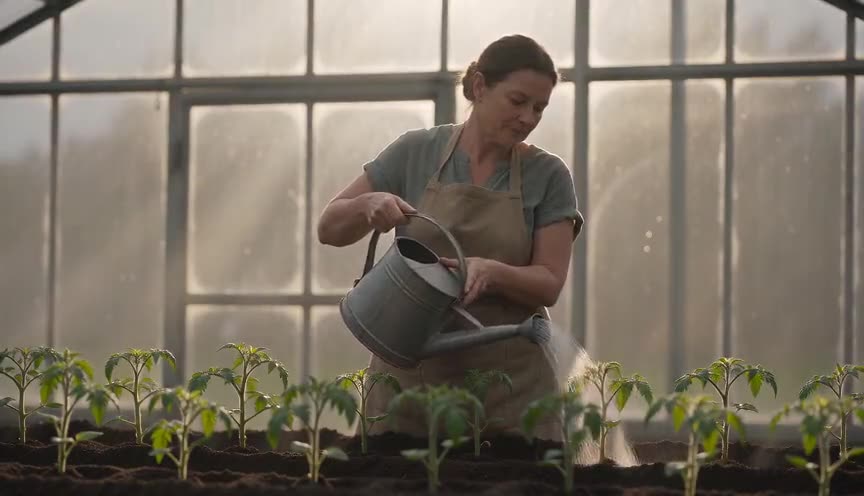
A static shot simply means the camera does not move; a tableau shot is static and goes further, staging every actor and prop with deliberate, painting-like composition, usually frontal and symmetrical, so the whole scene reads as one image.
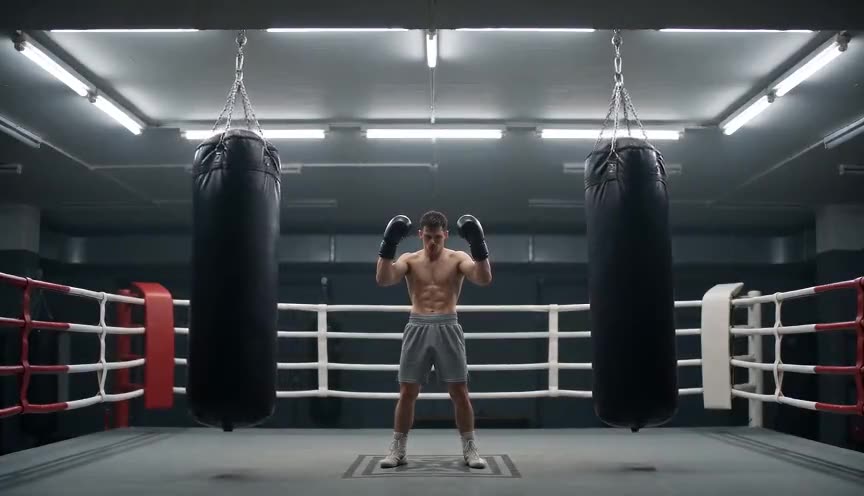
Symmetry is a balance principle that can appear in any shot; a tableau shot is a specific staging convention, wide and locked off, that often uses symmetry to arrange an entire scene like a frozen painting for its full duration.
In film
The Grand Budapest Hotel (2014)
Wes Anderson repeatedly locks the camera on frontal, symmetrical tableaux, staging hotel staff and guests like figures in a diorama.
Playtime (1967)
Jacques Tati frames modernist Paris in wide, static tableaux where tiny human figures navigate glass and steel architecture.
A Pigeon Sat on a Branch Reflecting on Existence (2014)
Roy Andersson builds the whole film from static, pale tableau vignettes, each one a single held shot with no camera movement.
The prompt
Ask explicitly for a static, locked-off wide or full shot with frontal or symmetrical staging, and describe where each person or object sits in the frame, since the model needs that spatial detail to build a real composition. Use words like tableau, painting-like, posed, held, motionless camera, and avoid any word implying movement (push, pan, walk toward camera, handheld). Specify even, flat lighting and a clear background line to keep the painterly read. Keep the described action small and contained, since a tableau is about held stillness, not motion.
The exact prompt that rendered the video on this page. Keep the description of the move, change the subject and the setting.
Tableau shot of a rooftop basketball court at dusk, camera locked off in a wide, frontal composition. Four adults in loose sportswear are posed at fixed spots on the concrete: one balances a basketball on a fingertip near the hoop, two stand mid conversation at center court, and one leans against the chain-link fence at frame edge. The city skyline lines up symmetrically behind them under even, flat evening light. Nobody walks toward or away from the camera; only small, contained gestures happen within each pose, holding the whole scene like a painting for four seconds. No text.
Common mistakes
Letting the camera drift
Any push, pan or handheld sway breaks the stillness a tableau depends on; even a slow drift reads as a different technique, not a tableau.
Sloppy blocking
Actors placed at random, ignoring lines and depth, kill the painterly read; every figure needs a deliberate spot, distance and pose within the frame.
Cutting too soon
A tableau needs time to be seen and absorbed; cutting away after a second or two robs the composition of its effect and turns it into a plain establishing shot.
Frequently asked questions
What is a tableau shot?
A tableau shot is a static, wide shot in which every actor and prop is deliberately arranged within the frame, like figures in a painting, and the scene plays out without camera movement or a cut, letting the audience read the whole composition at once.
Why do directors use tableau shots?
They use it to create distance and control, turning a scene into something the audience studies rather than follows. The stillness can heighten comedy, ritual or melancholy, and it signals that the composition itself, not the camera's movement, carries the meaning.
Is a tableau shot the same as an establishing shot?
No. An establishing shot is defined by its narrative job of showing where a scene takes place, and it can move or cut quickly. A tableau shot is defined by its staging and stillness, and it can happen anywhere in a scene as long as the frame is composed and held.
Can AI video models generate a tableau shot?
Yes, if you describe the staging precisely: a locked-off wide shot, frontal or symmetrical, with exact positions for each person or object, even lighting, and no camera movement. Tools like Imaginode read those spatial and lighting cues literally, so specific blocking matters more than mood words.