Day for night
Also calledNuit américaine, American night, Day-for-night shooting
Day for night is a technique for shooting night scenes during daylight hours, using underexposure, filters and color grading to make the footage read as nighttime. It lets a crew film large exterior night scenes without the cost, safety risks or scheduling limits of an actual night shoot.
What it tells
Directors reach for day for night when a story needs the mood of darkness, danger, secrecy, romance under moonlight, but the production cannot afford or safely execute a real night shoot. The technique preserves the emotional register of night: muted color, hard shadows, a sense of isolation, while keeping the crew working in daylight hours when actors and equipment perform best. It is a practical compromise that, when done well, never announces itself; the audience simply reads the scene as nocturnal and stays inside the story.
How it is shot
On camera, the crew underexposes the shot by two to three stops below a normal daylight exposure and adds a blue color cast, historically with a red filter on black and white film, or a cyan or blue filter and a polarizer on color stock to darken the sky. The sun is placed as backlight or hard side light to read as a moon source, skies are kept out of frame or crushed dark in the grade, and practical lights (windows, lanterns, headlights) are pushed brighter so they pop against the dark image. Modern productions often shoot flat under full sun and finish the look entirely in the color grade, lowering exposure, shifting white balance toward blue, and adding a vignette to sell the illusion.
When to use it
- Night exteriors are too costly, too long, or too risky to schedule and light after dark.
- A chase, fight or crowd scene needs full daylight visibility for safety but must read as nighttime.
- Low-budget or location-restricted shoots cannot secure permits or crew hours for true night filming.
- A moonlit mood is needed for a brief cutaway or establishing shot within an otherwise daytime schedule.
Not to be confused with
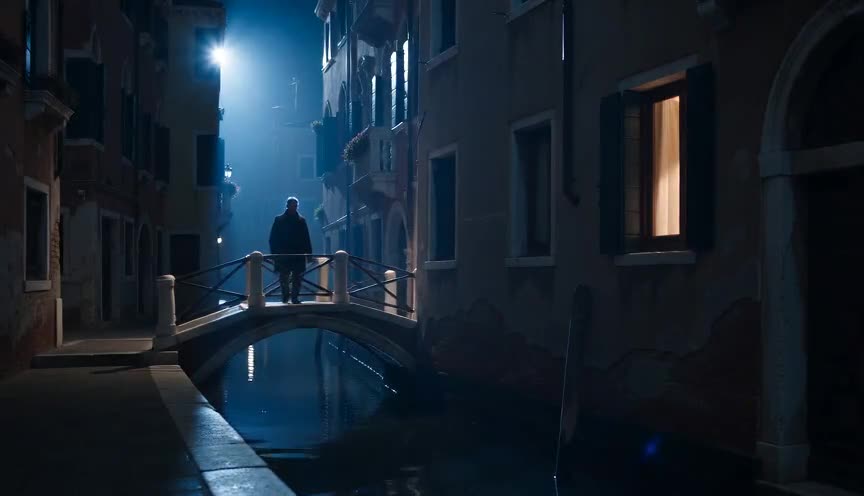
Moonlight gel lights an actual night set with blue gels to simulate moonlight on real darkness, while day for night shoots in real daylight and manipulates exposure and color to fake night entirely.
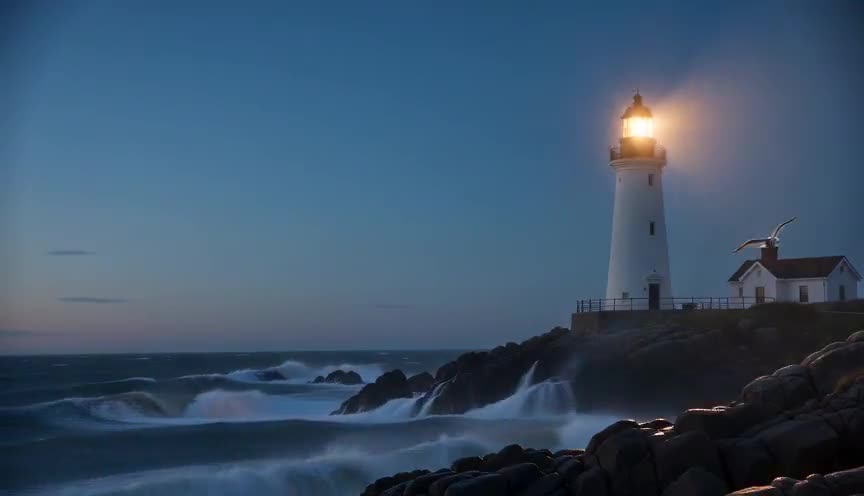
Blue hour uses the genuine natural light just after sunset for a real dusk atmosphere, while day for night substitutes full midday sun plus heavy correction to stand in for true, deep nighttime.
In film
Nosferatu (1922)
Several exterior night scenes were filmed in daylight and later tinted blue in release prints, an early and often studied use of the technique.
Mad Max: Fury Road (2015)
After the sandstorm, the blue night wasteland sequence was shot in daylight, deliberately overexposed and transformed in digital color grading, as John Seale has explained.
Nope (2022)
The Agua Dulce ranch night exteriors were captured in daylight with paired color and infrared cameras, then composited and graded to create unusually detailed moonlit images.
The prompt
Name the technique directly and describe the physical cues: a daylight sun angle with hard shadows, a blue-cyan color cast, underexposed midtones, a crushed dark sky, and practical lights (lamps, screens, neon) pushed bright against the dark grade. Avoid relying on words like 'night' or 'dark' alone, since the model may default to a literal night shoot with soft ambient light instead of the harder, filtered daylight-turned-night look this technique needs.
The exact prompt that rendered the video on this page. Keep the description of the move, change the subject and the setting.
Day for night: a static wide shot inside a recording studio with tall windows, filmed under real midday sun streaming through the glass, then underexposed two stops and graded with a heavy blue-cyan cast so the exterior sky reads as deep night while a sound engineer at the mixing console works under warm practical lamp light. The window light stays hard and directional like moonlight, shadows stay sharp, and the console's small LED indicators glow bright against the crushed dark blue background. Camera does not move; only the color and exposure treatment change across the shot. No text.
Common mistakes
Flat blue tint without underexposure
Adding only a blue color filter without lowering exposure leaves skies too bright and shadows too soft, so the shot still reads as daytime with a color problem, not night.
Visible sun or lens flare
Letting the sun itself, or a hard flare, stay in frame breaks the illusion instantly because no night sky produces that kind of specular highlight.
No motivated practical lights
Skipping bright practical sources like lamps, screens or headlights removes the contrast cue the eye needs to accept the frame as nocturnal, so the grade reads as dusk instead of night.
Frequently asked questions
What is day for night?
Day for night is a filming technique that shoots exterior scenes in daylight and then uses filters, underexposure and color grading to make the footage look like it was shot at night.
Why do filmmakers use day for night instead of shooting at night?
Real night shoots cost more, take longer, need heavy lighting rigs, and carry more safety risk for cast, crew and stunts, so day for night gets the night mood without those production burdens.
Does day for night work in color as well as black and white?
Yes, it originated with red filters on black and white film and adapted to color through blue or cyan filters, polarizers and, today, digital color grading that pushes exposure and white balance toward a cold night look.
Can AI video generators create a convincing day for night look?
Yes, tools on platforms like Imaginode can render the effect if you describe the underexposed, blue-cast daylight look explicitly, since the model needs the physical description rather than just the word 'night' to avoid a literal dark scene.