Moonlight gel
Also calledblue gel, CTB moonlight gel, moonlight blue, night blue gel
A moonlight gel is a blue-tinted lighting filter, usually a CTB gel, clipped over a light source to give it the cool, pale blue cast associated with real moonlight. It lets a cinematographer light a night scene with strong, controllable light while still reading to the eye as natural moonlight rather than a stage light.
What it tells
Real moonlight is faint and nearly colorless to the human eye, but audiences have learned, through a century of films, to read blue as night. Directors reach for a moonlight gel to build scenes of secrecy, longing, or danger: lovers meeting where no one can see them, a predator moving through a sleeping town, a character alone with their thoughts. The cool cast lowers the emotional temperature of a scene without a word of dialogue, separating night from day and making any warm light inside the frame, a window, a match, feel fragile and precious.
How it is shot
The gel is a sheet of blue-tinted polyester, commonly Rosco Cinegel 3202 Full Blue or Lee 183 Moonlight Blue, clipped onto a barn door or gel frame in front of a hard tungsten or HMI fixture. Because real moonlight is direct sunlight reflected off the moon, the source is usually kept hard and single-directional, one key light at a low angle through a window or from off-frame, rather than soft and wrapped. Color temperature effectively runs cool, often pushed toward 8000 to 12000K on a monitor, while skin tones are protected by keeping practical lights, lamps, candles, warm and uncorrected for contrast. Exposure is usually kept one to two stops under the daytime key to preserve the sense of low ambient light, with fill kept minimal so shadows stay deep.
When to use it
- Lighting a night exterior scene that must read as moonlit rather than artificially lit.
- Shooting day for night and needing to sell it with color, not just exposure.
- Building romantic or eerie mood on a balcony, dock, or window scene at night.
- Creating cold contrast against warm interior practicals visible in the same frame.
Not to be confused with
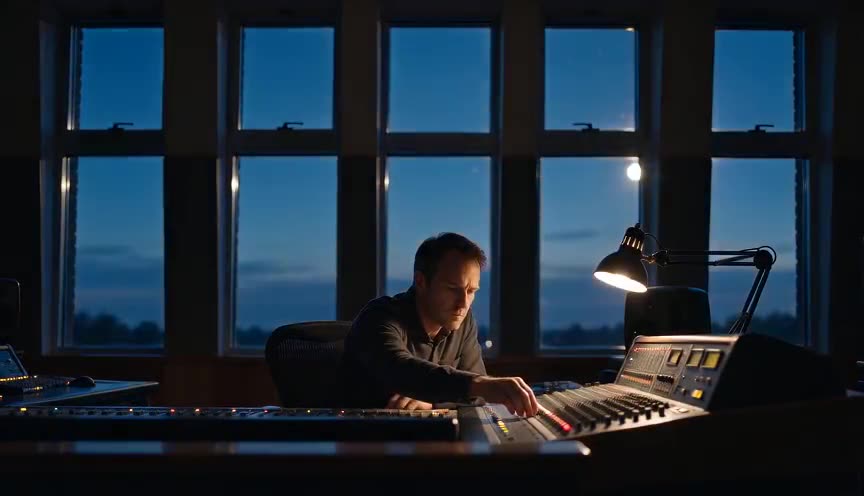
Day for night fakes an entire night scene while shooting in daylight, using exposure and grading; a moonlight gel is a lighting tool that can support that illusion or be used on its own at real night.
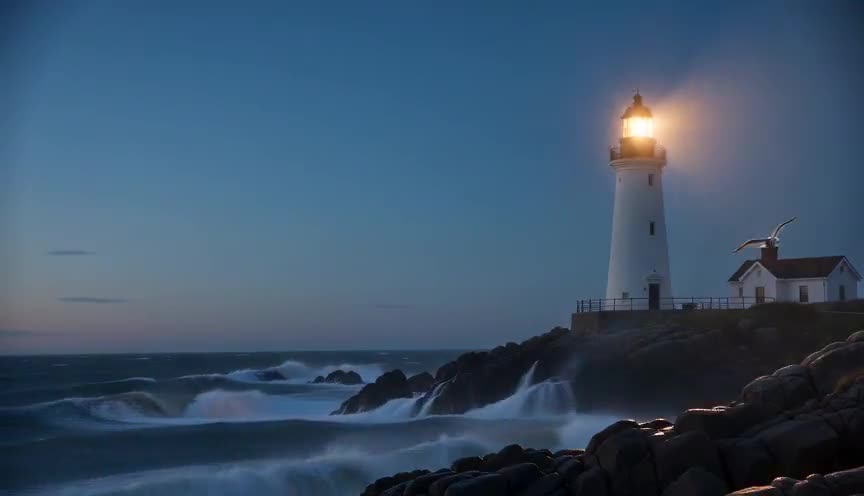
Blue hour is a naturally occurring blue ambient light at dusk or dawn that lasts only minutes; a moonlight gel manufactures that same cool cast with artificial light, any time, indoors or out, for as long as the shoot needs.
In film
Halloween (1978)
Dean Cundey's night exteriors use blue-gelled backlight as stylized moonlight, especially around the Myers house and streets, establishing his influential horror look.
The Fog (1980)
Dean Cundey uses blue-gelled beams through fog for moonlit coastal night exteriors, letting the mist read clearly while giving Antonio Bay an eerie glow.
E.T. the Extra-Terrestrial (1982)
Allen Daviau's forest and suburban night scenes use cool blue moonlight and backlight through haze, making the darkness readable and magical.
The prompt
Name the gel color and its physical source explicitly: 'blue CTB gel', 'cold moonlight', 'hard single-directional light'. Tell the model where the warm counterpoint sits (a window, a lamp) so the frame does not turn uniformly cyan. Mention that the light is hard and comes from one side, since AI models default to soft, even lighting unless told otherwise. Avoid vague terms like 'blue lighting' or 'night vibe', they tend to produce a flat color grade instead of a directional, motivated light source.
The exact prompt that rendered the video on this page. Keep the description of the move, change the subject and the setting.
Moonlight gel: static locked-off shot of a narrow Venetian canal at night, a stone footbridge and shuttered facades lit by a single hard light source drenched in deep blue CTB gel, simulating cold moonlight raking across the water from one side. A man in a dark coat walks slowly along the narrow walkway, his face catching a thin blue rim while the rest of him falls into deep shadow. The water's ripples carry faint blue highlights, one lit window glows warm amber in contrast, and the rest of the frame stays cool and low in contrast. Camera does not move. No text.
Common mistakes
Too soft a source
Wrapping the blue gel around a large soft box removes the hard-edged shadows real moonlight casts, leaving a flat blue wash instead of a believable night key.
No warm counterpoint
Without at least one warm practical, a window, a lamp, a match, the frame reads as monochrome blue rather than night, since real night scenes usually mix cool ambient with warm pockets.
Full saturation on skin
Letting the deepest blue gel hit faces directly without any warm bounce or fill can make skin look sickly or corpse-like instead of moonlit.
Frequently asked questions
What is a moonlight gel?
A moonlight gel is a sheet of blue-tinted filter placed over a light to make it read as cool moonlight instead of a warm artificial source. It is a standard tool for lighting night exteriors on a controlled set.
What color gel is used for moonlight?
Most cinematographers reach for a full or half CTB (color temperature blue) gel, such as Rosco Cinegel 3202 or Lee 183 Moonlight Blue, sometimes cut with a touch of green correction to avoid a pure, flat blue.
Is moonlight gel the same as day for night?
No. Day for night is a whole technique combining exposure, filtration and grading to shoot night scenes in daylight; a moonlight gel is one lighting tool that can be part of that technique or used on its own at true night.
Can I get a moonlight gel look with AI video tools?
Yes. Describe the gel color, the direction and hardness of the light, and what stays warm in the frame; tools like the ones on Imaginode read those physical light cues better than a vague request for 'blue lighting'.