Low-key lighting
Also calledlow-key light, dark lighting, shadow lighting
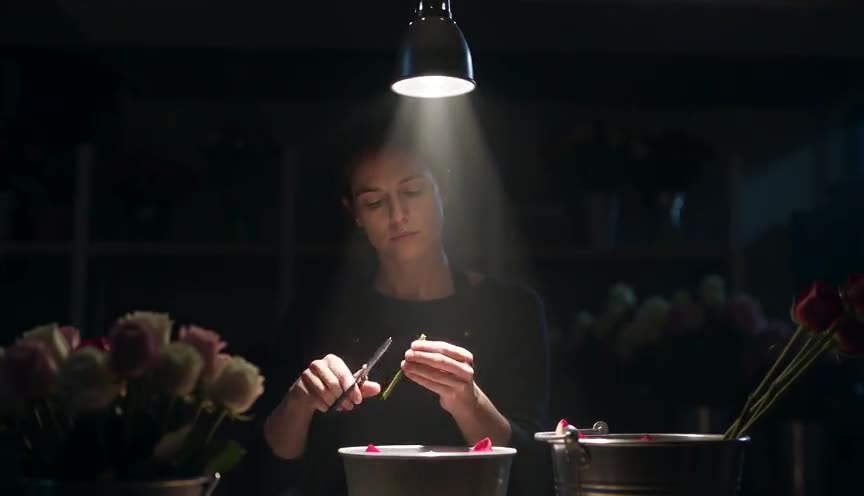
Low-key lighting is a lighting style that keeps most of the frame in shadow, relying on a single dominant light source with little or no fill. It creates a moody, tense or mysterious atmosphere and directs the viewer's eye to the small area that remains lit.
What it tells
Directors reach for low-key lighting when a scene needs weight rather than clarity: a confession, a threat, a private ambition. By hiding most of the frame, the light implies what it does not show, letting the audience fill in danger or intimacy with imagination. The technique also isolates a character from their surroundings, suggesting solitude, secrecy or moral ambiguity. Because so little is visible, every lit detail (a hand, an eye, a blade) carries extra narrative weight, so low-key lighting is a way of shaping the story with light before a single cut is made.
How it is shot
On set, the gaffer sets the key light hard and close, often a fresnel or a bare bulb at a steep angle, then pulls or eliminates the fill light so shadows stay black instead of gray. Contrast ratios commonly run from 8:1 to 16:1 between key and shadow, far beyond the 2:1 or 4:1 ratios used in high-key setups. Negative fill (black flags or floppies) absorbs stray bounce, and barn doors or gobos carve the beam so light only touches the subject's face or a narrow strip of the set. Exposure is set for the highlight, letting everything else fall toward black, and practicals like a single bulb or a screen glow often motivate the source.
When to use it
- Use it for interrogation, confession or threat scenes where the audience should feel unease and uncertainty.
- Shoot night exteriors or urban scenes where deep shadow reads as more realistic than an evenly lit frame.
- Isolate a character emotionally, showing loneliness, secrecy or moral conflict through darkness around them.
- Build suspense before a reveal, letting the audience's imagination fill in what the shadows conceal.
Not to be confused with
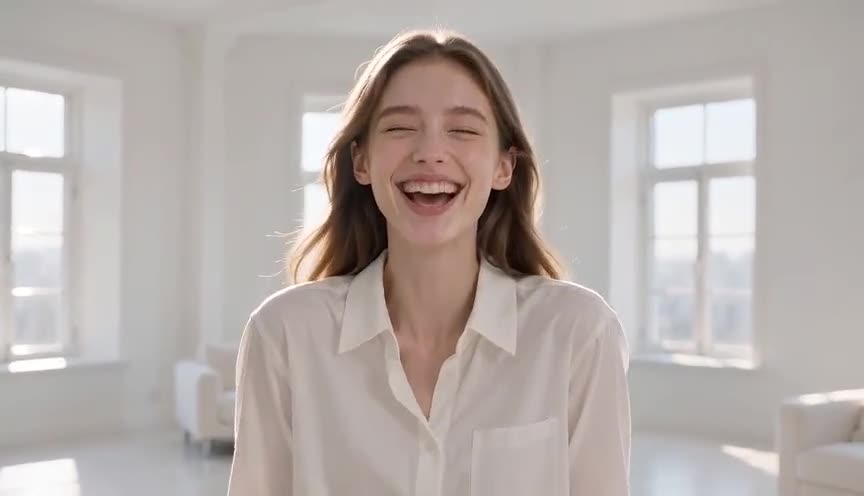
High-key lighting floods the frame with soft, even light and almost no shadow, producing an open, optimistic mood; low-key lighting does the opposite, keeping most of the frame dark to build tension or mystery.
Chiaroscuro is a painterly extreme of low-key lighting with a single hard source and near-total black shadow for dramatic sculptural contrast; low-key lighting covers a broader range, including softer, more naturalistic dark scenes.
In film
The Godfather (1972)
Gordon Willis lit interior scenes, especially the office confrontations, with a single overhead source and deep shadow to suggest hidden power.
Blade Runner (1982)
Interiors and rain-slicked streets are lit with hard, isolated sources against near-total darkness, reinforcing the film's noir mood.
Se7en (1995)
David Fincher keeps rooms and streets underexposed with narrow pools of light to sustain dread throughout the investigation.
The prompt
Name the light explicitly: one hard source, its direction and color temperature, and the absence of fill. Use words like 'deep shadow', 'single light source', 'underexposed background' and 'strong contrast' rather than vague terms like 'dark' or 'moody', which models often read as just low brightness with flat gray shadows. Mention practicals (a bulb, a screen, a streetlamp) to motivate the source, and specify that the background falls to near black. Avoid asking for both low-key lighting and even, soft fill in the same prompt, since that cancels the contrast.
The exact prompt that rendered the video on this page. Keep the description of the move, change the subject and the setting.
Low-key lighting on a lone skateboarder standing at the top of a concrete skate park ramp as the sun drops behind the horizon. A single low, warm sidelight, like the last sunset ray, rakes across her face and one shoulder, while the rest of her body, the ramp and the background fall into deep, near-black shadow. The camera holds a static medium shot at eye level, 50mm lens, no camera movement. Contrast is extreme: only the lit half of her face, the edge of the board and a thin rim on the concrete are visible, everything else reads as dark silhouette. No text.
Common mistakes
Confusing low-key with underexposed
Low-key lighting is about contrast and shadow shape, not simply lowering overall exposure; a uniformly dim gray frame reads as underexposed footage, not a deliberate dark look.
Leaving too much fill
Adding a soft fill light or letting bounce light wash into the shadows flattens the contrast and turns the shot back toward high-key, killing the mood the technique is meant to create.
Losing the subject in the dark
Pushing shadows so far that the audience cannot read the character's expression or position defeats the purpose; at least one clear point of light must stay on the subject.
Frequently asked questions
What is low-key lighting?
Low-key lighting is a lighting setup that keeps most of a scene in shadow, using one dominant light source with minimal fill so contrast stays high and the mood feels tense, mysterious or dramatic.
Is low-key lighting the same as film noir?
No. Film noir is a genre look that relies heavily on low-key lighting among other techniques (venetian blind shadows, dutch angles, hard shadows), but low-key lighting itself is used across many genres, not just noir.
How many lights does low-key lighting need?
Often just one. A single hard key light, sometimes with a small kicker or rim light for separation, is enough; the goal is to avoid fill rather than add more sources.
Can AI video models generate low-key lighting reliably?
Yes, if you describe the light source, its direction and the absence of fill explicitly. Tools like Imaginode respond better to concrete cues (single hard source, near-black background) than to mood words alone.