Dirty frame
Also calledDirty framing, Foreground obstruction, Shooting through foreground
A dirty frame is a shot where part of the lens is deliberately blocked by an out-of-focus object or figure in the foreground. It gives the image depth and texture and makes the viewer feel like they are peeking into the scene rather than watching it head-on.
What it tells
Directors reach for a dirty frame when they want intimacy without exposition. The obstruction (a shoulder, a plant, a doorframe) stands between the audience and the subject, turning a simple observation into an act of watching. It suggests the world keeps existing beyond the frame's edges, that the camera stumbled onto this moment rather than staged it, and it adds a layer of unease or voyeurism that a clean, open composition cannot.
How it is shot
Place an object or a person 30 to 90 centimeters (12 to 36 inches) from the lens, well inside the minimum focus distance so it renders as heavy blur, while the subject stays in focus several meters back. A wide aperture (f/1.4 to f/2.8) exaggerates the falloff. The foreground element should cover 10 to 40 percent of the frame, usually along one edge, never dead center. On set this can be a crew member's shoulder, a hanging light fixture, foliage, or a rack of clothes; the camera operator adjusts position by inches until the obstruction reads as natural rather than staged.
When to use it
- Introducing a character the audience will later realize was being watched
- Adding depth to a static wide shot that otherwise feels flat or staged
- Suggesting a crowded, lived-in space like a lobby, market, or newsroom
- Building unease before a reveal, as if the camera is hiding behind something
Not to be confused with
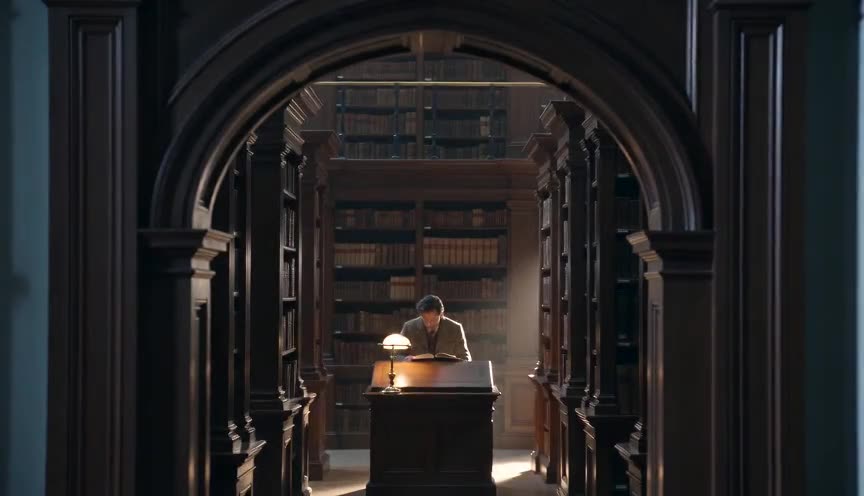
Frame within a frame uses a clean architectural border (a doorway, a window) to isolate the subject with sharp edges. A dirty frame instead uses a soft, out-of-focus obstruction that partially covers the image, without a defined border.
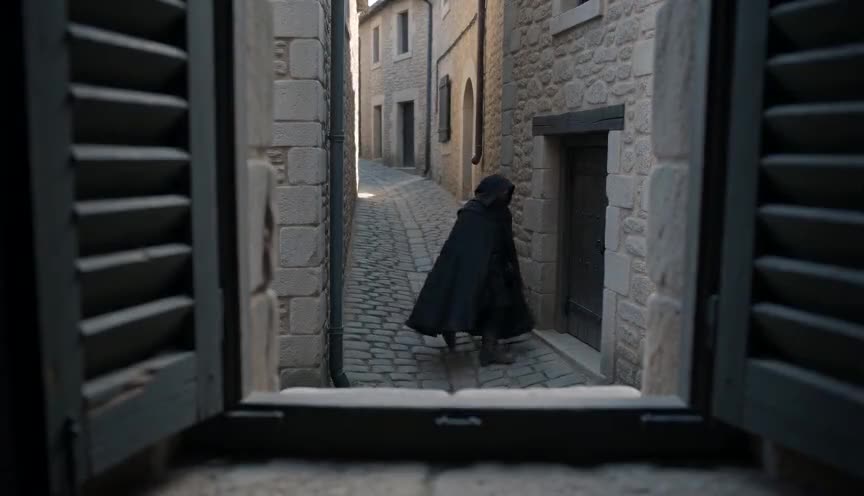
A voyeur shot is built around the idea of spying, often through blinds or foliage from a fixed vantage point. Dirty frame is the underlying technique that creates that feeling; it can appear in a voyeur shot or in an ordinary scene with no spying implied.
In film
The Godfather (1972)
Interior scenes are often shot past doorframes, shoulders, or hanging light fixtures, giving the compositions weight and a sense of eavesdropping.
Children of Men (2006)
Long takes frequently push blurred bodies and debris across the foreground, keeping the frame busy and grounding the chaos in a felt, physical space.
The prompt
Name the foreground obstruction explicitly (a hand, a lamp, a curtain, a passerby) and say it is out of focus and close to the lens, while the subject further back stays sharp. Mention a wide aperture and a specific lens if you want strong blur, and describe roughly what fraction of the frame it covers. Avoid asking for the obstruction to be centered or symmetrical, which reads as a frame-within-frame instead, and avoid describing it as sharp.
The exact prompt that rendered the video on this page. Keep the description of the move, change the subject and the setting.
Dirty frame shot in a 1930s hotel lobby with marble floors and brass fixtures. In the extreme foreground, a bellhop's blurred shoulder and the edge of a potted palm frond fill the left third of the frame, completely out of focus from a wide 50mm aperture. Deep in the background, in sharp focus, a woman in a long coat crosses the lobby toward the front desk, her footsteps unhurried. The camera stays locked off on a tripod, static, letting the crossing figure move while the soft foreground obstruction never shifts. Warm tungsten light glows from wall sconces. No text.
Common mistakes
Foreground too sharp
If the obstructing object holds focus, it competes with the subject instead of framing it. Push the aperture wider or move the object closer to the lens so it dissolves into blur.
Blocking too much of the frame
Covering more than half the image turns a dirty frame into an obstructed shot the audience resents. Keep the obstruction to a corner or edge so the eye can still find the subject.
No reason for the obstruction to be there
A random blurry shape in the foreground with nothing in the scene to explain it feels like a mistake, not a choice. Root the obstruction in the set: a plant, a passerby, a light fixture that belongs in the room.
Frequently asked questions
What is a dirty frame?
A dirty frame is a shot composed with an out-of-focus object or figure partially blocking the foreground of the lens, so the audience views the subject past this obstruction. It adds depth and a sense of watching something rather than being shown it directly.
Why do directors deliberately block part of the shot?
Blocking part of the frame adds visual depth, makes a set feel populated and real, and creates a subtle voyeuristic distance between the audience and the subject, which can build tension or intimacy depending on the scene.
Does a dirty frame need a wide aperture?
Not strictly, but a wide aperture (roughly f/1.4 to f/2.8) makes the foreground obstruction blur heavily while the subject stays sharp, which is the easiest way to sell the effect. A narrower aperture can still work if the obstruction is placed very close to the lens.
How do I get a dirty frame from an AI video model?
Describe a specific foreground object close to the lens and explicitly out of focus, state that the subject behind it stays sharp, and mention a wide aperture or shallow depth of field. On Imaginode, naming the obstruction and its position (left edge, bottom corner) gives more consistent results than a vague description.