Foreground interest
Also calledforeground framing, foreground element, foreground layering
Foreground interest is a composition technique that places an object, person, or texture close to the camera in the front layer of the frame. It adds depth, scale, and a sense of place, pulling the viewer's eye through the image toward the subject further back.
What it tells
Directors use foreground interest to root a shot in a specific world before the story starts talking. A blurred vase of flowers, a shoulder, a window frame at the edge of the lens tells the viewer where they are standing and whose point of view they share. It turns a flat picture into a layered space, suggesting that life continues in front of and behind the subject, and it slows the eye down for a beat before it settles on what matters.
How it is shot
On set, the crew positions an object or a person between 1 and 3 feet from the lens, often at the edge of frame, while the main subject sits several feet further back. A wide to normal lens (24mm to 50mm) with a moderate aperture (f/4 to f/8) keeps the foreground element visible but not tack sharp, so it reads as texture rather than a competing subject. With a wider stop (f/1.4 to f/2.8), the foreground can melt into soft shapes and color blocks instead. Focus is usually pulled to the person or action further back, and the foreground piece is dressed, lit, or nudged slightly so it never looks accidental.
When to use it
- Opening a scene in a new location, to establish depth and place before the dialogue starts.
- Shooting through market stalls, plants, or crowds to suggest a busy, lived-in environment.
- Framing a conversation where one character's shoulder or hand anchors the near layer.
- Building intimacy in a product or food shot by placing ingredients close to the lens.
Not to be confused with
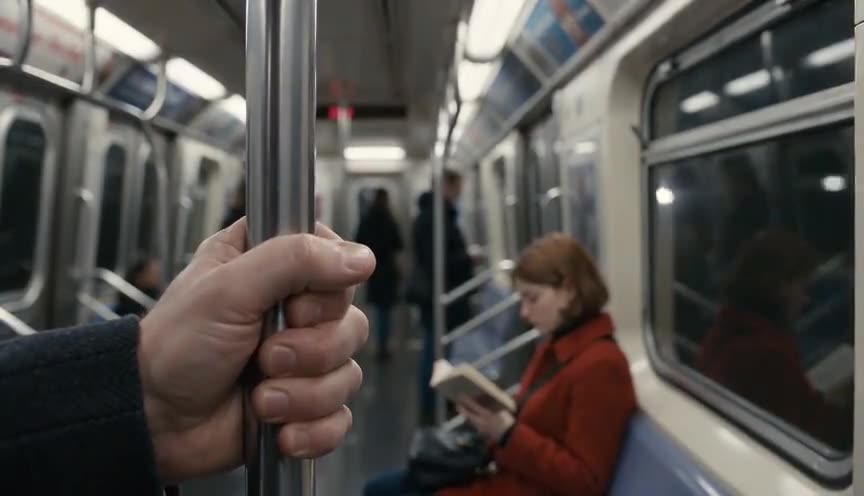
Layered depth arranges multiple planes (foreground, middle, background) across the whole shot, while foreground interest focuses on just the near element used to add depth and frame the main subject.
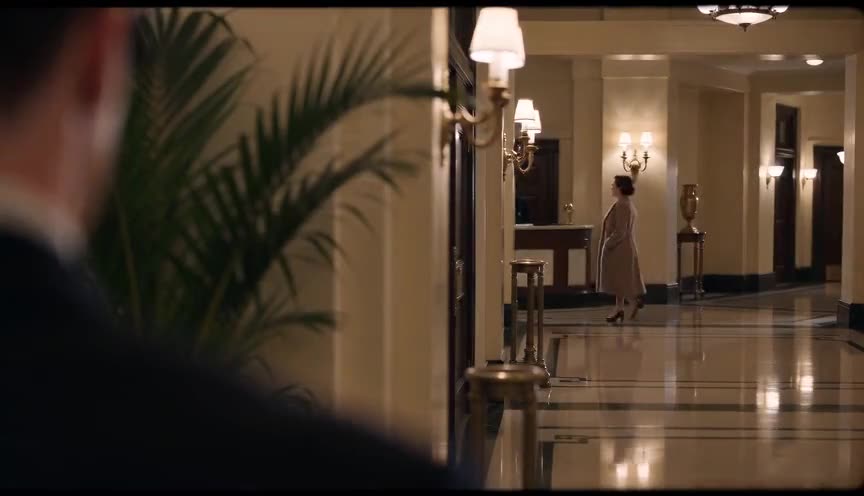
A dirty frame deliberately obstructs part of the lens with an out of focus object for a fragmented, voyeuristic feel, while foreground interest uses the near object mainly to add depth and scale, not to hide the subject.
In film
Citizen Kane (1941)
Gregg Toland's deep-focus cinematography stages objects and characters in the extreme foreground while action stays sharp in the background.
The Revenant (2015)
Emmanuel Lubezki repeatedly frames scenes through foreground branches, grass, and breath, using natural elements to add depth and immersion.
The prompt
Name the foreground object explicitly and place it in the same sentence as the lens and focus instruction, for example 'a glass jar of tulips in the extreme foreground, soft focus.' State where the main subject sits relative to it (further back, in focus) and give the aperture or depth of field word (shallow, f/2.8) so the model separates the layers. Avoid vague words like 'nice composition.' Keep the camera nearly static so the depth reads clearly, and mention that the foreground stays out of focus while the subject stays sharp.
The exact prompt that rendered the video on this page. Keep the description of the move, change the subject and the setting.
Foreground interest: a static camera holds a locked-off medium shot inside a flower shop, framed through a cluster of out-of-focus peonies and eucalyptus stems resting in a glass jar just inches from the lens. A 50mm lens at a wide aperture keeps the flowers as soft blurred color shapes in the front of the frame while a middle-aged woman arranging a bouquet stays in sharp focus several feet behind them. Warm afternoon light spills through a side window, and her hands move slowly, tying a ribbon, as the blurred blossoms remain still in the foreground for the full four seconds. No text.
Common mistakes
Foreground too sharp
When the near object is in as much focus as the subject, it competes for attention and confuses the eye about where to look.
Object floats mid-frame
Placing the foreground element dead center blocks the subject entirely instead of framing it; keep it toward an edge or corner.
No relation to the scene
A random branch or prop that has nothing to do with the location breaks believability; choose foreground objects that belong in the world.
Frequently asked questions
What is foreground interest?
Foreground interest is a composition technique where an object, person, or texture sits close to the camera in the front of the frame, adding depth and a sense of place while the main subject stays sharp further back.
How far should the foreground object be from the camera?
Usually between 1 and 3 feet, close enough that a wide or normal lens renders it soft or as a shape, but not so close that it blocks the subject entirely.
Does foreground interest require shallow depth of field?
No. It works with a deep-focus look too, where everything stays sharp, as long as the near object is placed and lit so it reads as a distinct layer rather than clutter.
Can AI video models generate foreground interest reliably?
Yes, if you name the foreground object, its distance, and its focus state in the prompt. On Imaginode, describing the near element separately from the subject's focus usually gives cleaner, more consistent depth than a generic composition request.