Short siding
Also calledShooting short, Short-sided framing, Looking into the frame edge
Short siding is a framing choice that places a subject so their gaze or body faces the narrow side of the frame, leaving little space to look or move into, instead of the open side. It reverses the usual comfort of lead room and makes the viewer feel the frame is working against the subject.
What it tells
Cinematographers reach for short siding when they want the audience to feel that something is off before a word is spoken. A character crowded against the edge they are looking toward reads as trapped, watched, or losing control of the scene, even in an ordinary room. It is a quiet way to tilt sympathy, mark a villain, or foreshadow a reversal, all through spacing rather than dialogue or music.
How it is shot
Start from a normal medium or close shot and break the lead room rule on purpose: position the subject so their nose and eyeline sit close to the frame edge on the side they face, leaving 5 to 15 percent of the frame width there instead of the usual 30 to 40 percent. The unused space piles up behind them. Camera stays static or moves normally, no unusual lens choice is required, though a 35mm to 50mm lens on a locked-off tripod keeps the imbalance readable. Framing is set at the storyboard or blocking stage, adjusted a few inches at a time on set until the discomfort reads clearly on a monitor without looking like a mistake.
When to use it
- A character is being interrogated, cornered, or losing an argument and needs to feel boxed in
- You want to mark someone as untrustworthy or dangerous before the story confirms it
- A scene needs quiet tension in a static two-person conversation without extra coverage
- You are building toward a reveal and want the framing itself to hint something is wrong
Not to be confused with
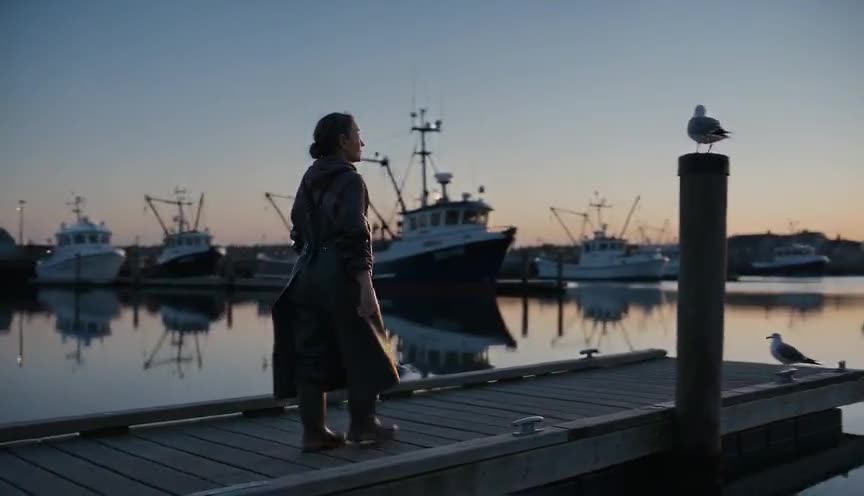
Lead room is the conventional choice, giving space in the direction a subject looks or moves so the shot feels balanced. Short siding is the deliberate opposite, removing that space to create discomfort instead of comfort.
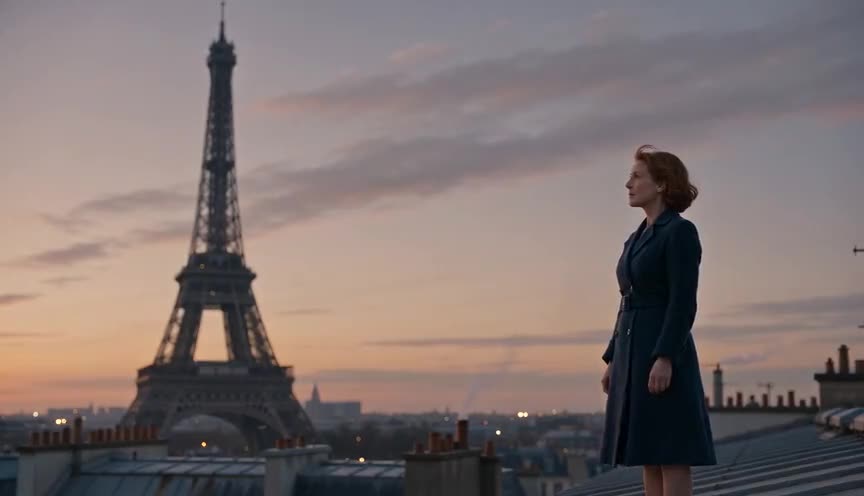
Rule of thirds is the general grid for placing subjects off-center in a balanced way. Short siding uses that same off-center placement but flips which side gets the space, turning a balanced convention into an unsettling one.
In film
Breaking Bad (2008)
Cinematographers on the series repeatedly short side characters losing power or control, crowding their gaze against the frame edge during confrontations.
The King's Speech (2010)
Tom Hooper and Danny Cohen repeatedly frame Bertie short-sided in therapy and palace scenes, making formal rooms feel hostile and psychologically constricting.
The prompt
Name the framing directly: describe the subject positioned near one edge of the frame with their gaze or body facing that same edge, and only a sliver of space in that direction compared to open space behind them. Keep the camera static or on a simple normal move so the imbalance is legible. Avoid describing a centered subject or generous space in the direction of the gaze, since that reads as ordinary lead room and cancels the effect.
The exact prompt that rendered the video on this page. Keep the description of the move, change the subject and the setting.
Short siding composition inside a dim recording studio behind a glass control room window. A sound engineer sits at a mixing console, framed tight against the left edge of the shot while facing left toward that same edge, only a narrow sliver of console and glass visible on that side, while empty studio space and a silhouetted vocal booth fill most of the frame behind him on the right. Camera is locked off on a tripod, static, normal 40mm perspective, soft overhead practicals and console LEDs providing the only light. No text.
Common mistakes
Confusing it with bad framing
Short siding must read as an intentional choice tied to the story, not as an accidental crop. Without contrast to a normal shot nearby, it can look like a mistake rather than a decision.
Applying it to every character
If everyone in a scene is short sided, the imbalance loses meaning. Save it for the character whose power or comfort you want the audience to doubt.
Pairing it with the wrong movement
A big camera move that keeps recentering the subject cancels the tension. Keep the camera static or restrained so the cramped space stays visible for the length of the shot.
Frequently asked questions
What is short siding?
Short siding is a composition technique where a subject faces or looks toward the narrow side of the frame instead of the open side, leaving little space to look into. It is the intentional reversal of standard lead room, used to create visual tension.
Why does short siding feel uncomfortable to viewers?
Audiences unconsciously expect open space in the direction a subject looks or moves. When that space is missing and piles up behind the subject instead, it reads as confinement or a loss of control, even if the viewer cannot name why.
Is short siding the opposite of lead room?
Yes. Lead room gives generous space in the direction of a subject's gaze or motion for a balanced, comfortable frame. Short siding removes that space on purpose, so the two are direct opposites used for opposite emotional effects.
How do I get short siding from an AI video model?
Describe the subject's position near one frame edge and state that they face or look toward that same edge, with little space there compared to the opposite side. On a tool like Imaginode, naming the imbalance explicitly, rather than just the subject and setting, is what makes the model render it correctly.