Negative space
Also calledEmpty space composition, Minimalist framing, Breathing room
Negative space is a composition technique that surrounds a small subject with a large area of empty, uncluttered background. It isolates the subject, directs the eye immediately, and often reads as loneliness, scale, or calm.
What it tells
Directors reach for negative space when the story needs room to breathe or when a character feels small against the world. A single figure against a blank wall, sky, or fog reads as isolation, vulnerability, or quiet resolve without a line of dialogue. Because the empty area carries no competing detail, the viewer's eye lands on the subject instantly and stays there. The technique also sets pace: a frame this spare slows the read of a scene, giving weight to stillness before action resumes.
How it is shot
Place the subject off to one side or low in the frame, leaving two thirds or more of the composition open: sky, wall, water, or shadow. A longer lens (50 to 135mm) compresses the background into a flat, unbroken plane, while a wide aperture (f/2.8 or wider) can blur any texture left in it. Light the empty area evenly and a shade darker or brighter than the subject so it stays inert; avoid props, people, or gradients that pull the eye away. On a locked-off or slow-moving camera, hold the frame for at least three to five seconds so the eye has time to register the emptiness before it settles on the subject.
When to use it
- A character feels isolated, small, or overwhelmed by their environment, physically or emotionally.
- You need a calm, contemplative beat between two busier, high-energy scenes.
- The story wants scale: a person against a vast sky, desert, or empty room.
- A single graphic element needs to read instantly on screen without visual clutter competing for attention.
Not to be confused with
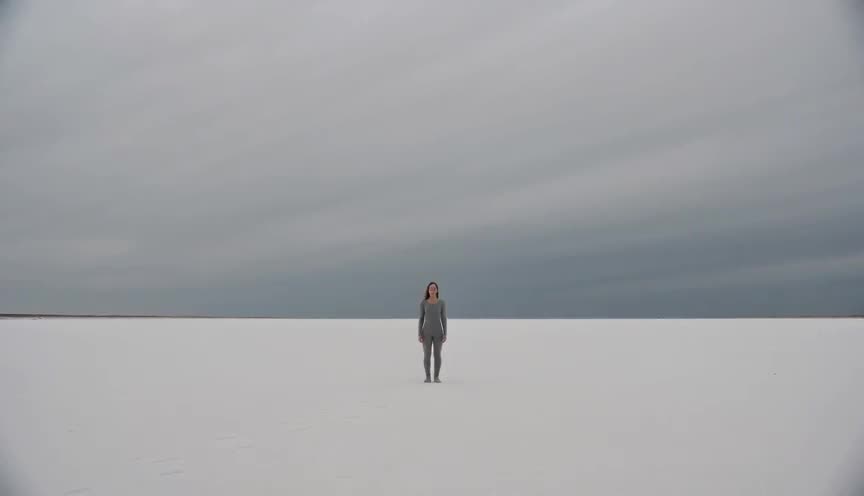
A clean frame simply removes clutter and distracting elements from a shot. Negative space goes further, using a large open area deliberately as an emotional and compositional device, not just tidiness.
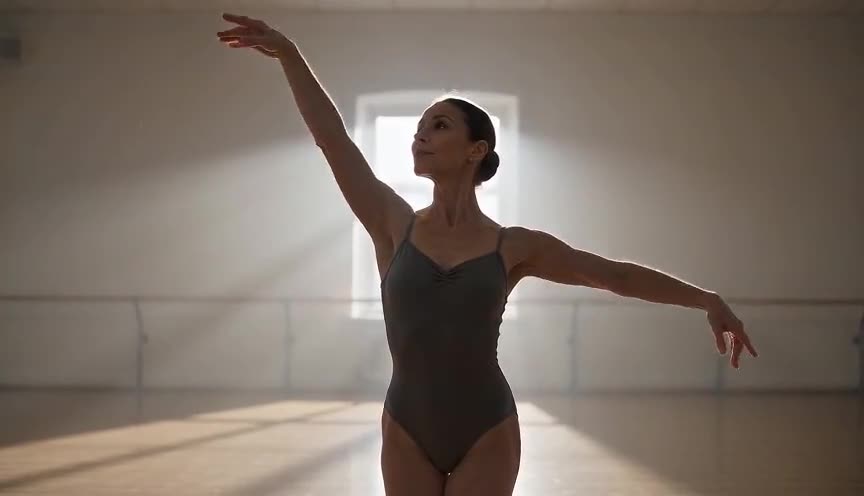
Figure-ground describes how the eye separates a subject from its background in any composition. Negative space is one specific way to build that separation, by making the ground large, empty, and visually inert.
In film
Lawrence of Arabia (1962)
Vast desert vistas dwarf the lone figure of Lawrence, using empty sand and sky to convey isolation and epic scale.
No Country for Old Men (2007)
Wide Texas landscapes leave characters as small marks against empty land, building dread and a sense of inevitability.
The prompt
Name the empty area explicitly (sky, wall, sand, water) and tell the model how much of the frame it should fill, since AI models default to centering and filling a shot with detail. Use words like uncluttered, off-center, small in frame, and specify that the background stays flat and empty for the full shot. Avoid adding secondary characters, props, or busy textures in your description, since even one extra detail will pull the model toward filling the empty space.
The exact prompt that rendered the video on this page. Keep the description of the move, change the subject and the setting.
Negative space: a wide static shot of an empty concrete skate park at sunset, one skater in dark silhouette rolling slowly across the bottom third of the frame while the top two thirds hold only a smooth gradient sky of orange and purple, no clouds, no other people, no signage. The camera does not move; only the skater drifts left to right at a steady, unhurried pace, staying small against the vast, uncluttered background for the full four seconds. No text.
Common mistakes
Cluttered background
Leaving props, people, or gradients in the empty area competes with the subject and cancels the effect. Keep the open space genuinely blank.
Subject too large
If the subject fills too much of the frame, the remaining background reads as ordinary space, not negative space. Keep it small and off-center.
No movement contrast
A frame with zero motion anywhere can feel dead rather than tense or isolated. Keep either the subject or the camera moving subtly to hold attention.
Frequently asked questions
What is negative space?
Negative space is a composition technique where a small subject is placed within a much larger area of empty, uncluttered background. It isolates the subject and directs the viewer's eye instantly, often reading as loneliness, scale, or calm.
How much of the frame should be empty for negative space to work?
There is no fixed rule, but most effective examples leave at least half, and often two thirds or more, of the frame empty. The exact ratio depends on how much isolation or scale the scene calls for.
Does negative space work in vertical or square video formats?
Yes, and it often works even better, since vertical frames naturally have more empty area above or below a standing subject. The principle stays the same: keep the subject small and the surrounding area clean.
Can AI video generators create negative space compositions?
Yes. Describe the empty area explicitly, state how small the subject should be, and avoid mentioning extra objects or people. Tools like Imaginode can render this composition reliably when the framing is spelled out clearly.