Headroom
Also calledHead room, Space above the head
Headroom is the amount of empty space left between the top of a subject's head and the top of the frame. Too much makes a person look small and adrift; too little crowds them and reads as cramped or about to be cut off.
What it tells
Headroom is a quiet signal to the eye about how a character relates to their space. A director tightens it to make a room feel oppressive or a character trapped, and opens it to make someone feel dwarfed, exposed, or alone. Because viewers rarely notice it consciously, it works underneath the story, shaping comfort or unease without a single line of dialogue.
How it is shot
The operator frames the subject so the eyes sit roughly in the upper third of the frame, leaving a margin above the head that scales with shot size: generous in a wide shot, minimal in a close-up. Too much space and the head sinks toward center, weakening the composition; too little and hair or a hat clips the frame line. On set this is adjusted by tilting the camera a few degrees, raising or lowering the tripod head, or having the subject step closer or farther from the lens. In post, reframing or a slight crop can correct headroom that was off during the shoot.
When to use it
- Framing a close-up where tight headroom should intensify pressure or urgency on the character
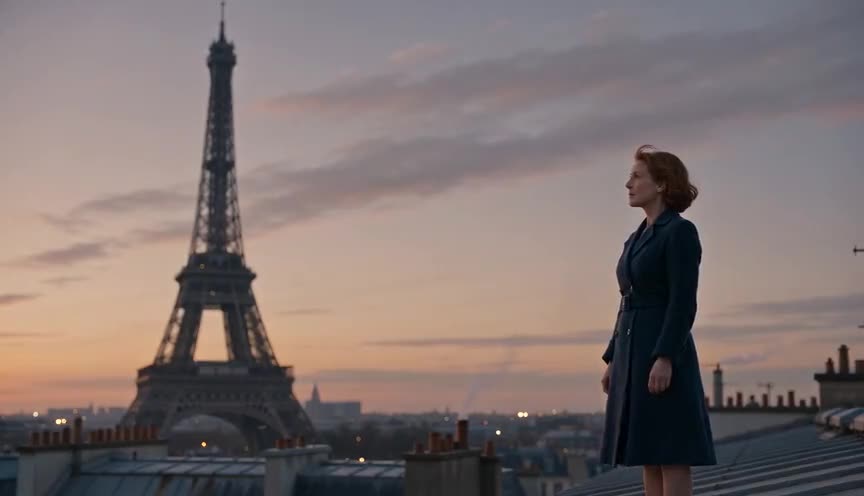
- Composing a wide establishing shot where generous headroom shows scale and isolation
- Standardizing interview or dialogue coverage so cuts between shots feel visually consistent
- Deliberately breaking the rule to make a character feel cramped, unstable, or about to lose control
Not to be confused with

Headroom manages vertical space above the head; lead room manages horizontal space in front of a moving or looking subject. Both are margin decisions, but on different axes of the frame.
Rule of thirds positions the whole subject within the frame grid. Headroom is a finer adjustment inside that placement, specifically how much sky or ceiling sits above the eyes.
In film
Citizen Kane (1941)
Gregg Toland's low-angle deep-focus compositions often include the ceiling, giving characters unusually generous headroom that makes rooms feel vast and looming.
The Shining (1980)
Kubrick's symmetrical corridor and hotel shots use wide, even headroom to stretch the space around characters and heighten their isolation.
The prompt
Name the shot size and state the headroom explicitly, for example 'tight headroom, hair nearly touching the top of frame' or 'generous headroom, subject small beneath a tall ceiling.' Models respond better to a concrete fraction of frame (a hand's width above the head) than to the word alone. Avoid vague terms like 'good composition'; also avoid asking for headroom and a moving crop in the same shot, since reframing during a take will undo the effect you set up.
The exact prompt that rendered the video on this page. Keep the description of the move, change the subject and the setting.
Headroom shot in a neon arcade at night: a static medium close-up on a woman in her thirties leaning over a pinball machine, magenta and cyan neon light washing across her face. The camera is locked off, framed so only a thin sliver of space sits above her head, the top of the arcade cabinet's marquee lights barely visible at the very edge of frame. She stays focused on the game, glancing up once as the machine's lights flicker, her posture and the tight framing making the space feel small and pressing. No camera movement, no cuts. No text.
Common mistakes
Floating head
Leaving too much space above the head makes the subject look adrift in the frame, especially in close-ups where the face should anchor the composition.
Clipped hair or hat
Framing too tight cuts into hair, hats, or headgear, which reads as a mistake rather than a deliberate choice unless the tension is intentional.
Inconsistent headroom across cuts
Changing headroom between matching shots in a scene, like reverse angles in a conversation, creates a visual jump that distracts from continuity.
Frequently asked questions
What is headroom in film composition?
It is the gap left between the top of a subject's head and the top edge of the frame. Cinematographers adjust it by shot size to keep the composition balanced and to control how connected or exposed a character feels.
How much headroom is correct?
There is no fixed number; it scales with shot size. A wide shot can carry a lot of space above the head, while a close-up needs very little, often just enough to avoid clipping hair.
Why do some shots use almost no headroom on purpose?
Cutting headroom down tight can make a character feel boxed in, watched, or under pressure, which is why directors use it in scenes of confrontation or panic.
Can AI video tools control headroom accurately?
Yes, tools like those on Imaginode respond well when you describe headroom explicitly, such as a thin margin above the head or a large gap beneath a tall ceiling, rather than leaving the framing implied.