Centered composition
Also calledDead-center framing, Center framing, Symmetrical centering
Centered composition places the main subject on the vertical (and often horizontal) center line of the frame instead of at a third. It reads as formal, still, and direct, pulling the eye straight to the subject with no competing pull to either side.
What it tells
Directors reach for the center when they want the frame to feel deliberate rather than casual, almost like a portrait or a tableau. It can signal control, isolation, ritual, or confrontation, since a centered figure faces the audience without the visual escape route a corner or a third gives. Wes Anderson uses it for wit and order, Kubrick for dread. The technique tells the viewer: look here, nowhere else, and take your time doing it.
How it is shot
Lock the camera on a tripod or use a static setup so the frame does not drift off axis. Align the subject's vertical axis with the frame's center line, checking through a grid overlay or center-cross viewfinder marking. Background elements are often mirrored or evenly distributed left and right to reinforce the symmetry. A normal to slightly wide lens (35mm to 50mm) keeps geometry honest, since wide lenses distort edges and can throw off the balance. Headroom is kept even and consistent, and any camera move, if used at all, tends to be a slow, perfectly centered push rather than a pan.
When to use it
- Introducing a character you want to feel isolated, powerful, or under scrutiny
- Filming ritual, ceremony, or repetitive action that benefits from formal stillness
- Shooting symmetrical architecture or landscapes where the subject anchors the frame
- Building unease before a reveal, since a centered subject feels exposed and watched
Not to be confused with
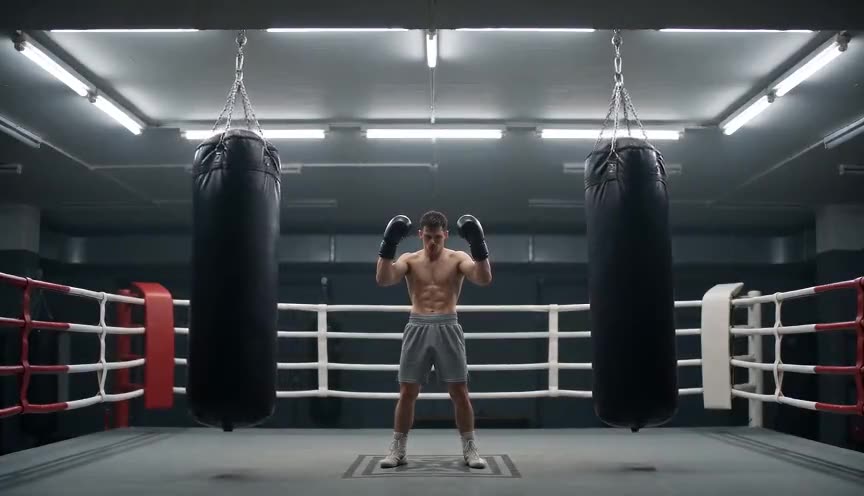
Symmetry is about mirrored elements on both sides of the frame; centered composition is about subject placement. A shot can be centered without being symmetrical, or symmetrical with the subject off to one side.
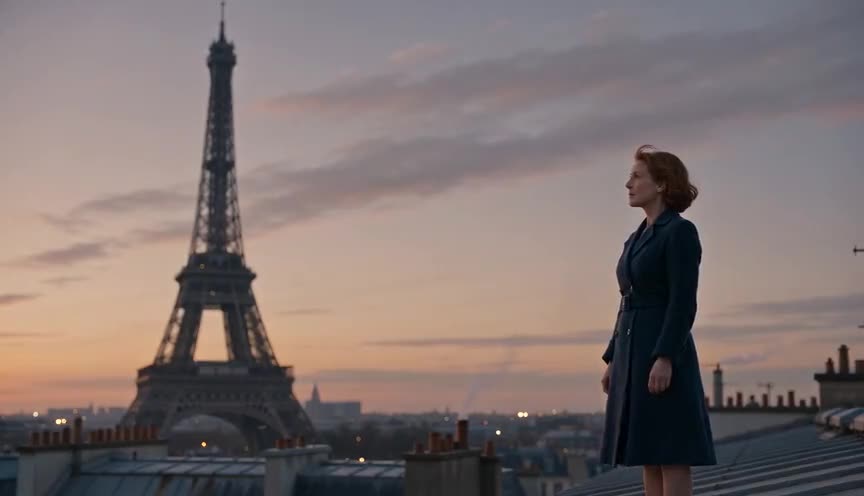
Rule of thirds spreads visual weight toward the edges for a natural, dynamic feel. Centered composition does the opposite, concentrating attention in the middle for a formal, static, confrontational effect.
In film
The Shining (1980)
Kubrick centers characters and hallways repeatedly to create a rigid, unsettling sense of symmetry and dread throughout the film.
The Grand Budapest Hotel (2014)
Wes Anderson uses dead-center framing as a signature device, giving nearly every shot a storybook, diorama-like formality.
The prompt
Say the subject sits exactly in the middle of the frame and describe a locked-off or perfectly straight-on camera so the model does not drift toward a rule-of-thirds default. Mention symmetry of the background if you want it reinforced, and specify a static shot or a slow, centered push rather than a pan, since lateral movement fights the composition. Avoid vague words like balanced; name the center line directly.
The exact prompt that rendered the video on this page. Keep the description of the move, change the subject and the setting.
Centered composition: a static locked-off wide shot of a woman in her thirties standing perfectly in the middle of a golden sunflower field that stretches evenly to both edges of the frame, her body aligned exactly on the vertical center line. The camera does not move at all for the full four seconds. Sunflowers sway gently in a light breeze on both sides, symmetrical in density and height, while she stands still, facing the lens directly under soft midday sun. No text.
Common mistakes
Letting the subject drift off axis
Even a few degrees of camera tilt or a subject stepping sideways breaks the centering and the shot reads as a sloppy rule-of-thirds attempt instead.
Overusing it in every scene
Centered framing loses its formal weight if applied to every shot; it works because it interrupts the more common thirds-based grammar around it.
Pairing it with a busy handheld camera
Centering signals control and stillness, so shaky or wandering camera work undercuts the effect; keep the camera locked or moving on a straight, centered axis.
Frequently asked questions
What is centered composition?
It is a framing choice that puts the main subject on the frame's vertical center line rather than at a third. It creates a formal, still, and often confrontational feel by directing all attention to one fixed point.
Why do directors like Wes Anderson use centered framing so much?
Centering gives shots a controlled, storybook quality and makes visual jokes or details easier to read at a glance, since nothing competes with the middle of the frame for attention.
Does centered composition break the rule of thirds?
Yes, it deliberately places the subject where the rule of thirds says not to. Filmmakers use it as a conscious exception to create formality, symmetry, or unease rather than natural balance.
How do I get centered composition from an AI video model like the ones on Imaginode?
Describe the subject as sitting exactly on the center line, ask for a static or straight-on locked camera, and mention symmetrical surroundings if you want the effect reinforced further.