Triangular composition
Also calledTriangle composition, Pyramid composition, Compositional triangle
Triangular composition arranges the key elements of a frame so their outlines suggest a triangle, usually with a wide stable base and a narrower apex. It gives the image a sense of balance, stability and quiet order, guiding the eye upward through the scene.
What it tells
Directors reach for triangular composition when they want a scene to feel settled even amid tension: three characters negotiating a deal, a family gathered at a table, a hero flanked by allies. The wide base reads as grounded and trustworthy, while the apex draws attention to whoever or whatever sits above the group, often a leader or a key object. Because triangles are among the most stable shapes the eye recognizes, the arrangement quietly reassures the viewer that the world of the scene, however fraught, has structure and hierarchy worth watching closely.
How it is shot
On set, the technique starts with blocking: three actors, or an actor plus two set pieces, are placed so their heads or key points form a triangle when connected by imaginary lines, wide at the bottom of the frame and narrow at the top. A locked-off or slow-moving camera on a 35mm or 50mm lens keeps the geometry legible without distortion. Lighting often reinforces the shape, a key light brightening the apex figure while fill keeps the base figures readable. Depth of field is usually moderate to deep so all three points stay in reasonably sharp focus. Eyelines and props, a raised hand, a lamp, an object on a table, can substitute for a person at the apex.
When to use it
- Staging a negotiation or conflict between three characters where hierarchy or alliance needs to read instantly.
- Grounding a family or group scene that needs to feel stable despite emotional tension underneath.
- Directing attention to one important object or face rising above two supporting figures in frame.
- Composing a wide establishing shot with foreground, midground and background elements that need visual order.
Not to be confused with
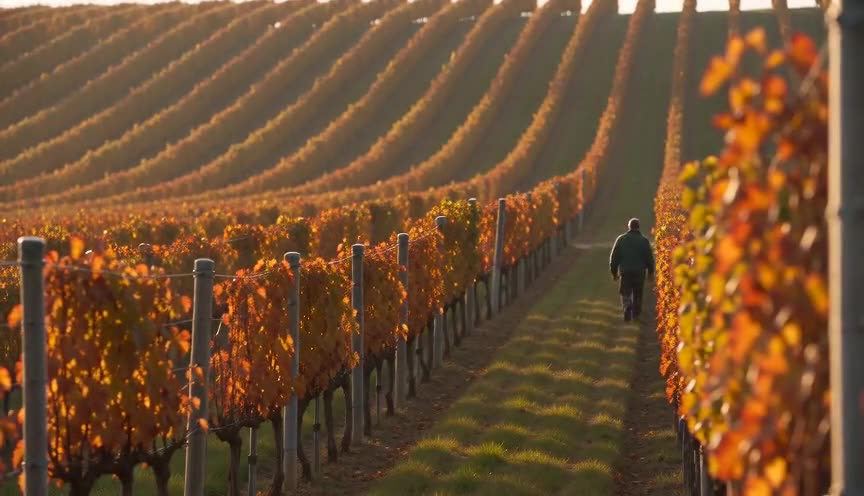
Diagonal composition uses a single slanted line to create energy and imbalance, while triangular composition uses three points to create stability. Diagonals feel dynamic and unresolved, triangles feel settled and resolved.

Symmetry mirrors a frame around a central axis for formal, often eerie balance. Triangular composition can be asymmetrical yet still feel stable because the eye reads the implied triangle shape rather than a mirrored split.
In film
Barry Lyndon (1975)
Kubrick and cinematographer John Alcott frequently arrange figures and candlelight into painterly triangles echoing 18th century portraiture.
The Godfather (1972)
Coppola often groups three family members in a stable pyramid to visualize loyalty and hierarchy within the crime family.
The prompt
Name the three anchor points explicitly (two figures or objects at the base, one higher element at the apex) so the model has clear geometry to follow instead of a vague group. Mention frame width, depth layers and a light source that favors the apex, since AI models render composition more reliably when light and blocking are described together. Avoid asking for more than three focal points, and avoid centering everything, which flattens the triangle into a static portrait.
The exact prompt that rendered the video on this page. Keep the description of the move, change the subject and the setting.
Triangular composition: a static locked-off wide shot inside a sunlit pottery workshop shows three points of visual weight forming a triangle, a seated potter at the wheel at the base left, a standing apprentice holding raised clay at the base right, and a hanging pendant lamp glowing above between them forming the apex. Warm side light from a large window rakes across shelves of finished pots in the foreground and background, deepening the sense of depth. The camera does not move, only the potter's hands slowly shape the clay and dust drifts through the light, keeping the eye moving along the triangle's edges. No text.
Common mistakes
Flat triangle
Placing all three points on the same plane with no depth difference turns the shape into a flat line the eye skims past instead of a pyramid it can climb.
Apex overload
Loading the top point with too much detail, color or motion makes the triangle top heavy and unstable, defeating the calm the shape is meant to create.
No reinforcement
Relying on blocking alone without light, color or focus to echo the triangle lets a busy background erase the shape entirely, so the composition reads as random.
Frequently asked questions
What is triangular composition?
It is a way of arranging people or objects in a frame so their outlines form a triangle, typically a wide, stable base with a narrower point rising above it. The shape reads to the eye as balanced and orderly, even in a busy or emotional scene.
Why do triangles feel stable in a frame?
The human eye recognizes a triangle as a self-supporting shape, wide at the bottom and narrowing upward, similar to how we read a stable structure in real life. That built-in association makes triangular arrangements feel grounded rather than random.
Can triangular composition work with only two people?
Yes. A prop, a light fixture, a shadow or even a raised hand can serve as the third point of the triangle, so two actors plus one strong visual element is enough to complete the shape.
How do I get an AI video model to compose a shot in a triangle?
Describe the three anchor points by position (left base, right base, top apex) and give each one a light or size cue, then keep the camera static so the model has one clear frame to solve. On Imaginode, naming the geometry directly works better than asking for 'balanced composition' alone.