Cross-cutting
Also calledParallel editing, Parallel cutting, Intercutting
Cross-cutting is an editing technique that alternates between two or more separate lines of action, usually happening in different places, to imply they are occurring at the same time. It builds suspense or reveals connection by forcing the viewer to hold multiple storylines in mind at once.
What it tells
Cross-cutting lets a director braid two stories into one emotional current. By intercutting a rescue with the danger it is racing against, or a celebration with the violence it conceals, the technique compresses time and space so the audience feels the clock ticking in both places at once. It manufactures suspense without dialogue, forces comparison between characters who never meet on screen, and can turn a simple sequence of parallel actions into a statement about fate, hypocrisy or urgency. Directors reach for it whenever the meaning lives in the gap between two scenes rather than inside either one.
How it is shot
In the edit, an editor alternates footage from two or more scenes shot separately, often on different days or sets, cutting back and forth on a rhythm that starts at 3 to 8 seconds per shot and tightens as the sequence builds, sometimes down to single-second cuts near the climax. Each scene keeps its own continuity of action, light and sound so the audience can track it instantly, which means matching lens choice and color temperature within each line even though the two never share a frame. Editors often shorten each successive segment and time the final cut to land on a shared beat (a gunshot, a bell, a look) so the two lines collide at the exact instant the story needs them to.
When to use it
- Use when two events must feel simultaneous, like a rescue racing against a countdown elsewhere.
- Use to compare two characters' choices, showing hypocrisy or contrast without them ever meeting on screen.
- Use to build suspense before a reveal, alternating a hidden threat with characters unaware of it.
- Use in a heist or chase to track separate team members executing a plan at the same time.
Not to be confused with
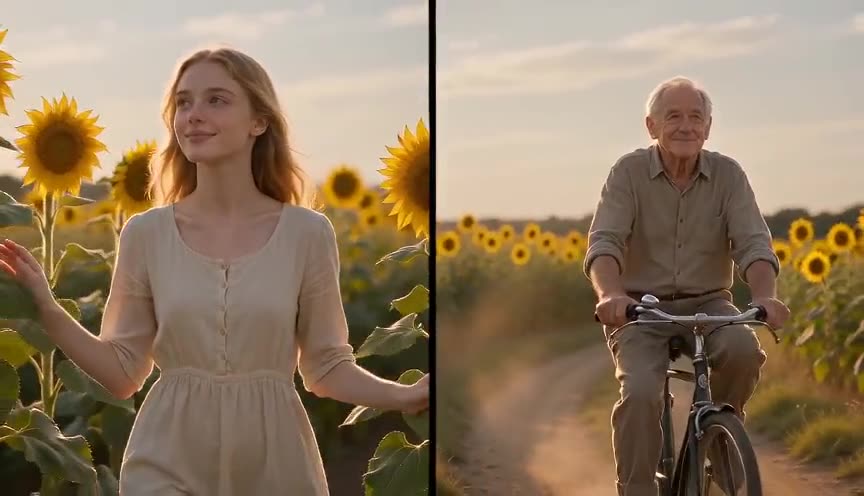
Split-screen shows both lines of action in the frame at once, side by side; cross-cutting keeps them sequential, one full shot after another, so the tension comes from the cut itself, not simultaneous visibility.
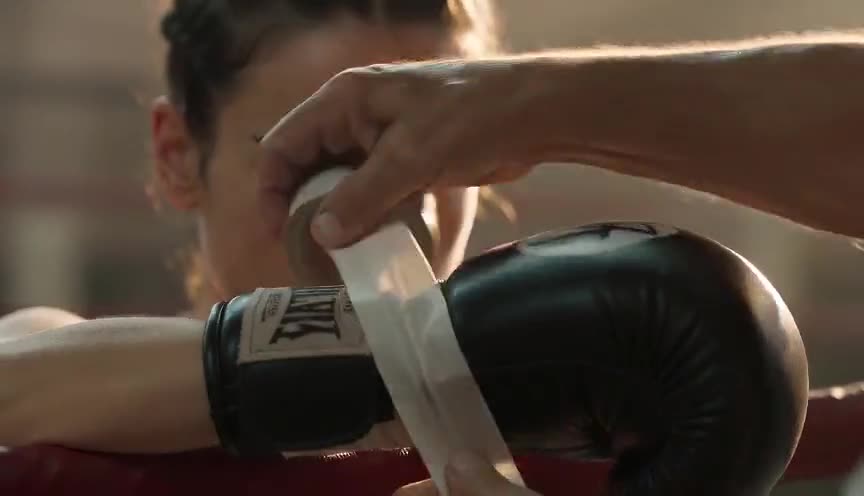
A montage-sequence compresses time to show progress or change across many short shots; cross-cutting instead alternates between two ongoing, roughly real-time actions to imply they happen at once, not to summarize a passage of time.
In film
The Godfather (1972)
Alternates a baptism ceremony with a sequence of murders being carried out simultaneously, building one of cinema's most studied cross-cut sequences.
The Silence of the Lambs (1991)
Cuts between an FBI raid on the wrong house and the killer's actual location, misdirecting the audience through parallel action.
Intolerance (1916)
D.W. Griffith's climax cross-cuts a last-minute rescue across four historical eras, an early and foundational use of the technique.
The prompt
Because AI video models render one continuous clip, describe cross-cutting as an explicit edit: name two distinct actions, state that the shot cuts between them, and give a cadence (every one or two seconds, speeding up). Keep each side visually distinct, different framing, light or color, so the alternation reads instantly even in four seconds. Avoid vague words like 'intercut moments'; instead specify the two subjects, their static camera setup and the number of cuts. Most models render two or three alternations well; asking for more inside a short clip tends to blur into a montage instead.
The exact prompt that rendered the video on this page. Keep the description of the move, change the subject and the setting.
Cross-cutting between two actions inside a busy ramen kitchen: a static medium close-up on a woman's hands slicing scallions fast under harsh fluorescent light, then a hard cut to a static medium close-up on a man's hands plunging noodles into a rolling, steaming pot at the next station. The shot alternates between these two fixed setups four times, roughly every one second, each cut landing on the same clanging rhythm of pans and shouted orders, camera never moving within either shot, until the sequence lands on the woman's hands lifting the scallions the instant the noodles hit the broth. No text.
Common mistakes
Cutting too slowly
If the alternation stays at the same lazy pace throughout, the sequence feels like two separate scenes shown back to back instead of one building tension.
No visual distinction between lines
If both actions share the same framing, light and color, viewers lose track of which line they are watching and the cross-cut reads as a jump cut instead.
Missing the payoff beat
Cross-cutting needs the two lines to converge on a shared moment, a sound, a look, a collision; without that beat the alternation feels arbitrary and the tension never resolves.
Frequently asked questions
What is cross-cutting?
Cross-cutting is an editing technique that alternates between two or more scenes, usually happening in different places, to suggest they occur at the same time. It is a core tool for building suspense or drawing a comparison between separate lines of action.
What is the difference between cross-cutting and parallel editing?
They are the same technique; 'parallel editing' is the broader term and 'cross-cutting' is what most editors call it when the alternation is used specifically to build suspense between simultaneous events.
Who invented cross-cutting?
D.W. Griffith is usually credited with developing cross-cutting into a suspense tool in films like Intolerance (1916), though early editors were already experimenting with alternating shots before him.
Can an AI video generator create a cross-cut sequence?
A single AI clip usually renders one continuous shot, so cross-cutting has to be built either by describing the alternation explicitly in the prompt or by generating separate shots and cutting them together afterward, as on a canvas like Imaginode.