Split screen
Also calledMulti-screen, Screen division, Split-frame
Split screen is an editing technique that divides the frame into two or more separate images displayed at the same time, each usually coming from a different camera or shot. It lets the viewer see parallel actions, locations or points of view simultaneously, without waiting for a cut.
What it tells
Directors reach for split screen when two things matter equally at the same moment: a phone call heard by both sides, two lives running on a collision course, or a single character fractured into competing impulses. It compresses time by removing the need to cut back and forth, and it makes the audience do active comparison work, reading two images at once. The device signals that simultaneity itself is the point, not sequence.
How it is shot
In production, each half of the frame is shot separately, often with matching lens focal length and light direction so the composite reads as one coherent world. Frame lines are marked on set (tape, string, or a physical divider in front of the lens for old-school in-camera splits) so both halves compose cleanly against the dividing edge. Today most split screens are built in post: two or more clips are masked, keyed to a hard or feathered edge, and placed on separate layers with matched color grading. Editors time the cuts within each half independently, and often nudge one side a frame or two so movements do not feel synchronized by accident.
When to use it
- Two characters on a call need to share reactions in the same instant.
- Parallel storylines are converging and the audience must feel the countdown.
- A montage compares repeated actions across different people or places at once.
- A character's inner conflict needs to be shown as two visible, opposing states.
Not to be confused with
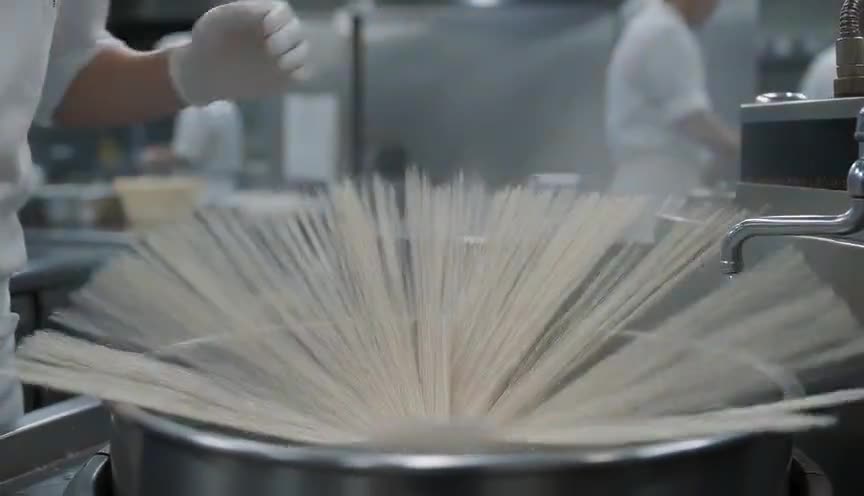
Cross-cutting alternates between two scenes with cuts, implying simultaneity through rhythm. Split screen shows both scenes in the same frame at literally the same time, so the viewer compares them directly instead of inferring the timing.
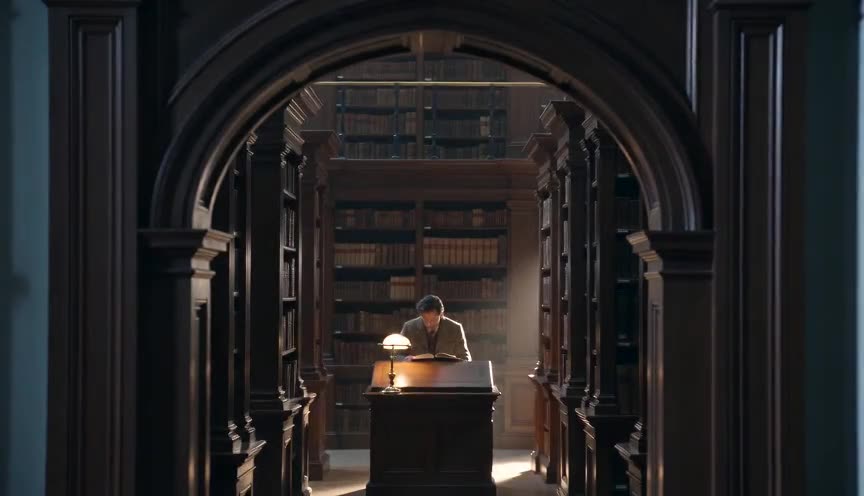
Frame within a frame uses a single continuous shot where an object (a window, a doorway) naturally encloses part of the image. Split screen is a constructed composite of separate shots joined by a hard visible dividing line.
In film
The Thomas Crown Affair (1968)
Uses grids of split-screen panels to compress a heist into overlapping simultaneous glimpses, a defining use of the technique in mainstream cinema.
Requiem for a Dream (2000)
Splits the frame to show two characters in the same bed emotionally and physically separated, using the divide to visualize isolation.
The prompt
Name the technique directly and describe the dividing line as a physical, static object in the frame (a hard vertical or horizontal edge, no gradient). Describe each half as its own shot with its own lens, subject and camera behavior, and state clearly that both halves move independently and simultaneously. Avoid vague language like 'split screen effect' alone; models render it more reliably when you specify the line's orientation and describe concrete, contrasting motion on each side.
The exact prompt that rendered the video on this page. Keep the description of the move, change the subject and the setting.
Split screen: a single frame divided by a sharp vertical line down the center, no gradient, no shadow. On the left half, a young woman in a linen dress walks steadily through a golden sunflower field, shot with a 35mm lens, her hand brushing the tall stalks. On the right half, an older man on a bicycle rides along a dirt path at the edge of the same field, shot with a 50mm lens, dust rising behind his wheels. Both actions run at the same natural speed under warm late afternoon light, and the dividing line stays perfectly still while each half moves independently. No text.
Common mistakes
Mismatched light or color between halves
If one side is warm and soft while the other is cool and hard, the composite looks like two unrelated clips glued together instead of one intentional frame.
No reason for the split
Using split screen purely for style, with no comparison, tension or simultaneity to justify it, reads as a gimmick and distracts from the story.
Both halves moving identically
When the timing of both sides syncs perfectly by accident, the eye reads it as an error rather than a deliberate parallel, so offset the action slightly.
Frequently asked questions
What is split screen in film?
Split screen is an editing technique that shows two or more images in the same frame at the same time, usually divided by a visible line. It is used to display parallel actions, phone conversations or contrasting perspectives without cutting between them.
How do editors line up the two sides of a split screen?
They plan the frame division during shooting, matching camera height, lens and light direction on both sides, then mask and composite the clips in post-production so the dividing edge sits cleanly between the two images.
Is split screen the same as picture in picture?
No. Picture in picture places a small secondary image over a dominant main image, while split screen gives each section equal visual weight, dividing the full frame rather than layering one image on top of another.
Can AI video tools generate a convincing split screen?
Yes, if you describe the dividing line explicitly and give each half its own subject, lens and motion. Tools like Imaginode render split screen well when the prompt states clearly that both halves move independently and simultaneously.