Montage sequence
Also calledTraining montage, Passage-of-time montage
A montage sequence compresses time by cutting together a series of short shots, often set to music, to show progress, change or transformation in a condensed span. It lets the viewer feel days, weeks or months pass in a matter of seconds.
What it tells
Directors reach for a montage when real-time storytelling would bore the audience but the passage or accumulation still matters emotionally. It turns repetitive, unglamorous effort (training, rebuilding, traveling, falling in love) into a compact, energizing beat that pushes the story forward. The rapid rhythm itself carries feeling: hope, urgency, exhaustion or joy, letting music and cutting do work that dialogue and long scenes cannot do as efficiently.
How it is shot
An editor assembles 6 to 15 short shots, most lasting 1 to 3 seconds, drawn from different moments and sometimes different locations, then cuts them together on straight cuts or dissolves. The sequence is usually scored first, or cut to a temp track, so cut points land on beats or accents to create rhythm. Shot sizes and angles vary deliberately (wide, close-up, insert, overhead) to avoid visual monotony, while a consistent color grade, costume or prop ties the fragments into one continuous idea. Calendar pages, clocks or light changes are common inserts to signal elapsed time.
When to use it
- To show a character's training or skill progress over weeks without filming every session
- To compress a journey, a build, or a physical transformation into a few seconds
- To build rising energy before a climax using rhythmic, music-driven cutting
- To cover a repetitive process, like packing, traveling, or rehearsing, that would be tedious in real time
Not to be confused with
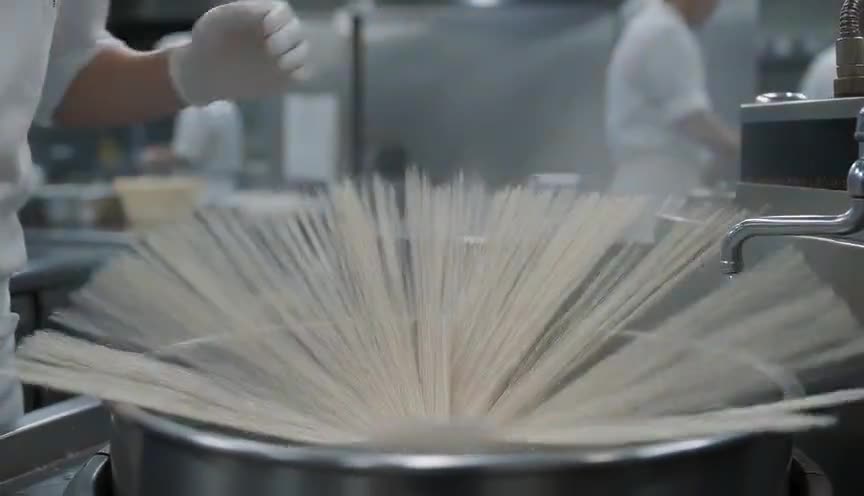
Cross-cutting alternates between two parallel storylines happening at the same time to build suspense. Montage compresses one storyline across time; cross-cutting expands tension within a single, continuous moment.
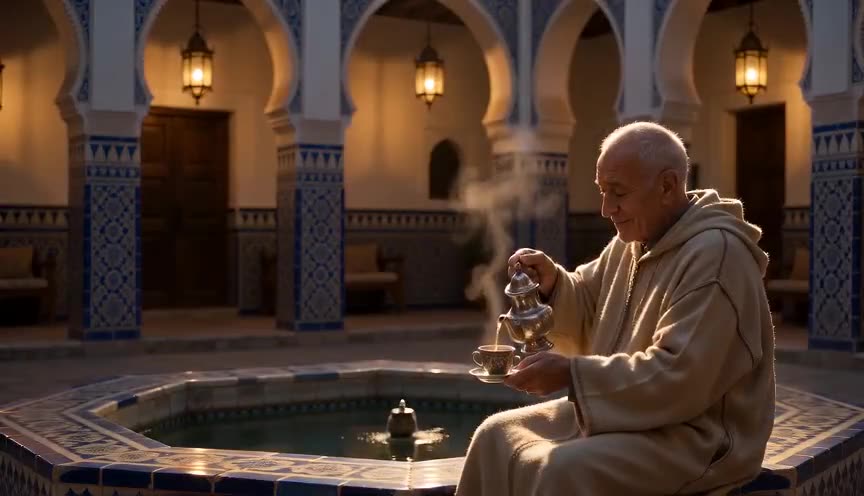
A dissolve is one transition between two shots. A montage sequence is the larger structure, often built from many cuts and sometimes dissolves, strung together to compress time across a whole scene.
In film
Rocky (1976)
The training runs and gym drills are cut to music, compressing weeks of preparation into a few energizing minutes.
Mulan (1998)
The military training sequence intercuts drills, failures and improvements set to a driving song to show rapid skill growth.
Rocky IV (1985)
A cross-cut training montage in the snow and in a gym became one of the most imitated examples of the technique.
The prompt
Describe two or three distinct shots in the same location, each with a clear action, size and camera behavior, and state that they are joined by quick straight cuts at a specific rhythm (for example every one to two seconds). Keep lighting, wardrobe and set consistent across the shots so the model reads them as one continuous idea rather than unrelated scenes. Avoid vague words like 'montage' alone; name the shots, the cut pace and the visual thread that ties them.
The exact prompt that rendered the video on this page. Keep the description of the move, change the subject and the setting.
Montage sequence in a worn boxing gym: shot one is a wide shot of a middle-aged man skipping rope under hanging bulbs, shot two is a close-up of a young woman's gloved hands being taped by a trainer, shot three is a medium shot of an older man driving punches into a heavy bag, dust drifting in warm tungsten light. The three shots are joined by quick straight cuts roughly every one and a half seconds, same gym, same warm color palette, slight handheld sway on each shot, consistent rhythm throughout. No text.
Common mistakes
No unifying thread
Shots that vary wildly in location, light or color read as disconnected clips rather than one compressed idea. Keep a visual anchor (place, costume, prop or grade) across the sequence.
Cutting too slow or too even
A montage with no rhythmic variation feels flat. Vary shot length slightly and let the pace build or release, ideally driven by a music track.
Too many similar shot sizes
Repeating the same framing (all medium shots, all close-ups) makes the sequence monotonous. Mix wide, medium, close-up and insert shots to keep the eye engaged.
Frequently asked questions
What is a montage sequence?
It is a series of short shots edited together, usually to music, to compress time and show progress, change or a passage of days, weeks or months in a condensed span. It is one of editing's most direct tools for skipping repetitive real time.
Why do training scenes always use a montage?
Training itself is repetitive and slow in real life. A montage lets filmmakers show the key beats of improvement (early struggle, small wins, final readiness) in under two minutes instead of filming and showing every session.
Does a montage sequence need music?
Not strictly, but most montages are cut to music because the beat gives the cuts a natural rhythm and carries emotion that dialogue-free footage alone cannot. Silent montages rely more heavily on visual rhythm and pacing.
Can an AI video tool generate a full montage sequence?
Most AI video models render one continuous clip per generation, so a full multi-scene montage is usually assembled by generating separate short shots and editing them together afterward. On a canvas like Imaginode you can generate each shot separately, then cut them into a sequence.