Fade in and fade out
Also calledFade to black, Fade up from black, Fade to white
A fade in gradually brings an image up from a black (or white) screen at the start of a scene, while a fade out gradually dims an image down to black at its end. Both give the viewer a clear pause, signaling that time has passed or that a section of the story is fully closed.
What it tells
Fades act like punctuation marks: a period, not a comma. Directors use them to close a chapter before opening another, to soften a hard emotional beat, or to let an audience exhale after tension. A fade to black can feel like sleep, death, or forgetting; a fade up can feel like waking, arriving, or remembering. Because the technique slows the rhythm, it is used sparingly, reserved for real turning points rather than routine scene changes.
How it is shot
In the edit, a fade is a dissolve against a solid color, usually black, built as an opacity keyframe over 12 to 48 frames (roughly half a second to two seconds at 24 fps), sometimes longer for a somber ending. Editors match sound to picture, fading the audio mix in parallel so silence and darkness arrive together. On film cameras, fades were once done optically with an iris diaphragm or by exposing black leader; today they are timeline effects in software like Premiere, Resolve or Avid. The shot itself is usually static or slow, since motion competing with a fade reads as messy.
When to use it
- Opening or closing a film, chapter, or standalone sequence with clear finality
- Signaling a large, unspecified jump in time between two scenes
- Giving the audience a breath after an intense emotional or violent scene
- Ending a dream, memory, or flashback before returning to the present
Not to be confused with

A dissolve blends two live scenes directly into each other; a fade always passes through a solid color, usually black, which reads as a firmer stop rather than a soft link between two moments.
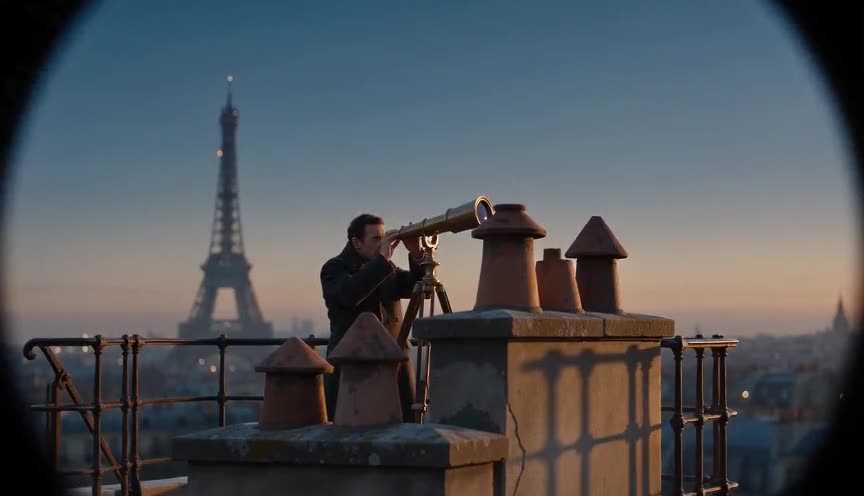
An iris transition closes the image to a shrinking circle before cutting to black, a more theatrical, dated device; a fade darkens the whole frame evenly and feels neutral and modern by comparison.
In film
The Godfather (1972)
Opens with a famously slow fade up from black on Bonasera's face, establishing the dark, enclosed tone of the wedding sequence.
Citizen Kane (1941)
Opens its Xanadu prologue by fading in on the No Trespassing sign, launching a sequence of dissolves and fades.
The prompt
Name the fade explicitly and say which color it fades from or to, almost always black. State that the frame starts or ends as a solid black screen and describe the brightening or dimming as gradual and even across the whole image, not a wipe or dissolve into another scene. Keep the camera static so the fade reads clearly, and avoid words like cut or transition to that could push the model toward a hard edit instead.
The exact prompt that rendered the video on this page. Keep the description of the move, change the subject and the setting.
Fade in and fade out: the frame begins as a solid black screen, then over about one second the image gradually brightens into a locked-off wide shot of a rainforest river, sunlight filtering through a dense green canopy onto slow brown water with a wooden canoe drifting near the bank. The camera never moves, holding the scene steady for two seconds while light shimmers on the current. In the final second the entire image evenly dims back to solid black, ending the shot in complete darkness. No text.
Common mistakes
Fading too fast
A fade under half a second reads as a flicker or a mistake rather than a deliberate transition; give it enough time, usually one to two seconds, to feel intentional.
Inconsistent duration across scenes
Mixing very short and very long fades in the same film breaks rhythm and makes the technique feel accidental instead of a designed piece of editing grammar.
Forgetting the audio fade
Letting the sound cut off abruptly while the picture fades gently creates a jarring mismatch; audio should dim in step with the image for the effect to feel complete.
Frequently asked questions
What is a fade in and fade out?
It is a transition where an image gradually appears from a black screen (fade in) or gradually disappears into a black screen (fade out), used to open, close, or separate sections of a film with a clear sense of finality.
How long should a fade last?
Most fades run between half a second and two seconds; shorter feels like a glitch, longer starts to feel like a deliberate, slow ending reserved for a film's final shot or a major closing chapter.
What is the difference between a fade and a dissolve?
A fade always passes through a solid color, usually black, before or after the image; a dissolve blends two live shots directly into each other without ever going fully dark, making it feel softer and more connective.
Can AI video tools generate a fade in and fade out?
Yes, describing a black starting or ending frame with a gradual, even brightening or dimming works well in tools like those on Imaginode, since the model only needs to render a simple, static brightness change over a few seconds.