Dissolve
Also calledCross dissolve, Crossfade, Lap dissolve
A dissolve is an editing transition where one shot gradually fades out while the next shot fades in, overlapping both images for a moment before the second one takes over. It softens the cut into a blend, telling the viewer that time has passed or that the two images are connected in meaning.
What it tells
Directors reach for a dissolve when a hard cut would feel too abrupt for what the story needs to say. It carries the audience through weeks, years or a shift in thought without announcing itself, and it can visually rhyme two images (a face and a landscape, a young hand and an old one) so the viewer feels the connection before they consciously notice it. It reads as gentle, reflective, even nostalgic.
How it is shot
In post-production, the outgoing clip's opacity ramps from 100 to 0 while the incoming clip ramps from 0 to 100 over the same window, usually 12 to 48 frames at 24fps (0.5 to 2 seconds), sometimes much longer for a slow dissolve used to suggest a dream or memory. Traditionally this was done optically in the lab with a double exposure; today it is a crossfade effect applied to two overlapping clips on the timeline, often with an eased rather than linear curve. The trick that separates a good dissolve from a muddy one is composition: matching camera height, similar framing and comparable tonal values in both shots make the blend legible instead of a smear.
When to use it
- Show days, seasons or years passing without a scene break or title card
- Connect two images thematically, like a character's face and their memory
- Soften a transition into a dream, flashback or hallucination sequence
- Move between locations in a montage where a hard cut would feel too fast
Not to be confused with

A fade goes between an image and a solid color (usually black), marking a full stop or a beginning. A dissolve goes directly between two shots, keeping the story moving without a blackout.
A match cut is an instant, single-frame cut where two shots share shape or motion. A dissolve stretches that same kind of visual rhyme over a second or two of overlap instead of a hard edit.
In film
Citizen Kane (1941)
Dissolves link the breakfast table vignettes into a montage, showing years of Kane and Emily's marriage deteriorating as their seating and attitudes change.
Apocalypse Now (1979)
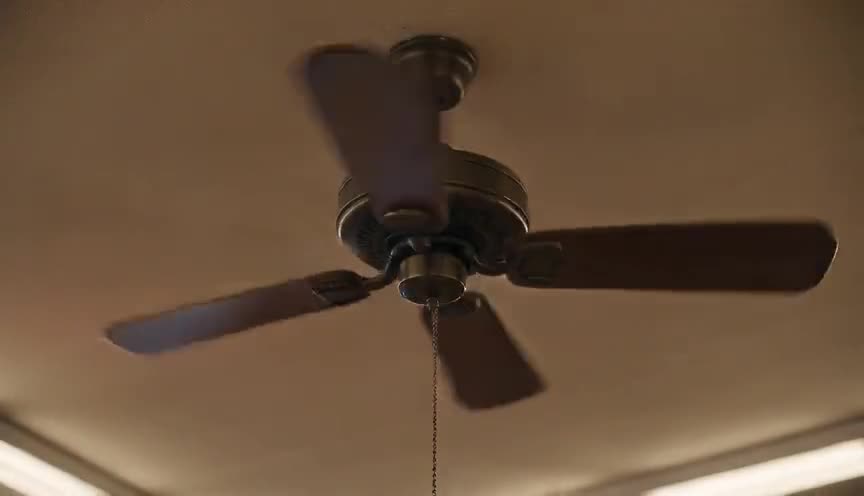
The opening dissolves a spinning ceiling fan into helicopter rotor blades, blending the character's mental state with the jungle to come.
The prompt
Describe two distinct shots and tell the model they crossfade or dissolve into each other over a specific duration, not cut. Keep the camera position and framing consistent across both shots so the model has something stable to blend, and specify what changes (light, time of day, a person) versus what stays fixed (the fountain, the wall). Avoid vague words like transition; name the effect directly as a dissolve or crossfade.
The exact prompt that rendered the video on this page. Keep the description of the move, change the subject and the setting.
Dissolve: in a Moroccan riad courtyard, shot one shows a young woman in flowing linen clothing sitting cross-legged beside a tiled fountain at midday, hard sunlight on the blue and white zellige tiles. Over roughly two seconds this image gradually crossfades into shot two, the same courtyard now lit by warm hanging lanterns at dusk, an older man in a wool djellaba pouring tea beside the same fountain, camera position and framing held identical so the fountain and tile pattern stay aligned as the two images blend smoothly into one another. No text.
Common mistakes
Mismatched framing
Dissolving between shots with very different camera heights or compositions creates a confusing double image instead of a clean blend, so the transition looks like an error rather than a choice.
Wrong duration
A dissolve under half a second reads as a glitch, while one held too long past three or four seconds drags the pace and makes the audience wait instead of feel time pass.
Overusing it
Dissolving between every scene flattens the film's rhythm and drains the technique of meaning, so it starts to feel like a default rather than a deliberate storytelling choice.
Frequently asked questions
What is a dissolve?
A dissolve is a transition where one shot fades out while the next fades in, so both images overlap briefly before the second one fully replaces the first. It signals passing time or a thematic link between the two shots.
How long should a dissolve last?
Most narrative dissolves run half a second to two seconds (12 to 48 frames at 24fps). Shorter feels like a glitch, longer starts to feel like a deliberate dream or memory effect, which is sometimes exactly the point.
What is the difference between a dissolve and a fade?
A fade goes to or from a solid color, usually black, and marks a full stop or opening. A dissolve goes directly between two shots with no blackout, keeping the momentum of the scene while still softening the cut.
Can AI video models generate a dissolve?
Yes. Tools built for text to video generation, including the models available on Imaginode, can render a crossfade between two described shots if you specify both images and the overlapping transition explicitly in the prompt.