Invisible cut
Also calledhidden cut, seamless cut, disguised cut, concealed edit
An invisible cut is an edit hidden inside movement, action, or a masking element so the viewer never registers that two separate shots have been joined. It preserves the illusion of one unbroken take even though the camera position, lens, or set has actually changed between shots.
What it tells
Directors reach for the invisible cut when they want the momentum of continuous time without the logistics of shooting it for real. It keeps the audience inside the scene's flow instead of noticing the machinery behind it, which sustains tension, preserves a character's sense of presence, and lets a film build the false but powerful feeling of a single unbroken gaze across an entire sequence or, in extreme cases, an entire movie.
How it is shot
The editor and camera crew plan the join before shooting. A cut is placed at the peak of a fast movement (a turn, a swing, a step), behind a passing occlusion (a body, a pillar, a dark object filling the lens), or on a matched action where the framing, velocity, and direction of movement line up almost exactly between the two shots. Lighting, lens choice, and camera height must match closely across the cut so no visible jump occurs. On set, this often means shooting overlapping coverage of the same action twice, from two setups, so the editor has real material to stitch at the exact right frame.
When to use it
- Simulating a single unbroken take across a long dialogue or walking scene without a real one-take shoot.
- Hiding a change of location, time, or camera rig inside a character's turn or a passing object.
- Maintaining tension in a chase or confrontation where a visible cut would break momentum.
- Stretching a practical one-shot sequence beyond what a single continuous take could physically capture.
Not to be confused with
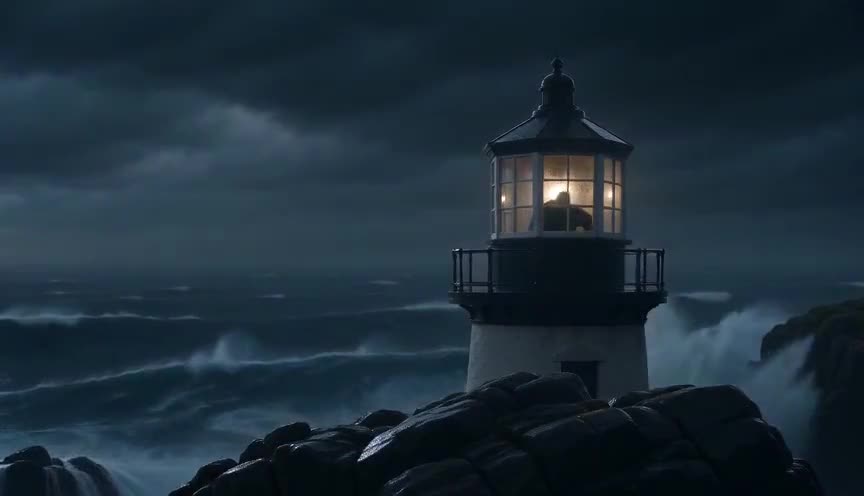
A match on action cuts on a specific movement and is meant to feel smooth, but the cut itself can still be noticed. An invisible cut goes further: it is engineered so the viewer never perceives an edit at all.
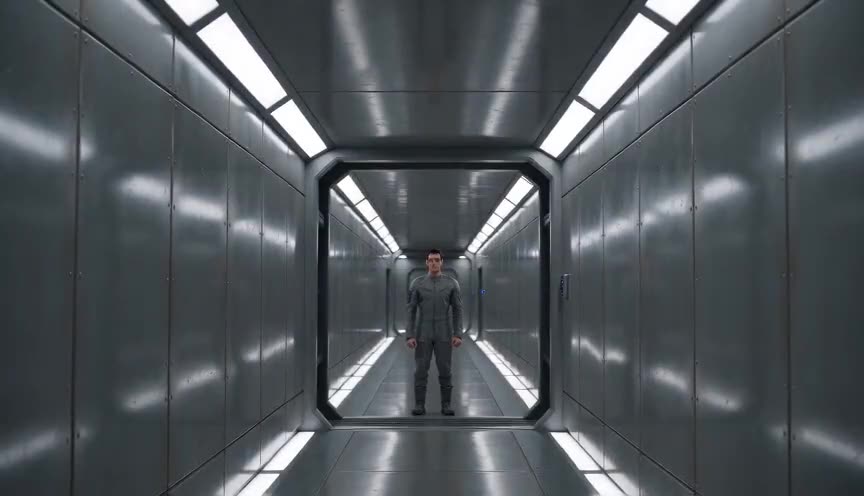
An axial cut moves the camera straight along its lens axis for a deliberate, felt jolt toward or away from the subject. An invisible cut hides that same repositioning so it reads as continuous motion instead.
In film
Birdman (2014)
The entire film is built from long takes joined by invisible cuts hidden in whip pans, dark corridors, and passing bodies to simulate one continuous shot.
Rope (1948)
Hitchcock disguised key reel changes by cutting as the camera moved into an actor's back or another dark surface, sustaining the illusion of continuous action.
1917 (2019)
The film's apparent single-take structure relies on invisible cuts concealed in tunnels, darkness, and character movement across the frame.
The prompt
Describe the shot as one continuous camera move, but plan the cut point inside an occlusion (a boulder, a passing figure, a swing of the head) so the model has a natural place to hide the join. Match wind, light direction, walking pace, and camera height on both sides of the cut so nothing jolts. Avoid asking for a change in scale, angle, or lighting mood right at the join, since that is exactly what breaks the illusion.
The exact prompt that rendered the video on this page. Keep the description of the move, change the subject and the setting.
Invisible cut on an Icelandic black sand beach, overcast light and steady onshore wind. Shot one: tracking behind a man in a dark coat walking along the shoreline, camera dollying at his pace, waves breaking on his left, until a large black volcanic boulder fills the entire frame. Shot two: as the boulder clears, the same man continues walking at the identical pace from a slightly different angle, same wind, same overcast light, no change in speed or direction, so the join hides inside the boulder and the walk reads as one unbroken shot. No text.
Common mistakes
Mismatched motion
If the subject's speed or direction shifts even slightly across the cut, the eye catches it instantly. Both shots need identical pace and trajectory through the join.
Inconsistent light or lens
A change in color temperature, contrast, or focal length between the two shots breaks the illusion even if the action matches perfectly. Keep lighting and lens choice constant across the cut.
Cutting without a hiding place
Placing the join on a static, fully visible frame with no occlusion or motion peak leaves nowhere for the edit to disappear into, and the audience sees a cut instead of a continuous take.
Frequently asked questions
What is an invisible cut?
It is an edit disguised inside movement, action, or a masking object so two separate shots read as one continuous take. The audience feels unbroken time even though the camera or setup has actually changed.
How is an invisible cut different from a match cut?
A match cut can be noticed and is often used for meaning, connecting two ideas across a visible edit. An invisible cut is built specifically so the viewer never perceives that a cut happened at all.
How do filmmakers hide cuts on set?
They shoot overlapping coverage of the same action from two camera setups, then join the footage at a fast movement, a dark occlusion, or a body passing the lens where the frame briefly goes black or unreadable.
Can AI video tools create an invisible cut?
Yes, within a short clip you can describe two matched shots joined at an occlusion or motion peak, and tools like those on Imaginode will render the transition if the motion, light, and pace are specified precisely.