Match cut
Also calledMatch cutting, Matched cut
A match cut joins two shots that share a strong visual, compositional, or sound similarity, so the cut reads as one image transforming into another rather than a hard break. It bridges two different times, places, or subjects while keeping the viewer inside a single continuous idea.
What it tells
Directors reach for the match cut to compress time or distance in a single heartbeat, and to plant a thematic link the audience feels before they can name it. A bone becomes a spacecraft, a scream becomes a train whistle, a gesture in one decade echoes in another. The technique lets editing do the work of metaphor, turning a simple cut into an argument about how two moments belong to the same story.
How it is shot
The editor picks two shots whose shape, motion, color, or sound rhymes closely: a round object matching another round object in the same screen position, or an action ending in shot A picked up mid-motion in shot B. Framing, lens angle, and subject scale are kept close so the eye does not have to reorient. Timing is precise, often cut on a specific frame where the two elements briefly overlap in size and position. This can be planned at the storyboard stage or found later in the edit bay by testing footage against footage until the shapes line up.
When to use it
- Compressing years or decades into a single cut without a title card or dissolve
- Linking two characters or eras through a shared object, gesture, or shape
- Ending a sequence on a strong visual so the next scene can complete it
- Building a montage where each cut rhymes visually with the one before it
Not to be confused with
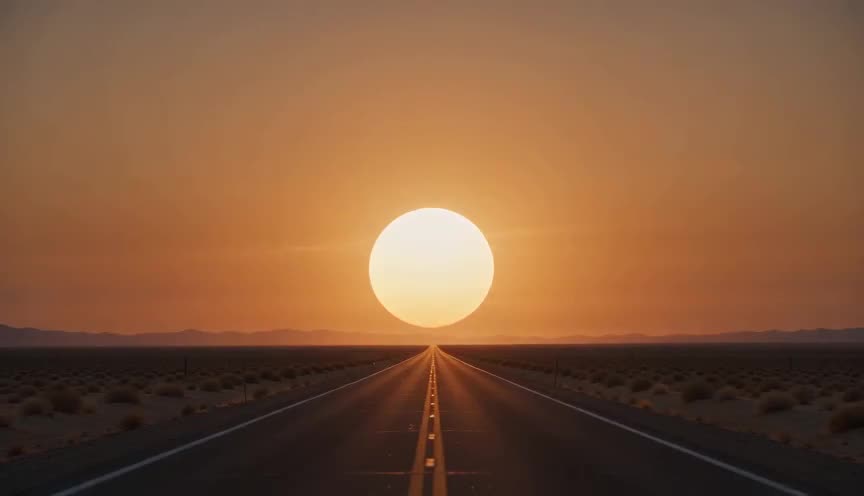
Graphic match is the visual technique of shape and composition rhyme between two frames. Match cut is the editing decision to place a cut at that rhyme, so a graphic match is often the tool that makes a match cut work.
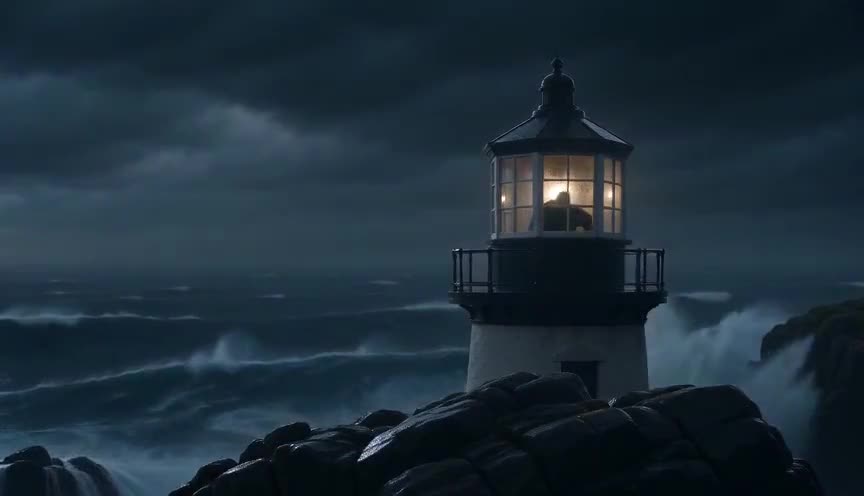
Match on action cuts mid-movement between two angles of the same continuous action to hide the cut. A match cut instead jumps between different subjects or times, using shape or motion similarity rather than continuous action.
In film
2001: A Space Odyssey (1968)
A thrown bone cuts directly to an orbiting spacecraft, collapsing millions of years of human history into one cut.
Lawrence of Arabia (1962)
A struck match cuts to a blazing desert sunrise, compressing a journey and shifting tone from intimate to epic in an instant.
The prompt
Describe both shots and the exact cut point: what shape, color, or motion repeats across the two frames, and where in the frame it sits. Name the framing (close-up, overhead) and keep it identical on both sides of the cut so the model does not drift in scale. Avoid vague instructions like 'creative transition'; instead state the concrete object or gesture that survives the cut.
The exact prompt that rendered the video on this page. Keep the description of the move, change the subject and the setting.
Match cut: first shot is a static overhead close-up of a spoon stirring coffee in a white porcelain cup on a chrome diner counter, spoon circling clockwise, steam curling up, warm tungsten light, 1970s diner details in soft focus behind. On the exact rotation, cut to a second static overhead close-up of a ceiling fan blade spinning at the same speed and same screen position, same warm tungsten light, then the camera pulls back slightly to reveal the diner's dining room with patrons seated in red vinyl booths. No text.
Common mistakes
Weak visual rhyme
If the shapes, colors, or motion do not closely match in size and screen position, the cut just looks like a jump cut with extra effort.
Mismatched framing
Cutting from a wide shot to a tight close-up breaks the illusion even if the objects match, because the eye has to reorient scale.
Overusing it
Stacking match cuts back to back turns a meaningful device into a gimmick and drains the payoff of the technique.
Frequently asked questions
What is a match cut?
A match cut is an edit that joins two shots sharing a strong visual or motion similarity, so the cut feels like one image becoming another rather than a hard break between unrelated scenes.
What is the difference between a match cut and a smash cut?
A match cut relies on visual similarity between the two shots to smooth the transition. A smash cut is the opposite: it deliberately jars the viewer with an abrupt, unrelated cut, often for shock or comedy.
Do you need visual effects to make a match cut?
No. Most match cuts are achieved purely through careful shot selection and editing timing, matching framing, shape, and motion between two pieces of ordinary footage rather than through compositing.
Can AI video tools generate a match cut?
Yes, if you describe both shots and the exact point of visual overlap explicitly. Tools like those on Imaginode render short clips well when the prompt states the matching shape, framing, and timing rather than a vague transition instruction.