Wipe
Also calledWipe transition, Wipe cut, Line wipe
A wipe is an editing transition where a line, shape, or pattern sweeps across the frame, pushing the outgoing shot aside as it uncovers the incoming one. It reads as a graphic, deliberate scene break, often signaling a change of location, chapter, or tone rather than continuous time.
What it tells
Directors reach for a wipe when a straight cut feels too abrupt but a dissolve feels too soft. The visible motion of the wipe announces itself as a formal device, which is exactly the point: it can suggest a chapter turning, a comic-book or serial pacing, or nostalgia for older film grammar. Because the audience clocks the transition consciously, it works best when the story wants a light, playful, or episodic rhythm rather than emotional continuity.
How it is shot
In post, an editor keys the outgoing shot to a moving mask (a line, diagonal, iris, or clock shape) that reveals the incoming shot underneath, usually over 0.5 to 1.5 seconds. The mask edge can be hard for a graphic, retro feel or feathered a few pixels for a smoother look. Direction matters: a wipe moving the same way as an exiting subject reads as motivated, while an arbitrary direction reads as pure punctuation. Classic optical-printer wipes (as in old serials) had visible grain and slight wobble; digital wipes are perfectly clean unless grain or a slight speed ramp is added back for character.
When to use it
- Marking a hard scene or location change within a fast, episodic sequence
- Giving a montage or training sequence a serial, old-adventure-movie energy
- Signaling a jump between parallel storylines without a full dissolve
- Adding a stylized, retro or comic-book beat to an otherwise modern edit
Not to be confused with
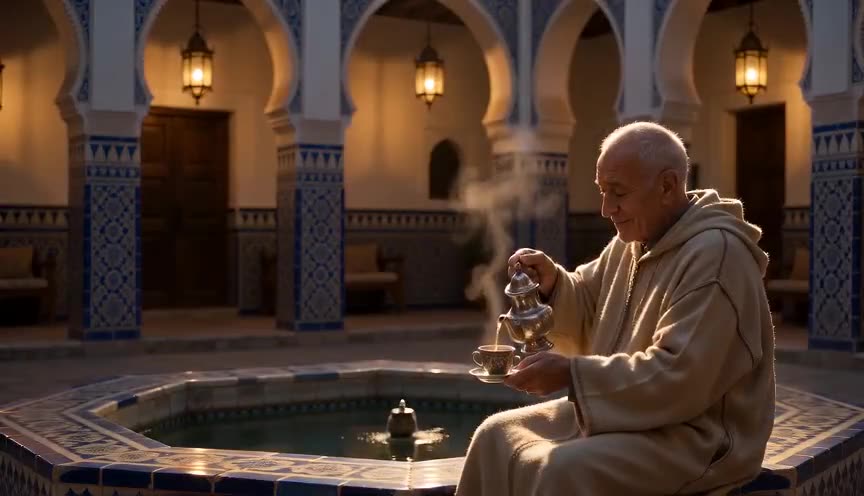
A dissolve blends two shots by cross-fading opacity over time, suggesting a soft, continuous link. A wipe instead pushes one image aside with a hard-edged shape, announcing a clean break rather than a gradual merge.
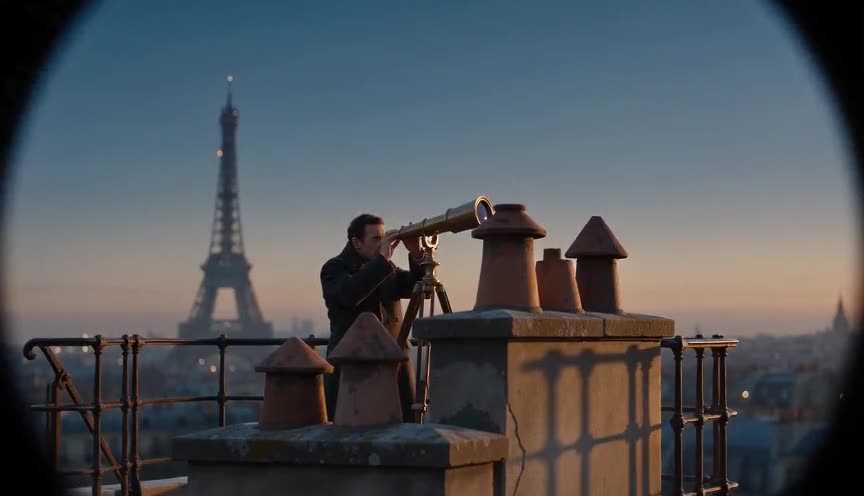
An iris transition is a specific kind of wipe where the mask is a circle that opens or closes. A general wipe can use any shape, direction, or pattern, so an iris is best thought of as one variant of the wipe family.
In film
Star Wars (1977)
George Lucas used dozens of line and shape wipes between scenes as a direct homage to the serials and Kurosawa films he grew up on.
The Hidden Fortress (1958)
Akira Kurosawa used wipes extensively to jump between locations and time, a style Lucas later borrowed for Star Wars.
The prompt
Describe the wipe as a physical, moving edge, not an abstract effect: name its shape (vertical line, diagonal, circle), its direction, and its speed in seconds. State clearly what the first shot shows, what the second shot reveals, and that the edge stays sharp with no fading. Avoid vague words like 'transition effect' alone, since generic video models render that as a dissolve; be literal about the sweeping line and the two distinct scenes it separates.
The exact prompt that rendered the video on this page. Keep the description of the move, change the subject and the setting.
Wipe transition inside an abandoned train station: the first shot is a static wide view of a rusted platform with broken benches and scattered pigeons, dim gray daylight. A hard vertical line sweeps left to right across the frame at a steady pace over about one second, wiping the empty platform away with no fading. It reveals the second shot: the same station now lit by a shaft of warm light, dust motes drifting, an old clock frozen at the wrong hour on the far wall. The wipe edge stays sharp throughout. No text.
Common mistakes
Overusing the device
Stacking wipes between every scene turns a stylistic choice into a gimmick and dates the edit instantly; save it for moments that actually benefit from a graphic break.
Direction that fights the action
A wipe moving opposite to a character's exit or a camera's pan feels random rather than motivated, breaking the visual logic the shape was supposed to reinforce.
Wrong duration for the tone
A wipe that lingers too long feels sluggish in an action sequence, while one that snaps by too fast in a slow, contemplative scene undercuts the mood instead of supporting it.
Frequently asked questions
What is a wipe in film editing?
A wipe is a transition where a moving line or shape pushes one shot off the frame while revealing the next shot underneath it, creating a visible, graphic changeover between scenes.
Why do wipes feel old-fashioned?
Wipes were common in 1930s to 1950s serials and were later revived by Kurosawa and Lucas, so audiences associate the hard-edged sweep with vintage adventure and pulp storytelling rather than modern realism.
What shapes can a wipe use?
Common shapes include a straight vertical or diagonal line, a clock hand, a circle (an iris), a checkerboard, or a star; software editors let you pick the mask shape and its speed freely.
Can AI video tools generate a wipe transition?
Describing the moving edge literally, its shape, direction, and speed, gets closer results than saying 'transition' alone. On a canvas like Imaginode you can also generate the two shots separately and cut them together with a wipe in post.