Cosmic horror
Also calledLovecraftian horror, Eldritch horror, Cosmicism
Cosmic horror is a genre look that frames human figures as tiny, insignificant details against architecture, scale or entities too vast and alien to fully grasp. It swaps jump scares for a slow, creeping dread, using scale distortion, wrong geometry and sickly light so the viewer senses something ancient and indifferent watching just outside the frame.
What it tells
Directors reach for cosmic horror when the threat is not a monster you can fight but a truth you cannot survive knowing. The genre borrows from Lovecraft: humanity is small, its reason is fragile, and the universe does not care. By dwarfing characters inside oversized or impossible spaces, filmmakers turn ordinary settings into proof of insignificance. The emotional payoff is not fear of death but fear of meaninglessness, a dread that lingers because the story refuses to fully explain what is happening or why.
How it is shot
On set, cosmic horror is built through scale mismatch and geometry that resists logic. Cinematographers use wide or ultra-wide lenses (14mm to 24mm) to stretch space and place a single small figure far from camera, often centered in a cavernous or oddly proportioned room. Practical light is kept dim and colored (sickly green, cold cyan, deep violet) to strip warmth from skin tones, while large negative space and low-key lighting hide edges of the frame in shadow. Camera moves are slow and deliberate, drifting or creeping rather than cutting fast, so the eye has time to register that proportions are off. Set design bends right angles into slightly impossible corridors, and sound design (handled in post) adds a low sub-bass hum that the audience feels more than hears.
When to use it
- When a story needs the audience to feel small against forces or institutions bigger than any single character.
- For a reveal where understanding the threat would break the character's mind rather than help them.
- In science fiction or horror scenes set inside vast, alien or unnaturally geometric architecture.
- When dread should build slowly through implication rather than through jump scares or gore.
Not to be confused with
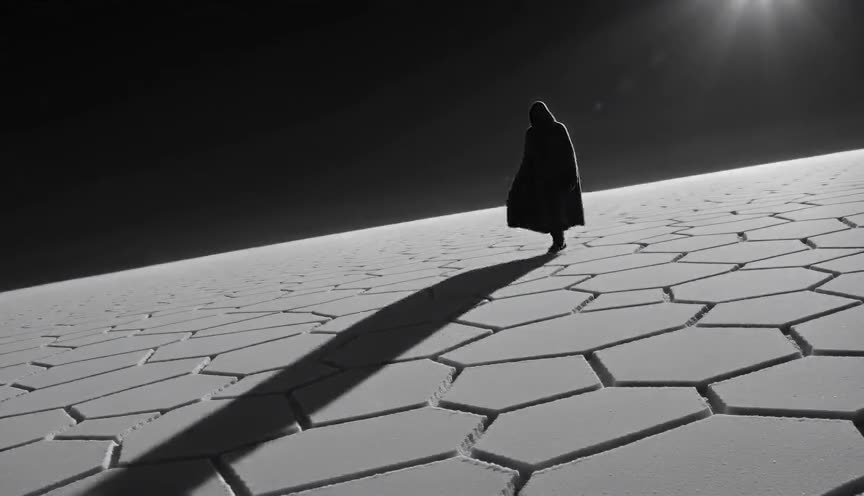
German expressionism distorts sets and shadows to externalize psychological unease within a human-scaled world, while cosmic horror uses scale itself to suggest forces beyond human comprehension, not just twisted emotion.
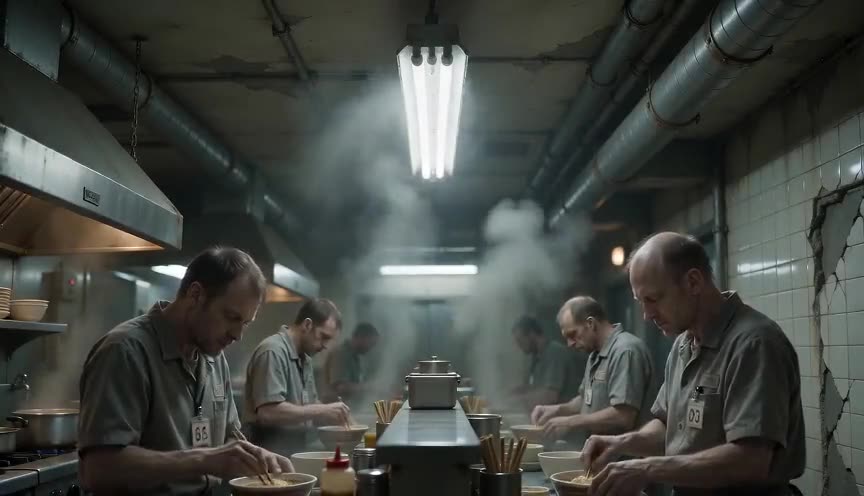
Dystopian look critiques a believable, man-made future or society gone wrong, while cosmic horror abandons social critique entirely, aiming instead at existential dread about forces indifferent to humanity altogether.
In film
Annihilation (2018)
Uses mutated flora, impossible refraction and a shimmering zone to suggest an intelligence that reshapes matter for reasons humans cannot parse.
Color Out of Space (2019)
Adapts Lovecraft directly, turning a family's isolated farm into a site of biological and geometric wrongness driven by an unseen, unexplained force.
Event Horizon (1997)
The gravity drive chamber, Gothic corridors and flashes of an unknowable dimension make the ship feel like a portal to forces beyond human comprehension.
The prompt
Name the scale explicitly: describe a human figure as tiny against an oversized or subtly wrong structure, and specify the light color (sickly green, cold violet) rather than saying 'scary'. Push the lens wide (14mm to 24mm) so proportions stretch, and keep the camera move slow and unbroken so the wrongness reads as real, not glitchy. Avoid literal monsters, tentacles or gore, since AI models render those as generic creature-feature imagery; instead lean on scale, silence, symmetry gone slightly off, and a light source with no visible origin.
The exact prompt that rendered the video on this page. Keep the description of the move, change the subject and the setting.
Cosmic horror look. A lone lighthouse keeper stands on a rocky coast at night and looks up: in the black sky above the sea, an impossibly huge dark shape with faint glowing lines slowly moves behind the clouds, so big that it fills half the sky, while the lighthouse beam looks tiny. Cold green and grey tones, dread, slow push in. No text.
Common mistakes
Adding a literal monster
AI models default to generic tentacle creatures when asked for 'cosmic horror', which turns dread into creature-feature cliché; describe scale and wrongness instead of a monster.
Explaining the threat
Cosmic horror depends on the audience never fully understanding what they are looking at; spelling out the entity's origin, motive or biology collapses the dread into ordinary monster logic.
Fast cuts and jump scares
Quick editing and sudden shocks belong to slasher or supernatural horror; cosmic horror needs slow, sustained shots that give the audience time to notice the scale is wrong.
Frequently asked questions
What is cosmic horror?
Cosmic horror is a genre look that makes human characters feel small and insignificant against forces, spaces or entities too vast and alien to fully understand, using scale, wrong geometry and dread rather than jump scares to unsettle the viewer.
Does cosmic horror always need tentacles or Lovecraftian monsters?
No. The core of the look is scale and incomprehensibility, not any specific creature design; some of the most effective cosmic horror scenes never show a monster at all, relying instead on architecture, light and silence.
What color grade works best for cosmic horror?
Desaturated, cold palettes with a sickly green or violet cast work well because they strip warmth from skin and make light sources feel unnatural or unexplained, reinforcing the sense that something alien is nearby.
Can AI video tools generate a cosmic horror look?
Yes. Tools like Imaginode can render the scale distortion, sickly light and slow camera drift that define cosmic horror when the prompt names those elements explicitly rather than just saying 'scary' or 'Lovecraftian'.