Chiaroscuro
Also calledChiaroscuro lighting, Painter's light, High-contrast lighting
Chiaroscuro is a lighting style built on extreme contrast between light and dark, where one strong source carves a figure or object out of near-total blackness. It narrows the viewer's attention to a small lit area and gives the image a painterly, often ominous or intimate weight.
What it tells
Directors reach for chiaroscuro when they want the image to carry psychological weight rather than plain visibility. The hidden half of a face suggests a hidden motive; a single lit hand or object becomes the emotional center of the frame. Because it borrows its logic from Renaissance and Baroque painting, chiaroscuro also signals seriousness and craft, pulling a scene out of ordinary coverage and into something deliberately composed and morally charged.
How it is shot
One hard key light, often a small source like a lamp, candle or shaft of window light, is placed at a steep angle to the subject, with fill light cut back to almost nothing so the lighting ratio runs 8:1 or higher. Flags, barn doors or black wrap control spill so light does not leak into the background, which is often left unlit or dressed with black negative fill. Exposure is set for the highlight, letting shadow areas fall to near black with little visible detail. Smoke or haze can be added to make the light beam itself visible and to soften its edge slightly without killing the contrast.
When to use it
- A character is hiding something and the scene needs visual doubt about their intentions.
- A single object, letter or face must dominate an otherwise dark, cluttered space.
- You want a still-life or portrait moment to read as painterly rather than documentary.
- A confession, interrogation or private ritual needs to feel isolated from the world around it.
Not to be confused with
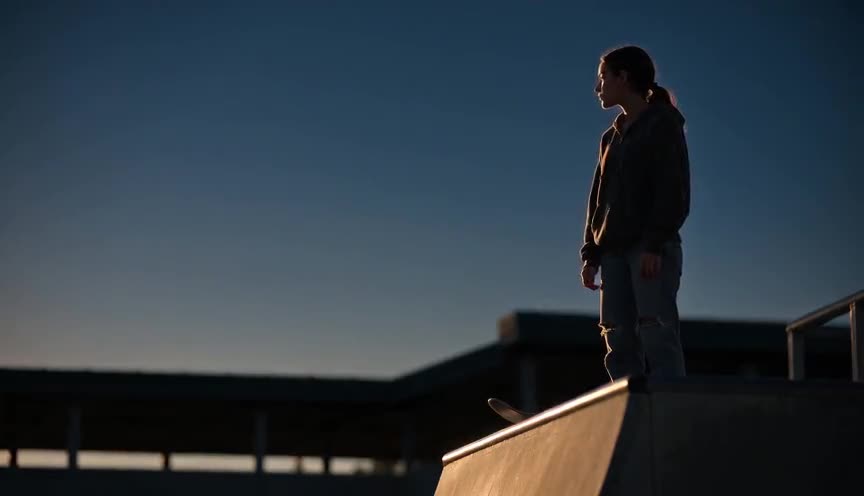
Low-key lighting is the broader mood category of underexposed, shadow-heavy images. Chiaroscuro is a specific, more extreme and more sculptural version of low-key, built around one dominant source and painterly composition rather than general darkness.
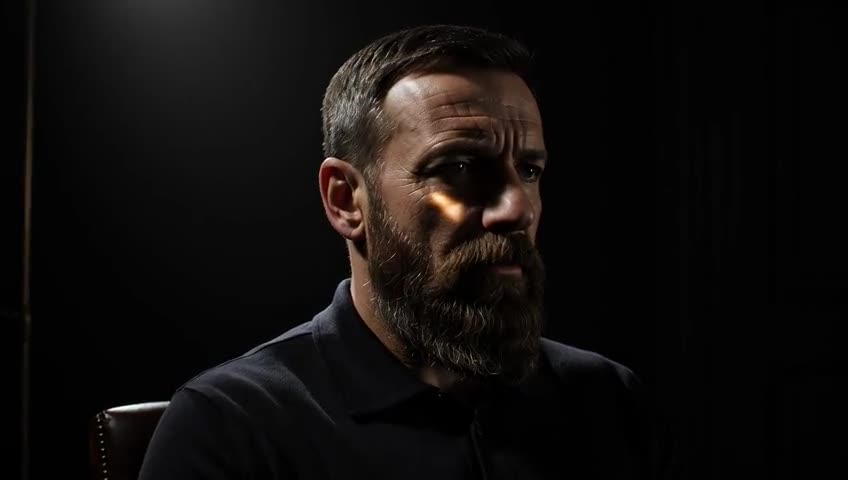
Rembrandt lighting is a precise portrait setup within the chiaroscuro tradition, defined by a small triangle of light on the shadowed cheek. Chiaroscuro is the wider principle; Rembrandt lighting is one named recipe for achieving it on a face.
In film
The Godfather (1972)
Gordon Willis lights office scenes with a single overhead source, letting eyes and half the face disappear into shadow to suggest concealed power.
Barry Lyndon (1975)
Stanley Kubrick shoots interiors by candlelight alone, producing deep, painterly falloff that mirrors 18th century portraiture.
The prompt
Name the single hard source explicitly (a lamp, a window shaft, a candle) and say the fill is almost gone, so the model understands one light, not an evenly lit room. Ask for the background or one side of the frame to fall to near black, and mention that only part of the subject stays sharp in the light. Avoid words like bright, cheerful or evenly lit, and avoid asking for multiple visible light sources, which flattens the contrast the technique depends on.
The exact prompt that rendered the video on this page. Keep the description of the move, change the subject and the setting.
Chiaroscuro lighting inside a small flower shop at dusk: a single hard shaft of light falls from an overhead work lamp onto a florist's face and hands as she trims stems, one side of her face and one hand fully lit with sharp detail, the other side of her body and the entire background collapsing into near total black. Petals and metal buckets flash briefly where the light grazes them. The camera stays locked off and completely static, the light source unmoving, only her hands and the flower stems shifting inside the narrow pool of light. No text.
Common mistakes
Fill light left too high
Adding even a small bounce or second source flattens the shadows and turns chiaroscuro into ordinary low-key lighting, losing the sculpted, near-black falloff the look depends on.
Exposing for the shadows
Raising exposure to keep detail in dark areas kills the contrast entirely. Expose for the highlight and let the shadow side genuinely disappear.
Letting light spill into the background
Without flags or negative fill, light bounces around the set and the background stays visible, undercutting the isolated, single-source feel the technique needs.
Frequently asked questions
What is chiaroscuro in film lighting?
It is a lighting approach that creates strong, sculpted contrast between light and dark within the frame, using one dominant source and little or no fill so most of the image falls into deep shadow around a small lit area.
Where does the term chiaroscuro come from?
It comes from Italian painting, combining chiaro (light or clear) and scuro (dark or obscure). Painters like Caravaggio and Rembrandt used it centuries before cinematographers adopted the same principle for the screen.
Is chiaroscuro the same as film noir lighting?
Not quite. Chiaroscuro is a lighting principle, while film noir is a genre look that uses chiaroscuro alongside other elements like venetian blind shadows, canted angles and urban settings, so noir is broader than the lighting technique alone.
How do I get chiaroscuro from an AI video model?
Describe one specific hard light source, say the fill is almost absent, and ask for the background or one side of the subject to fall to near black. On a platform like Imaginode, naming the single source and the near-black areas explicitly gets a much stronger result than general terms like dramatic lighting.