German expressionism
Also calledExpressionist cinema, Weimar expressionism, Caligari style
German expressionism is a genre look built from painted-on shadows, warped architecture and extreme chiaroscuro that turns the physical world into a mirror of a character's inner state. It makes the viewer feel dread or instability before the story gives them a reason to.
What it tells
Directors reach for this look when the plot itself is about a mind unraveling: guilt, madness, tyranny, a nightmare logic that the everyday world cannot contain. By bending walls and streets and painting shadows where no light source could produce them, the frame stops describing a place and starts describing a psychological state. The audience is never allowed to relax into realism, which keeps unease constant even in quiet scenes.
How it is shot
Sets are built with raked floors, leaning walls and jagged, asymmetric geometry, often painted with false shadows in thick black strokes so the lighting looks designed rather than natural. A single hard key light, frequently low and off-axis, throws long, sharp-edged shadows across actors and walls; fill light is minimal, pushing the image toward high contrast black and white or a near-monochrome grade. Wide-angle lenses (18 to 28mm) and low camera angles exaggerate the distortion. Actors use heavy, angular makeup and stylized, jerky movement to match the set's unreality. Everything, camera height, lens choice, light angle, is chosen to break normal spatial logic rather than record it.
When to use it
- A character's psychological collapse needs to bleed into the environment itself
- You want a nightmare or fairy-tale register that reads as unreal from the first frame
- A horror or gothic scene needs dread without gore, through shape and shadow alone
- You are building a period or theatrical pastiche referencing silent-era cinema
Not to be confused with
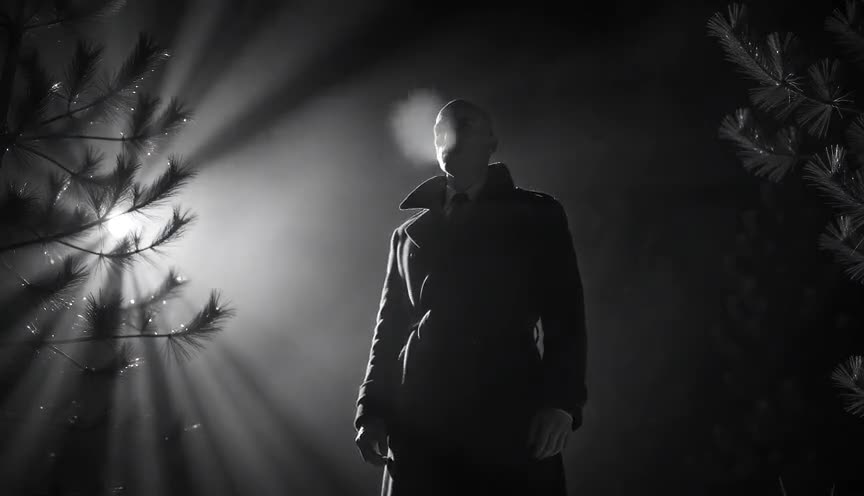
Film noir inherits the hard shadows and low-key lighting but keeps naturalistic sets and real city locations; German expressionism goes further, physically warping architecture to make the distortion structural, not just lit.
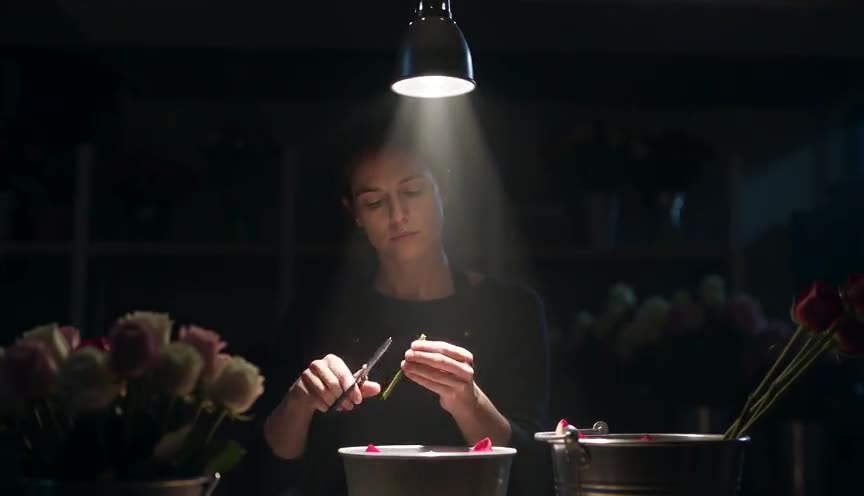
Chiaroscuro is the lighting technique, strong light against deep dark, that German expressionism uses as one of its tools. Expressionism adds painted shadows, canted sets and exaggerated performance on top of that lighting base.
In film
The Cabinet of Dr. Caligari (1920)
Painted zigzag shadows and impossibly tilted buildings turn the entire town into a visualization of a disturbed mind.
Nosferatu (1922)
Hard, elongated shadows (the vampire's claw on the staircase wall) become more frightening than the creature itself.
M (1931)
Fritz Lang carries the low, hard-edged lighting and oblique angles into a sound film to visualize a city gripped by paranoia.
The prompt
Name the ingredients explicitly: painted or exaggerated shadows, canted or leaning architecture, a single hard low light source, high contrast black and white or near-monochrome, wide-angle low-angle framing. Avoid words like 'realistic', 'soft', 'naturalistic' or 'symmetrical', they pull the model toward normal lighting. Mentioning silent-era or 1920s German cinema as a style reference helps the model commit to the distortion instead of softening it.
The exact prompt that rendered the video on this page. Keep the description of the move, change the subject and the setting.
German expressionism: a lone figure in a long dark coat walks across a cracked white salt flat at dusk, filmed in a static locked-off wide shot from a low angle. A single hard, low side light casts an elongated, jagged shadow across the cracked salt that looks painted rather than naturally cast, its edges razor sharp. The horizon tilts slightly off level, the sky rendered in stark high-contrast black and white with deep crushed blacks and no soft fill. The figure's coat flares once in a gust of wind; nothing else in the frame moves. No text.
Common mistakes
Naturalistic fill light
Adding soft fill or bounce light flattens the hard shadow edges that define the style, turning the frame back into ordinary realism.
Straight, level sets
Without leaning walls, raked floors or a tilted horizon, the image reads as noir instead of expressionism, missing the sense of warped space.
Real-world shadow physics
Shadows that match the actual light logically look correct but ordinary; the style depends on shadows that are drawn or exaggerated beyond what the light source would truly produce.
Frequently asked questions
What is German expressionism in film?
It is a genre look, born in 1920s Weimar cinema, that uses painted or exaggerated shadows, distorted architecture and extreme high-contrast lighting to make the visual world reflect a character's psychological state rather than physical reality.
Is German expressionism only for black and white films?
It originated in black and white and still reads most strongly there, but the core ideas, hard directional light, warped geometry, exaggerated shadow, can be adapted into color with a heavily desaturated, high-contrast grade.
How is it different from film noir?
Film noir uses similar hard-shadow lighting but keeps real, naturalistic locations and architecture. German expressionism physically distorts the sets themselves, tilting walls and painting false shadows, so the unreality is structural, not only optical.
Can AI video tools generate a German expressionism look?
Yes. Tools on Imaginode such as Seedance, Kling, Veo, Wan and Grok Imagine can render the hard shadows, canted sets and high contrast if you name those elements directly in the prompt rather than relying on the genre name alone.