French New Wave
Also calledNouvelle Vague, Godard style, Left Bank cinema
French New Wave is a low-budget, anti-classical film style born in Paris around 1959, built on handheld cameras, natural light, real locations and abrupt jump cuts. It gives the viewer a restless, present-tense feeling, as if the story is being caught rather than staged.
What it tells
Directors reached for this style to break the polish of studio cinema and put the audience inside a rougher, more honest present. The jump cuts and offhand framing remove the safety net of invisible editing, so viewers feel the seams of the film and, with them, the impulsiveness of the characters. It suits stories about young people, cities and small rebellions, where a clean, composed image would feel like a lie.
How it is shot
Shoot handheld with a lightweight 35mm or 16mm camera, often on the shoulder, no dolly or crane. Use existing daylight or practical street and shop light instead of rigged lighting, and shoot in real locations with a small crew, sometimes a two or three person team. Mix wide establishing shots with sudden close-ups, and let focus and exposure drift slightly rather than locking them down. In editing, cut on action but skip frames within a continuous shot, or jump between angles that do not match, to compress time and puncture continuity. Direct sound, ambient noise and non-professional or loosely directed actors reinforce the improvised, documentary feel.
When to use it
- A scene about young characters improvising their way through a city, unplanned and reactive.
- A montage of everyday street life where polish would undercut the honesty of the moment.
- A conversation you want to feel caught rather than composed, with visible rough edges.
- A sequence that needs urgency and immediacy more than visual beauty or symmetry.
Not to be confused with

Jump cut is one editing tool, a single discontinuity in time within a shot. French New Wave is a whole look built from jump cuts plus handheld camera, natural light and real locations.
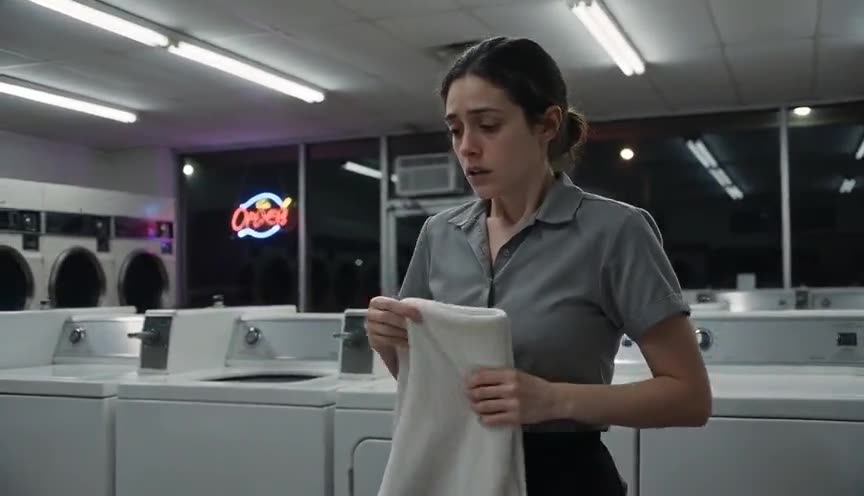
Cinema verite is a documentary method aimed at observed truth, often with no directed staging at all. French New Wave borrows its rawness but stays fictional, with actors, scripts and a stylistic agenda.
In film
Breathless (1960)
Jean-Luc Godard's jump cuts inside continuous conversations became the signature move of the whole movement.
The 400 Blows (1959)
Francois Truffaut shot handheld on real Paris streets with natural light, setting the template for the style's rough intimacy.
Jules and Jim (1962)
Truffaut mixes freeze frames, whip pans and offhand framing to give the love triangle a restless, diary-like energy.
The prompt
Name the era and place plainly: handheld 16mm or 35mm camera, black and white or slightly bleached color, natural available light, real street setting. Push words like unsteady, spontaneous, documentary immediacy, grainy, and avoid words that imply polish, symmetry or studio lighting. Since the model renders one continuous take, describe the handheld drift and framing shifts within that single shot rather than asking for a cut, and let exposure and focus feel a touch imperfect.
The exact prompt that rendered the video on this page. Keep the description of the move, change the subject and the setting.
French New Wave style, handheld 16mm camera moving with a person's shoulder through a crowded night market in Taipei, black and white, grainy, slightly unsteady frame that drifts and reframes on its own as stalls, steam and blurred neon shop signs pass close to the lens. Natural available light only, exposure shifting subtly between bright stalls and dark alley gaps, focus loosely following a young woman walking fast between vendors, her face catching light only in glimpses. No text.
Common mistakes
Too smooth
A stabilized gimbal move or perfectly locked frame kills the rough, caught-in-the-moment quality the style depends on.
Studio lighting sneaking in
Even light softboxes or rim lights read as staged and pull the image away from the raw, available-light feel that defines the look.
No discontinuity at all
Relying only on a pretty handheld shot without any jump cut, offhand framing or unmatched angle produces a nice image but not the Nouvelle Vague signature.
Frequently asked questions
What is French New Wave in film?
It is a low-budget style from late 1950s and 1960s Paris cinema, marked by handheld cameras, natural light, real locations and jump cuts that break classical continuity editing to feel spontaneous and present-tense.
Does French New Wave need black and white?
No. Many defining films were black and white for budget reasons, but the style is really about handheld camera, natural light and discontinuous editing, and it works in color too.
Why do jump cuts matter so much to this style?
Jump cuts strip away the invisible editing of classical cinema, making the viewer aware of time being compressed and the film being assembled, which suits stories about impulsive, restless characters.
Can an AI video model recreate French New Wave convincingly?
Yes, tools like the ones behind Imaginode can approximate the handheld drift, grain and available light of the style within a single generated shot, though true jump cuts across separate takes need editing after generation.