Neo-noir
Also calledModern noir, Color noir, Post-noir
Neo-noir is a contemporary genre look that borrows the deep shadows, moral ambiguity and off-kilter framing of classic film noir but renders them in color, with harder contrast and modern lenses. It tells the viewer that something is corrupt or unresolved before a single line of dialogue explains why.
What it tells
Directors reach for neo-noir when a story needs suspicion baked into the image itself: a detective story, a betrayal, a city that hides more than it shows. The style lets the frame carry the moral weight, so a lobby, a street or a kitchen already feels compromised. It gives modern, color productions the fatalism of old noir without losing the texture and freedom of contemporary cameras and grading.
How it is shot
Neo-noir keeps noir's low-key lighting ratio, often 4:1 or higher, but shoots in color instead of black and white, letting one or two hard sources carve a face while the rest of the room falls near-black. Venetian-blind gobos, practical lamps and neon spill are common, graded toward cold blues or sickly greens against warm skin tones. Lenses run wider or slightly anamorphic, adding edge falloff. Camera moves stay slow and deliberate (a creeping dolly, a held frame) rather than handheld, and compositions lean on diagonals, doorways and mirrors that fragment the subject. In the grade, blacks get crushed while a narrow band of saturated color survives, and light grain keeps the image from looking clinical.
When to use it
- Introducing a corrupt institution, city or character before any dialogue reveals the corruption
- Shooting a modern crime, mystery or thriller that wants noir's fatalism without going black and white
- Building a scene around betrayal, blackmail or a morally compromised choice
- Reworking a period or retro setting with contemporary color grading and lens choices
Not to be confused with
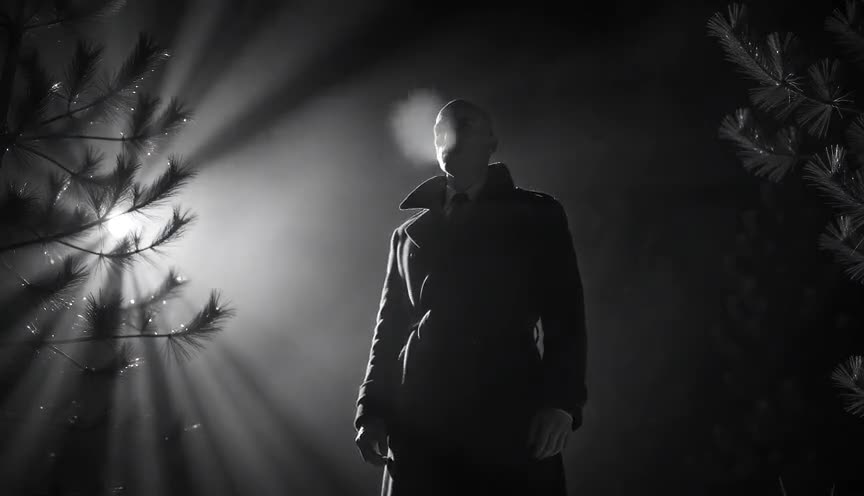
Film noir is the original black-and-white style from the 1940s and 50s, shot on high-contrast film stock; neo-noir applies the same shadows and moral tone to color productions with modern gear.
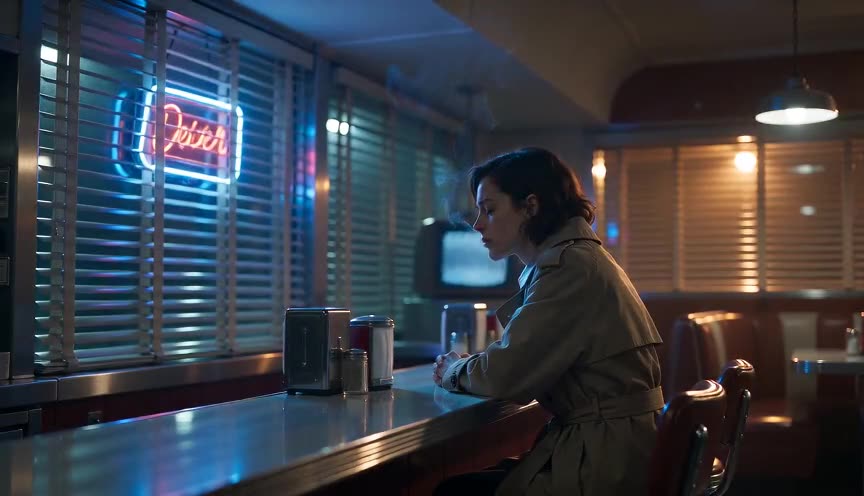
Tech noir folds neo-noir's shadows and cynicism into futuristic or technological settings, adding neon, screens and synthetic materials; neo-noir stays grounded in a more realistic, present-day or period world.
In film
Chinatown (1974)
Uses warm California light and noir plotting in color, credited as a founding text of neo-noir style and mood.
Drive (2011)
Pairs neon-soaked night photography with long silences and moral ambiguity, a widely cited modern neo-noir touchstone.
L.A. Confidential (1997)
Recreates 1950s Los Angeles corruption in color with hard shadows and venetian-blind lighting drawn straight from noir tradition.
The prompt
Name the color palette explicitly (cold blue or teal shadows against warm amber highlights) since neo-noir depends on that contrast, not just darkness. Call out hard key light, venetian-blind or window-blind shadow patterns, and a slow or locked camera rather than energetic handheld movement. Avoid words that push toward pure black and white or toward bright, even lighting, both of which flatten the look. Mention a mirror, window or glass surface if you want the fragmented framing noir is known for.
The exact prompt that rendered the video on this page. Keep the description of the move, change the subject and the setting.
Neo-noir hotel lobby at night, a static locked wide shot on a 35mm lens frames a lone woman in a tailored coat crossing a marble floor. Hard key light from an unseen lamp cuts across her face while venetian-blind shadows stripe the walls in bands of black and deep teal. The background falls into near-total darkness except for one warm amber sconce, contrasting her cool-lit figure against the void behind her. The camera holds for four seconds as she passes a gilded mirror that briefly reflects her silhouette. The grade pushes blacks deep and keeps her skin warm against cold blue-green light. No text.
Common mistakes
Lighting everything evenly
Neo-noir depends on unlit space. If fill light softens every shadow, the frame reads as a normal color drama instead of noir.
Skipping the color contrast
Just adding shadows without pushing cool and warm tones against each other loses the specific look; the style needs a clear temperature split, not just darkness.
Restless camera work
Handheld shake or fast cutting undercuts the fatalistic stillness that noir framing relies on; slow, deliberate moves read as more menacing.
Frequently asked questions
What is neo-noir?
Neo-noir is a genre look that takes the deep shadows, moral ambiguity and hard framing of classic 1940s film noir and applies them to color films, usually with harder contrast and modern lenses instead of black-and-white photography.
How is neo-noir different from film noir?
Film noir refers to a specific black-and-white era of filmmaking; neo-noir is any later production, in color, that revives noir's shadows, fatalism and crime themes, whether set in the past or present.
Does neo-noir need a crime story?
Most neo-noir films involve crime, betrayal or corruption, but the term describes a visual and moral style more than a strict plot requirement, so it can appear in dramas and thrillers too.
Can an AI video model generate neo-noir shots?
Yes. Tools like the ones on Imaginode can render neo-noir convincingly if the prompt names the hard key light, venetian-blind or striped shadows, cool-versus-warm color grade and a slow or static camera explicitly.