Film noir
Also calledNoir lighting, Hard-boiled style, Shadow cinematography
Film noir is a high-contrast, low-key lighting and camera style built on deep black shadows, hard directional light and skewed compositions. It signals moral ambiguity, danger and isolation to the viewer before a single line of dialogue is spoken.
What it tells
Film noir emerged in 1940s Hollywood crime dramas to visualize corruption, guilt and fatalism without stating them outright. Directors used shadow to hide motive, hard light to trap characters in cages of venetian blind stripes, and skewed angles to suggest a world tilted off its moral axis. The look tells the audience that no one on screen is fully trustworthy, that danger hides in the dark corners of the frame, and that the story will end badly for someone. It remains a shorthand for suspicion and moral compromise in any genre.
How it is shot
Film noir relies on low-key lighting: one hard key light, often a bare bulb or single practical source, with fill kept to a minimum so shadows fall to near-black. Shoot at f/2.8 to f/4 with a 35mm or 50mm lens to hold some depth while letting backgrounds vanish into darkness. Gaffers cut light through venetian blinds, window bars or branches to throw hard stripes across faces and floors. Camera angles skew low or dutch to unsettle the frame, and compositions treat deep shadow as negative space rather than filling it. On set this means one strong source, black flags to shape it, haze to catch the beam, and a slow, deliberate camera, often locked off or moving on a dolly rather than handheld.
When to use it
- Opening a crime, mystery or detective story where guilt and suspicion drive the plot.
- Introducing a morally ambiguous character whose intentions the audience should question from the start.
- Building dread in a confrontation scene without violence, using shadow instead of action.
- Signaling a flashback or confession embedded inside a larger, contemporary story.
Not to be confused with
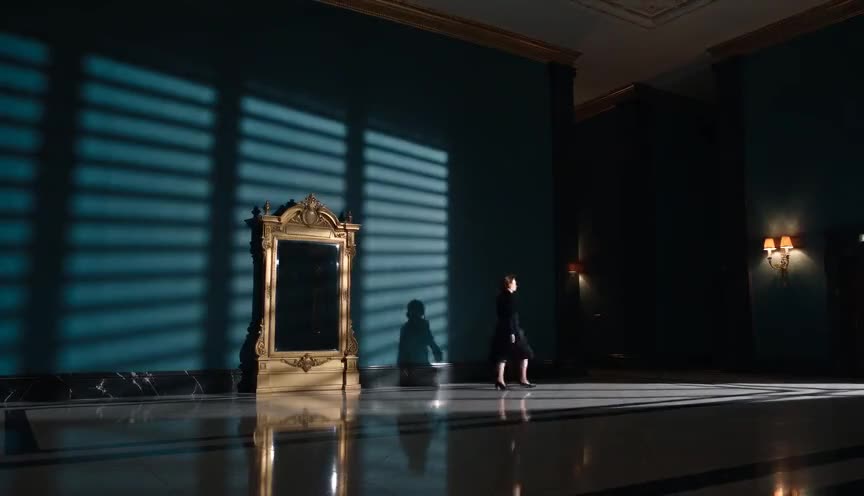
Neo-noir borrows film noir's shadows and moral ambiguity but shoots in color, often in modern locations, with a cooler or more stylized palette instead of pure black and white contrast.
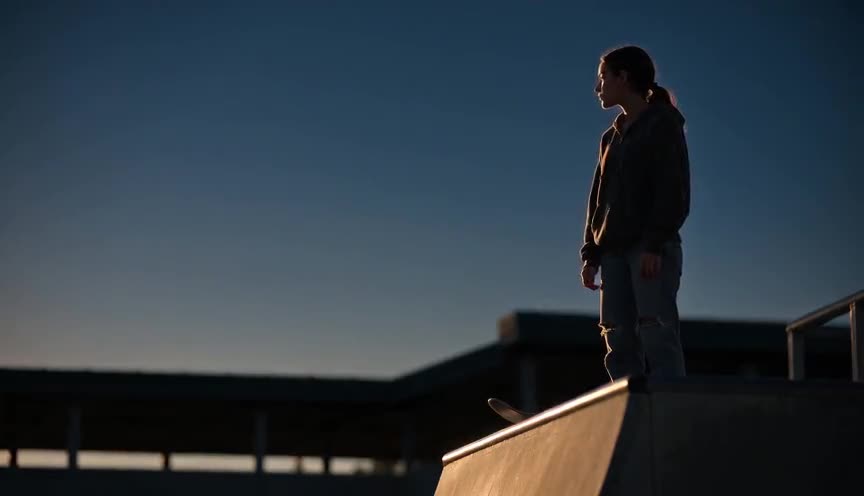
Low-key lighting is the lighting technique noir is built on, but noir also demands specific angles, venetian blind patterns and a black and white or heavily desaturated grade to complete the genre look.
In film
The Maltese Falcon (1941)
Low-key lighting and hard shadows define Sam Spade's world, hiding motive in every darkened office and stairwell.
Double Indemnity (1944)
Venetian blind shadows striping the walls became a genre signature, trapping characters in bars of light and dark.
Touch of Evil (1958)
Deep, oppressive shadow and skewed camera angles turn a border town into a moral trap for every character on screen.
The prompt
Name the lighting explicitly: low-key, hard directional key light, deep black shadows, venetian blind or branch shadow patterns. Ask for black and white or a heavily desaturated grade, hard edges rather than soft glow, and a slow or static camera. Avoid words like bright, colorful or soft, which push the model toward a high-key result. Mentioning a single practical light source, fog to catch the beam, and a low or dutch angle helps the model commit to the full noir package rather than just darkening the image.
The exact prompt that rendered the video on this page. Keep the description of the move, change the subject and the setting.
Film noir style in a misty pine forest at night: a lone figure in a long coat stands between tall trunks as a single hard spotlight cuts through the fog from off-frame left, throwing sharp tree-branch shadows across the ground and the figure's face. The image is black and white, high-contrast, with the background falling into near-total black. The camera is locked off on a low angle, tilted slightly like a dutch angle, and does not move. Fog drifts slowly through the beam of light, catching dust and moisture, while the figure's breath is visible. No text.
Common mistakes
Just darkening the image
Lowering overall exposure without a hard shadow edge gives a murky, flat result. Noir needs sharp-edged contrast between black and light, not uniform gloom.
Shooting in full color
Noir's visual shorthand depends on black and white or near-monochrome. Full, saturated color pushes the result toward a crime drama or neo-noir instead of classic noir.
Filling every corner with light
Noir treats empty pools of shadow as negative space that builds tension. Lighting every part of the frame evenly removes the mystery the style depends on.
Frequently asked questions
What is film noir?
Film noir is a lighting and camera style, born in 1940s crime cinema, that uses deep black shadows, hard directional light and skewed angles to suggest moral ambiguity and danger. It is as much a visual grammar as a genre.
Does film noir have to be black and white?
Not strictly, but the classic look is black and white or very desaturated. Color versions of the style, using the same shadows and angles, are usually called neo-noir instead of film noir.
What lens and lighting setup gives a noir look?
A 35mm or 50mm lens at a moderate aperture, one hard key light with minimal fill, and a gobo like venetian blinds or branches to break the light into stripes. Keep the background dark and the camera slow or locked off.
Can I get a film noir look with an AI video generator?
Yes. Describe the lighting and angle explicitly rather than just naming the genre, and ask for black and white or heavy desaturation. On Imaginode you can test this prompt with models like Kling or Veo and adjust the shadow pattern until it reads as noir.