Silhouette
Also calledBacklit silhouette, Shadow figure shot
A silhouette is a shot in which the subject is exposed as a solid dark shape against a much brighter background, with no visible surface detail. It strips away face, color and texture, leaving only outline and gesture for the viewer to read.
What it tells
Directors reach for silhouette when they want a figure to feel universal rather than individual: a stranger, an archetype, a mood instead of a face. It hides identity to build mystery or suspense, or it turns an ordinary action into an iconic graphic image. Because the viewer cannot read expression, the body's posture and movement carry the entire emotional weight of the shot.
How it is shot
Expose the camera for the background light source (sky, window, practical lamp), which pushes the subject several stops underexposed until it reads as pure black shape. Position the subject directly between the camera and the light, with no fill light striking the side facing the lens; even a small amount of front fill will break the effect and reveal detail. The background should be noticeably brighter and ideally uncluttered, so the outline stays clean and readable. A hard, single source works better than diffused light because it produces a sharper edge. Wardrobe and hair should avoid thin, wispy shapes that blur the silhouette's readability.
When to use it
- Introducing a mysterious or anonymous character before revealing their identity later in the scene
- Ending a scene on a symbolic, graphic image rather than dialogue or facial performance
- Suggesting a universal figure (a soldier, a parent, a stranger) instead of a specific person
- Shooting against a strong practical source like a sunset, doorway or window when fill light is impractical
Not to be confused with
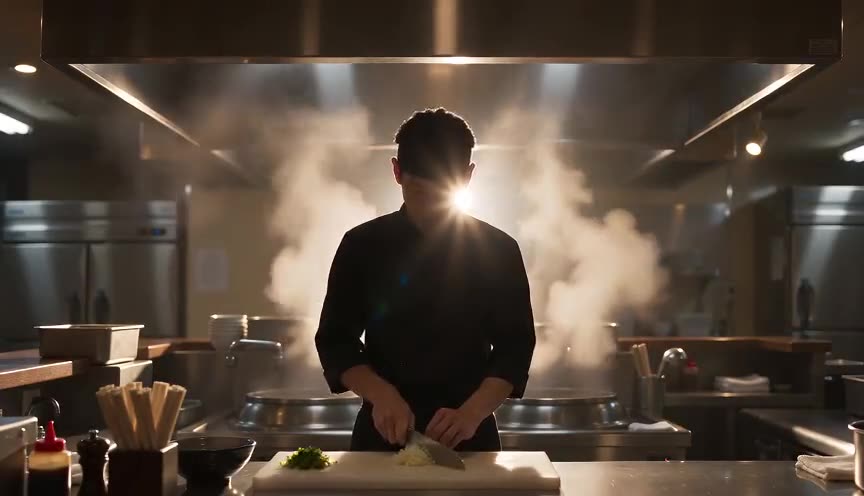
Backlight places a light source behind the subject to separate it from the background, but the front of the subject still carries some exposure and detail. Silhouette pushes that same setup further, cutting fill entirely so the subject goes fully black.
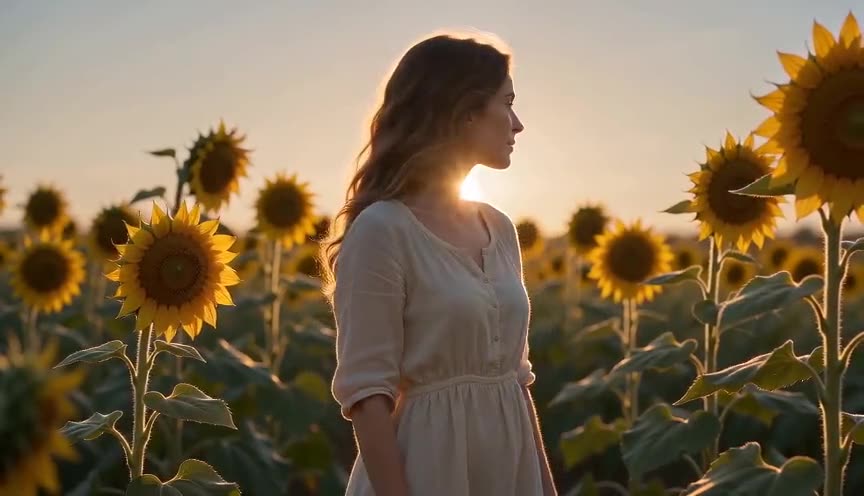
Rim light traces a thin bright edge around a subject that otherwise remains lit and detailed. Silhouette removes that detail completely, leaving only the outline shape with no lit surface at all.
In film
E.T. the Extra-Terrestrial (1982)
The bicycle riders crossing in front of the full moon become pure black silhouettes, turning an ordinary escape into an iconic image.
The Lion King (1994)
Pride Rock is repeatedly shown in silhouette against the sunrise or sunset to give the setting mythic, storybook weight.
The prompt
Tell the model to expose for the background, not the subject, and describe the background explicitly as bright (sky, window, glow) so it understands the contrast relationship. Say the subject shows no visible detail, only a dark outline, and avoid words like 'lit face' or 'visible expression' that push the model toward fill light. Keep the background simple so the shape reads clearly, and specify a static or slow camera so the outline stays legible for the full clip.
The exact prompt that rendered the video on this page. Keep the description of the move, change the subject and the setting.
Silhouette: static locked-off shot inside a glass greenhouse at dusk, a middle-aged woman standing among rows of tall potted plants, her entire body rendered as a solid black shape against a bright orange sky glowing through the glass panels behind her. The camera holds completely still for four seconds while she slowly raises a watering can, her outline crisp and dark with no visible facial detail or clothing texture, only the shape of her arms and the can readable against the light. Warm backlight streams through the glass panes, silhouetting the surrounding leaves into soft dark shapes as well. No text.
Common mistakes
Adding fill light
Even a small bounce card or soft fill on the front of the subject breaks the pure black shape and turns it into an underexposed subject instead of a true silhouette.
Cluttered background
A busy, uneven background makes the outline hard to read. Silhouettes need a clean, evenly bright surface behind the subject for the shape to register clearly.
Exposing for the subject
Metering off the person's face instead of the background source lifts exposure and reveals detail, which defeats the entire purpose of the technique.
Frequently asked questions
What is a silhouette shot?
It is a shot where the subject appears as a solid dark shape with no visible detail because the camera exposes for a much brighter background behind them, so the subject reads only as outline and gesture.
How do you get a silhouette without fill light ruining it?
Remove all light sources facing the front of the subject, keep the background source much brighter, and meter your exposure off that background rather than the subject's face.
Does silhouette work indoors or only outdoors?
It works anywhere there is a strong light source behind the subject and none in front, which is why windows, doorways, glowing screens and greenhouse glass all produce reliable silhouettes.
Can AI video tools like those on Imaginode generate silhouettes reliably?
Yes, if the prompt explicitly says the subject shows no visible detail and describes the background as the bright source, since the model needs that contrast spelled out rather than implied by lighting terms alone.