Butterfly lighting
Also calledParamount lighting, Glamour lighting
Butterfly lighting is a portrait setup where the key light sits high and directly in front of the face, casting a small butterfly-shaped shadow under the nose. It sculpts the cheekbones and smooths the face, giving the viewer a sense of glamour and classic elegance.
What it tells
Directors reach for butterfly lighting when a face needs to look flawless and iconic rather than lived-in. The symmetrical shadow under the nose flatters strong cheekbones and narrows a wide nose, so the technique became the signature look of old Hollywood glamour photography and star portraits. It tells the audience: look at this face as an object of beauty, almost a painting, and it slows the viewer down to admire rather than to read emotion or backstory.
How it is shot
The key light is raised above the camera's lens axis, roughly 30 to 45 degrees above the eyeline, and centered directly on the subject's nose so its shadow falls straight down between the nostril and the upper lip. A beauty dish or a large softbox, placed 3 to 5 feet from the face, gives the soft, even wrap this look needs. A white bounce card or a low fill light sits just below the chin to lift shadows under the eyes and keep the light ratio around 2:1. The camera stays at eye level, close, on a normal to long lens (50mm to 85mm) to avoid distortion.
When to use it
- Shooting a glamour or beauty portrait where symmetry and cheekbones should read as flawless
- Filming a fashion editorial close-up that needs a soft, sculpted, high-end look
- Photographing a character in a moment of vanity, seduction, or self-admiration
- Recreating a classic Hollywood studio portrait style for a period piece or homage
Not to be confused with
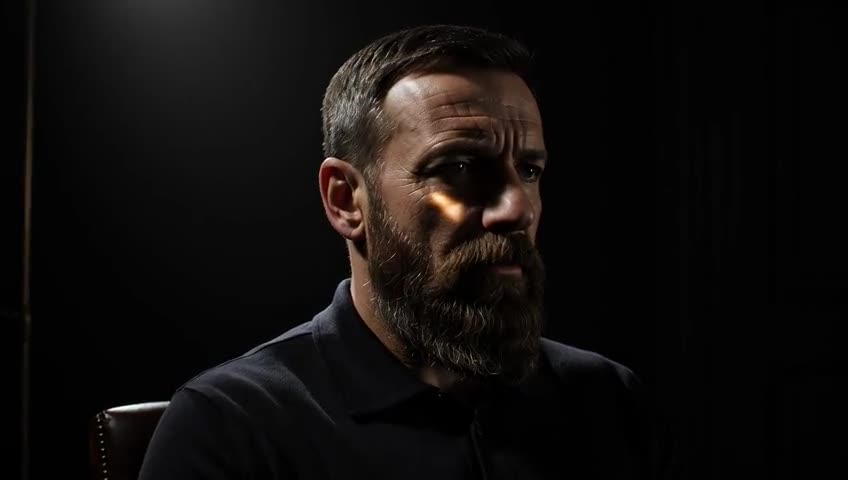
Rembrandt lighting places the key light at a 45-degree side angle to create a small triangle of light on one cheek, giving depth and drama. Butterfly lighting keeps the key centered and frontal for symmetry, not dimension.

Loop lighting is butterfly lighting's practical, less extreme cousin: the key sits lower and slightly to one side, casting a small looped shadow beside the nose instead of straight down, which suits a wider range of faces.
In film
Shanghai Express (1932)
Cinematographer Lee Garmes lit Marlene Dietrich with an early version of this frontal, high key light, later nicknamed Paramount lighting after the studio's glamour house style.
Morocco (1930)
Josef von Sternberg's studio glamour portraits of Dietrich use the same centered, high key light to sculpt her cheekbones into an idealized, symmetrical face.
The prompt
Name the light's position explicitly: high, centered, directly in front of the face, almost above the lens. Mention the small shadow under the nose and a soft fill below the chin, since those details are what make the technique readable in a single still or a 4-second clip. Avoid vague words like moody or dramatic, they push the model toward side lighting instead. Keep the camera locked or barely moving so the light pattern stays legible.
The exact prompt that rendered the video on this page. Keep the description of the move, change the subject and the setting.
Butterfly lighting on a woman in her forties standing between rows of autumn vines heavy with golden leaves. Camera is static, locked on a close-up at eye level with a soft 85mm lens look. A single warm key light sits high and directly in front of her face, almost above the camera, casting a small symmetrical butterfly-shaped shadow straight down under her nose, with a soft fill lifting the shadows under her eyes. Background vineyard rows are softly out of focus in warm amber tones, her expression calm and still through the shot. No text.
Common mistakes
Key light placed too low or off-axis
If the light drifts to one side or drops below the eyeline, the shadow shifts into a loop or Rembrandt pattern instead of the centered butterfly shape.
No fill under the chin
Without a bounce card or low fill, the eye sockets and under-chin area go too dark, which fights the soft, flattering intent of the setup.
Using it on the wrong face shape
Butterfly lighting emphasizes cheekbones but can deepen hollow cheeks or make a round face look flatter, so it does not suit every subject.
Frequently asked questions
What is butterfly lighting?
It is a portrait lighting technique where the key light is placed high and centered directly in front of the face, creating a small butterfly-shaped shadow under the nose. It is prized for flattering symmetrical faces and pronounced cheekbones.
Why is it called Paramount lighting?
Paramount Pictures' studio cinematographers used this frontal, high key setup so often on their glamour portraits in the 1930s and 1940s that the technique picked up the studio's name as a nickname.
Who does butterfly lighting suit best?
It flatters faces with strong, symmetrical cheekbones and a straight nose, since the light narrows the nose and sculpts the cheeks. It can look unflattering on round or heavily lined faces without careful fill.
Can an AI video model generate butterfly lighting accurately?
Yes, if you describe the light's position and the resulting shadow explicitly rather than just naming the technique. On Imaginode, naming the high frontal key and the shadow under the nose gets a much more reliable result than the term alone.