Top light
Also calledOverhead light, Downlight
Top light is a light source placed directly above the subject, pointing straight down. It carves deep shadows under the brow, nose, cheekbones and chin, stripping the face of flattery and often reading as clinical, isolating or ominous.
What it tells
Directors reach for top light when they want to deny a character warmth or sympathy. It flattens the charm out of a face, hollows the eyes, and turns a room into an interrogation space even without a table and two chairs. Because it withholds the soft fill that usually protects an actor, it signals exposure: a character being judged, questioned, or reduced to a function rather than a person the camera loves.
How it is shot
The fixture sits at or near 90 degrees above the subject's head, usually on a boom, a ceiling grid, or a practical like a hanging bulb or a gym floodlight. Hard sources (open-face lights, small par cans) produce sharp-edged shadows under the eye sockets and nose; larger sources or softboxes soften the falloff but keep the direction. No fill light is added, which is what makes the look severe. Outdoors, straight overhead sun at midday does the same job for free, so cinematographers either shoot in that window on purpose or bounce fill in to avoid it. Distance from source to subject controls contrast: closer and smaller means harder shadows.
When to use it
- Shooting an interrogation or confession scene where you want the subject to feel exposed and unprotected.
- Filming outdoors at midday when the sun sits nearly overhead and you cannot control the schedule.
- Building a menacing or clinical mood for a villain, a morgue, a locker room or an institutional setting.
- Photographing sports or gym scenes lit by practical overhead fixtures to keep the look authentic.
Not to be confused with
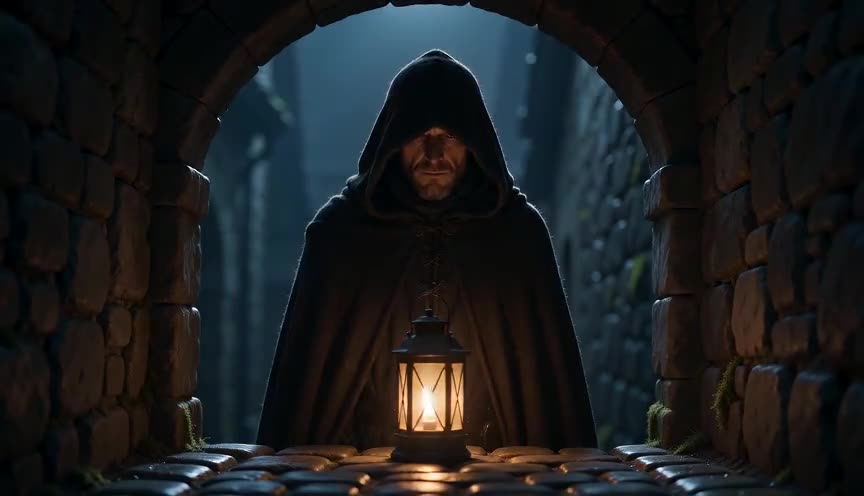
Underlighting places the source below the face for the opposite effect: shadows thrown upward, which reads as unnatural or monstrous, while top light throws shadows down and reads as cold or exposed.
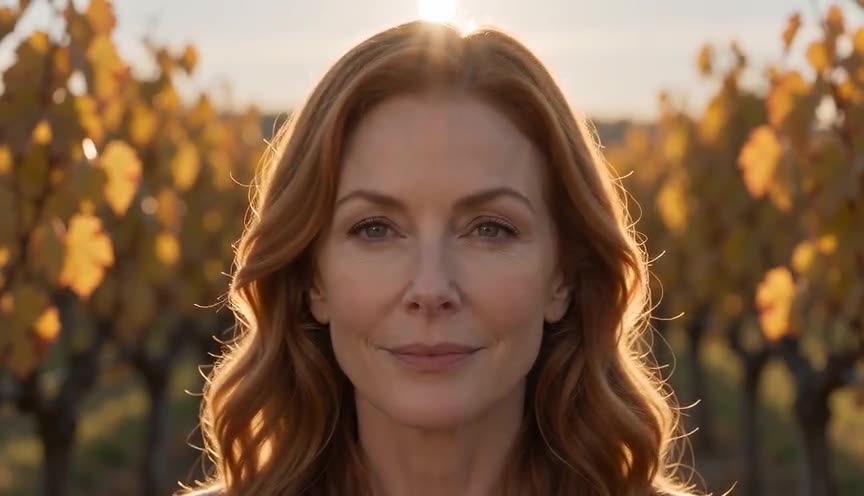
Butterfly lighting also comes from above but angled forward at roughly 45 degrees, casting a small symmetric nose shadow that flatters. Top light is steeper, closer to vertical, and deliberately unflattering.
In film
The Godfather (1972)
Cinematographer Gordon Willis lit Vito Corleone's office scenes with hard overhead sources, hollowing his eyes into shadow to make him unreadable and powerful.
One Flew Over the Cuckoo's Nest (1975)
Flat fluorescent ceiling fixtures cast institutional top light across the ward, stripping warmth from every face to underline the setting's clinical control.
The prompt
Name the fixture position explicitly (overhead floodlight, light directly above, midday sun straight down) and describe the effect on the face (shadows pooling under the eyes, nose and chin) since models respond better to a described result than to a lighting term alone. Say there is no fill light to prevent the model from softening the shadows. Avoid vague words like moody; specify hard-edged or soft-edged shadow and the exact direction, straight down.
The exact prompt that rendered the video on this page. Keep the description of the move, change the subject and the setting.
Top light. A boxer sits alone on a stool in the middle of a dark gym, lit only by one hard lamp hanging directly above his head. The light falls straight down: his hair and shoulders are bright, his eyes disappear into dark sockets, deep shadows under his brow, nose and chin, and a circle of light on the floor around him, everything else black. He slowly lifts his head. Static camera. No text.
Common mistakes
Adding fill by accident
A bounce card or a second light source washes out the eye shadows and kills the effect entirely; top light only reads if it stays unopposed.
Source too far or too soft
A large diffused source hung too high produces gentle falloff instead of the hollow-eye look; move the fixture closer or use a smaller, harder source.
Confusing it with an overhead camera angle
Top light is about where the light comes from, not where the camera sits; you can shoot top light from eye level, a low angle or anywhere else.
Frequently asked questions
What is top light?
Top light is a lighting setup where the main source sits directly above the subject and points straight down, creating hard shadows under the eyes, nose and chin instead of the flattering light most portraits use.
Why does top light make faces look sinister?
Because the shadows fall into the eye sockets and under the nose and chin, the face loses the readable expression viewers rely on, which the brain often interprets as hidden intent or menace.
Is top light the same as an overhead shot?
No. Top light describes the direction of the light source; an overhead shot describes where the camera is placed. You can combine either camera angle with top light or with any other lighting direction.
Can AI video tools generate top light convincingly?
Yes, if you describe the source position and the shadow pattern explicitly rather than naming the technique alone. On a platform like Imaginode, pairing the term with a description of shadows under the eyes and chin gets a more reliable result.