Cameo lighting
Also calledPortrait lighting on black, Cameo effect
Cameo lighting is a technique that lights the subject with a single, tight, hard light source while the background stays completely black, with no fill or spill reaching it. It strips away every visual distraction and forces the viewer's eye onto the lit figure alone, as if it were carved out of the dark.
What it tells
Directors reach for cameo lighting when a character needs to feel isolated, exposed, or almost sculptural, cut off from time and place. Because the background gives no information, the technique flattens context and pushes the audience toward pure attention on gesture, texture, and expression. It carries a theatrical, painterly weight, recalling old studio glamour portraits, and works well for confession scenes, interrogations, or any moment where a face alone should carry the entire emotional charge of the shot.
How it is shot
A single hard key light, often a fresnel or a small hard-source fixture with barn doors or a snoot, is aimed tightly at the subject from a 30 to 45 degree angle, with the beam narrowed just enough to cover the face and shoulders. No fill light is added, and the background is placed far enough from the key (often 3 meters or more) or flagged so it receives zero spill, reading as true black on camera. Exposure is set for the highlight on the skin, letting everything outside the beam fall several stops under, well past the point where detail survives. A snoot, gobo, or barn doors keep the edge of the beam sharp rather than feathered.
When to use it
- A single character delivers a confession or a secret and nothing else should compete for attention
- You want a theatrical, portrait-like moment inside an otherwise naturalistic scene
- A figure needs to feel cut off from place and time, floating in darkness
- You are building a striking still-like frame for a title card or a character reveal
Not to be confused with
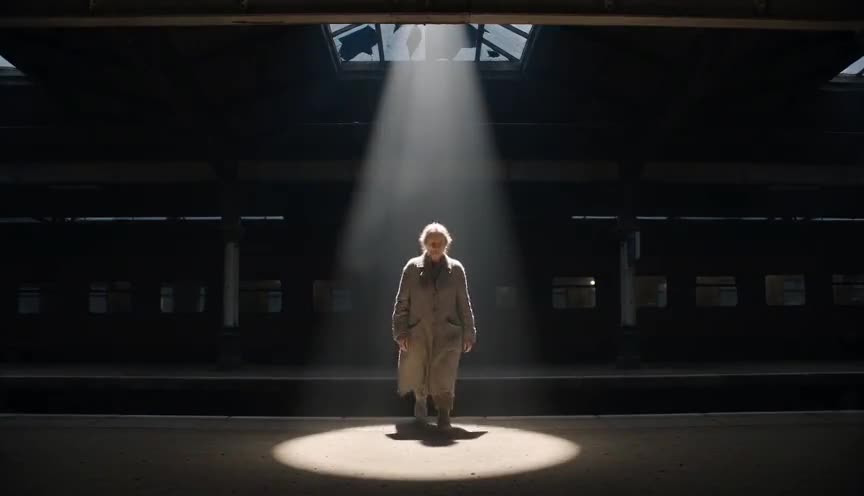
A spotlight is the light source itself and can still allow some ambient fill on the background; cameo lighting specifically demands a background of total, unlit black with zero spill.
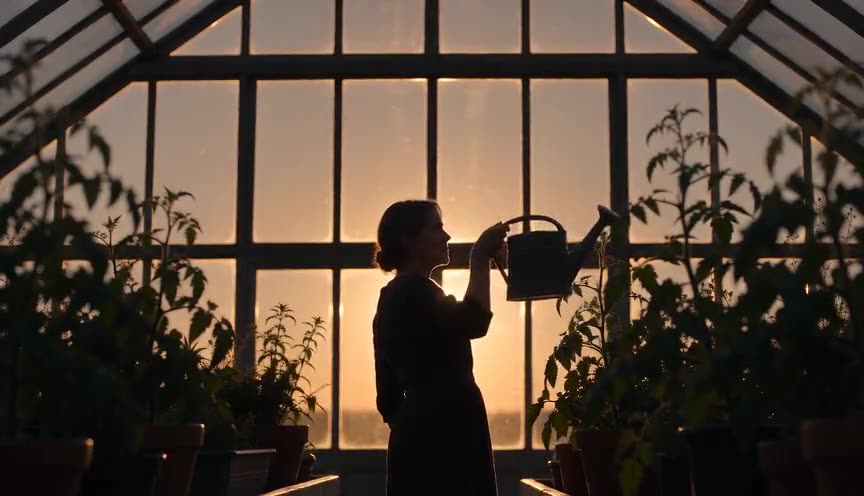
Silhouette keeps the subject dark against a bright background, the exact inverse of cameo lighting, which lights the subject brightly and drops the background to black.
In film
Shanghai Express (1932)
Josef von Sternberg isolates faces in hard beams against black studio backdrops, a hallmark of his glamour-era lighting style.
The Scarlet Empress (1934)
Von Sternberg again uses tight, sculptural single-source light to carve faces out of pure darkness for maximum stylization.
The prompt
Name the light explicitly as a single hard beam, state that the background is pure black with no fill and no ambient spill, and describe a visible sharp edge to the light rather than a soft gradient. Avoid words like glow, ambient, or soft, which push models toward diffuse lighting. Mention the light's angle and that everything outside it stays underexposed, and keep the camera static so the contrast reads clearly in a short clip.
The exact prompt that rendered the video on this page. Keep the description of the move, change the subject and the setting.
Cameo lighting on a lone boatman poling a wooden canoe down a dark rainforest river at night. A narrow shaft of moonlight breaks through a small gap in the dense canopy, falling as a hard, tightly edged beam only on his face and shoulders; the water, banks, and trees around him stay completely black, with no ambient light and no fill reaching them. The camera is locked on a tripod at eye level in a static medium shot as he drifts slowly through the beam, his features sharp and lit while the rest of the frame remains true black. No text.
Common mistakes
Adding fill light
Even a small amount of fill on the background kills the effect; cameo lighting needs the surroundings to read as pure, unbroken black, not dark gray.
Using a soft source
A softbox or bounced light produces a gentle falloff instead of a crisp-edged beam, which undercuts the sculptural, cut-out look the technique depends on.
Letting the beam spill too wide
If the light covers more than the subject, the background picks up spill and stops looking black, so the isolation effect disappears.
Frequently asked questions
What is cameo lighting?
Cameo lighting is a lighting technique that hits the subject with one hard, narrow light source while the background stays completely unlit and black, isolating the figure like a cut-out portrait.
How is cameo lighting different from low-key lighting?
Low-key lighting uses deep shadows across a whole scene with some tonal range in the background, while cameo lighting pushes the background all the way to zero, with no visible detail at all outside the beam.
What equipment do you need for cameo lighting?
A single hard-edged fixture such as a fresnel with barn doors, or a focusable spotlight with a snoot, plus enough distance or flagging between the subject and background to keep spill off the backdrop.
Can an AI video model generate cameo lighting reliably?
Yes, if you describe the beam as hard-edged and state clearly that the background stays pure black with no ambient light; tools like those on Imaginode respond well to that level of physical detail.