Spotlight
Also calledFollow spot, Hard spot light, Isolation lighting
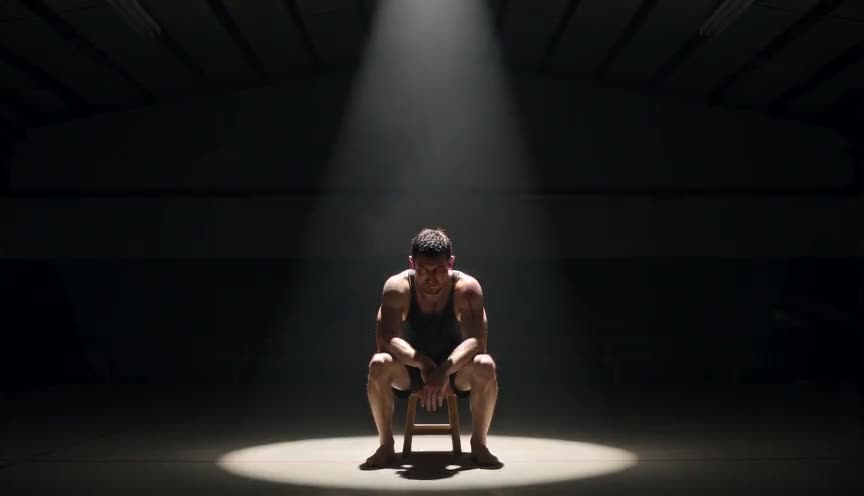
A spotlight is a narrow, directional beam of hard light that isolates a subject from its surroundings, letting everything outside the beam fall into shadow. It pulls the viewer's eye to one point in the frame and signals importance, exposure, or judgment without a single word.
What it tells
Directors use a spotlight to strip away context and force a moral or emotional reading of a single figure. In a musical, it turns a performer into the center of the universe. In a courtroom or interrogation scene, it becomes an accusation, a beam that exposes and judges. Because everything outside the light disappears, the spotlight also removes choice: the viewer cannot look anywhere else, so the character's fear, triumph, or isolation lands with full weight, undiluted by background detail.
How it is shot
On set, a spotlight is typically a fresnel or ellipsoidal fixture with barn doors or a shutter that cuts a hard-edged circle of light, often a 5 to 15 degree beam. The fixture sits well back from the subject, 20 to 40 feet, so the beam stays tight and its edge stays sharp instead of soft. Everything outside the pool is left unlit or covered with black flags, pushing the exposure difference between light and shadow to 4 or more stops. A gobo or iris can trim the shape further, and a follow spot operator on a dimmer can track the subject as they move.
When to use it
- A single performer takes center stage during a live musical number or theatrical scene.
- An interrogation or confession scene where one character must feel exposed and judged.
- A reveal of a hidden character stepping out of darkness into a pool of light.
- A dream or memory sequence where only one detail matters and the rest should vanish.
Not to be confused with
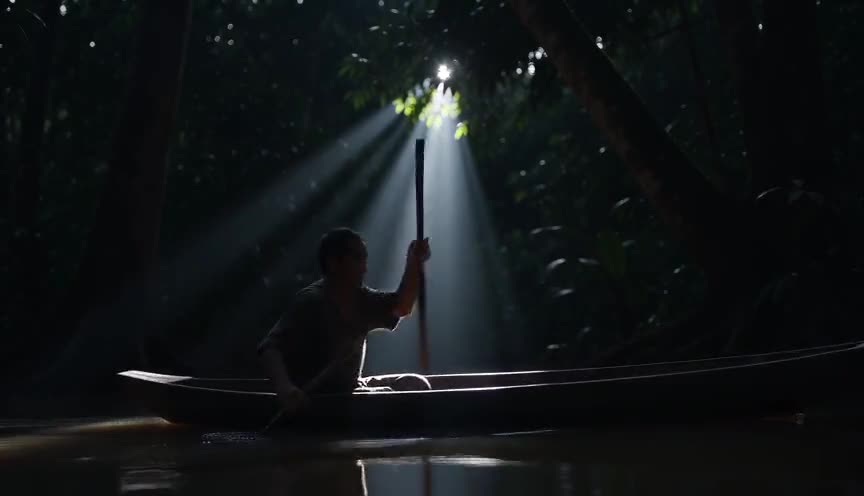
Cameo lighting isolates a subject against a pure black background using a single tight source, similar to a spotlight, but it is built for portraiture and product shots rather than for tracking a moving performer across a stage or set.
Top light comes straight down from above and often creates a spotlight-like pool on the floor, but it usually keeps some ambient fill in the room, whereas a true spotlight relies on total surrounding darkness for its isolation.
In film
The Third Man (1949)
A sudden shaft of light from a nearby window reveals Harry Lime's face in a dark doorway, creating a classic character introduction.
Chicago (2002)
Musical numbers use a hard spotlight to isolate performers on a bare stage, turning fantasy sequences into pure performance.
The prompt
Name the fixture and its effect directly: say 'a single hard spotlight beam' or 'a tight cone of light' and specify that the surrounding space is in near-total darkness. Describe the sharp edge of the light pool and the exposure gap between the lit subject and the black background, since AI models often default to soft, ambient fill unless told otherwise. Avoid vague words like 'dramatic lighting' alone; instead name the beam angle, the darkness outside it, and whether the light is static or slowly moving with the subject.
The exact prompt that rendered the video on this page. Keep the description of the move, change the subject and the setting.
Spotlight: inside an abandoned train station at night, a single hard beam of light drops from a broken skylight and forms a tight, sharp-edged circle on the dusty platform floor. A middle-aged woman in a worn coat walks slowly into the beam from the surrounding darkness, her face lit while the rusted pillars, broken benches, and collapsed ceiling around her stay black and invisible. The camera stays locked on a tripod, static, while dust drifts through the beam. The edge between light and shadow stays hard and sharp throughout. No text.
Common mistakes
Soft, gradual falloff
A spotlight needs a hard edge; if the light fades gradually into the dark instead of cutting off sharply, it reads as ambient lighting, not an isolating beam.
Too much ambient fill
Leaving visible detail in the background defeats the isolation; the surrounding space should read as near-black so the pool of light has nowhere to compete.
Beam wider than the subject
If the circle of light spills far beyond the person's body, it stops feeling like a targeted spotlight and starts looking like a poorly controlled key light.
Frequently asked questions
What is a spotlight in film?
A spotlight is a narrow, hard-edged beam of light aimed at one subject while the rest of the frame stays dark, used to isolate a character or object and direct the viewer's full attention onto it.
How is a spotlight different from a key light?
A key light is the main light shaping a subject within an otherwise lit scene, while a spotlight isolates the subject by leaving everything else close to black, often with a visible hard-edged pool of light.
Why do musicals use spotlights so often?
A spotlight strips away the set and turns the frame into pure performance space, so the audience's eye has nowhere to go but the singer or dancer, matching the heightened, theatrical mood of a musical number.
Can I generate a spotlight look with AI video tools?
Yes. On Imaginode, describing a single hard beam, a sharp-edged pool of light, and near-total darkness around the subject gets AI video models like Seedance or Kling to render a convincing spotlight without ambient fill sneaking in.