Cross lighting
Also calledCross key lighting, Dual key lighting
Cross lighting is a setup in which two light sources strike the subject from opposite or crossing angles instead of one dominant key. It models both sides of the face or body at once, separates the subject from the background, and can produce a distinct double shadow on the floor or wall behind them.
What it tells
Directors reach for cross lighting when a scene needs energy without losing shape. A single key light can flatten a subject into one lit plane, but two sources crossing from either side carve cheekbones, shoulders, and hands even in a dim or busy location. The technique reads as tense, electric, or nocturnal: it suits confrontations, dance numbers, and interrogations where the subject is caught between forces. Because it separates figure from background without softening the mood, filmmakers use it to keep a scene visually sharp while the story stays unresolved or adversarial.
How it is shot
Two lights of matched or contrasting color temperature are placed at 30 to 60 degrees off the camera axis, on opposite sides of the subject, usually at head height. Each unit works as a key for its own side of the face while rimming the other, so a dedicated backlight is often unnecessary. Hard sources with barn doors sharpen the crossed shadows; softboxes on both sides give a gentler two-sided glow. Gaffers balance the two units within half a stop of each other for symmetry, or push one brighter to keep a dominant side. Gels in contrasting colors, warm against cool, push the crossing into a stylized, almost theatrical look.
When to use it
- A confrontation or interrogation scene where both faces need equal, sharp definition despite low ambient light.
- A dance or fight sequence that needs bodies to read clearly from any angle as they move.
- A moody interior like a bar, garage, or laundromat where a single practical fixture would flatten the subject.
- A stylized two-color look, warm against cool, to signal tension or mark a genre shift.
Not to be confused with
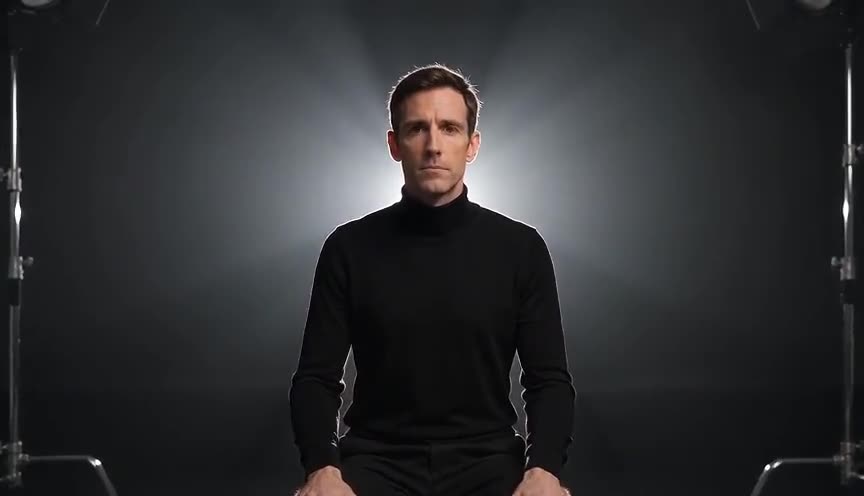
Three-point lighting builds a hierarchy of key, fill and back light from one dominant direction. Cross lighting instead uses two competing sources of similar strength from opposite sides, so there is no single key and the shadows cross rather than soften.
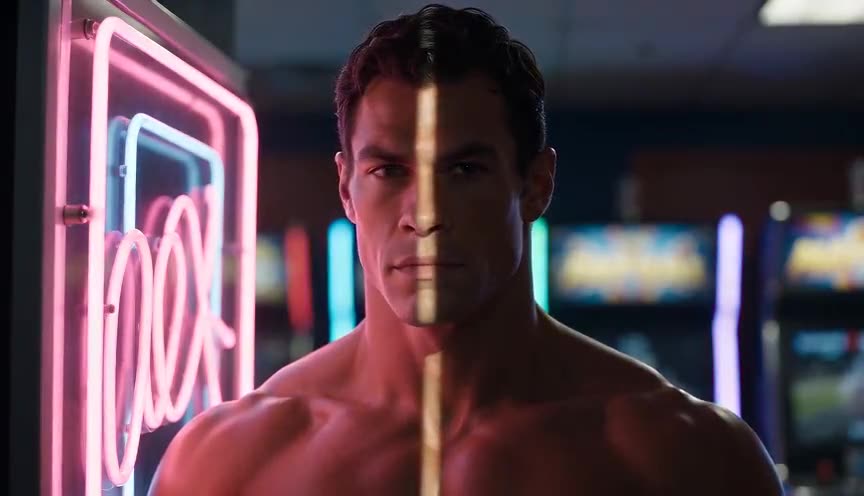
Split lighting uses one light at 90 degrees to divide a single face into a lit half and a shadowed half. Cross lighting uses two separate sources from both sides, so both halves stay lit, just with different shadow directions.
In film
The Red Shoes (1948)
Jack Cardiff's ballet sequence uses paired theatrical sidelights from opposite wings, modeling Vicky Page's body and separating her sharply from the stage space.
The Third Man (1949)
Robert Krasker lights the Vienna sewer chase with hard sources from intersecting directions, producing the famous overlapping shadows as Harry Lime runs through the tunnels.
Raging Bull (1980)
Michael Chapman lights the boxing bouts with hard opposing ring sources, carving both fighters from both sides while smoke and ropes catch double-edged shadows.
The prompt
Name both sources and their positions explicitly: two lights, one from the left, one from the right, at roughly 45 degrees to the camera. Mention the color of each, warm on one side and cool on the other, so the model does not merge them into a single soft wash. Ask for the shadow this creates, on the wall or floor, since that double shadow is the clearest tell of cross lighting. Avoid vague words like 'dramatic lighting'; they tend to produce generic backlighting or a plain silhouette instead.
The exact prompt that rendered the video on this page. Keep the description of the move, change the subject and the setting.
Cross lighting on a woman folding towels alone in a laundromat at night, lit by two sources at roughly 45 degrees on either side: a warm amber light from the left through the front window and a cool blue light from the right cast by a vending machine glow. The camera holds a static medium shot as she works, her face and hands modeled by both colors, a crossed double shadow stretching behind her onto the row of dryers. No text.
Common mistakes
One light disguised as two
Placing both fixtures at nearly the same angle produces a single broad key instead of a crossing pattern; the two sources need a real angular difference, roughly 60 to 90 degrees apart.
Uneven intensity kills the cross
If one light is much brighter than the other, the dimmer side reads as fill rather than a second key, and the double shadow disappears into a single soft shadow.
Ignoring the background shadow
Cross lighting is most visible in the shadow it throws behind the subject; shooting too close to a bare wall or skipping a wall altogether hides the technique's signature look.
Frequently asked questions
What is cross lighting in film?
Cross lighting is a lighting setup where two sources hit the subject from opposite or intersecting angles instead of one main key. It models both sides of the subject at once and often throws a distinctive double shadow, which is why it shows up in interrogation scenes, dance sequences, and moody interiors.
Is cross lighting the same as three-point lighting?
No. Three-point lighting organizes key, fill, and back light around one dominant direction. Cross lighting drops that hierarchy for two competing sources of similar strength on opposite sides, which is why the shadows cross instead of blending into a single soft falloff.
Do the two lights in cross lighting need to be different colors?
Not necessarily, but many filmmakers gel them differently, warm against cool, to make the crossing obvious and add mood. Matched color temperature still works; it just relies more on the double shadow than on color contrast to read as cross lighting.
Can an AI video model generate cross lighting convincingly?
Yes, if you describe both light sources, their positions, and their colors explicitly rather than saying 'dramatic lighting.' On Imaginode, naming the crossed double shadow in the prompt is the detail that most reliably pushes models like Kling or Veo toward a true cross-lighting result instead of a generic backlit look.