Hard light
Also calledHarsh light, Direct light, Specular light
Hard light is illumination coming from a small or distant source relative to the subject, producing shadows with sharp, well-defined edges and abrupt jumps between bright and dark areas. It reads as harsh and graphic, putting the viewer on edge rather than at ease.
What it tells
Hard light strips away comfort. Directors reach for it when a scene needs tension, exposure or moral weight: an interrogation, a confession, a betrayal caught in raw daylight. Because the shadows it casts are crisp and unforgiving, hard light makes faces look carved rather than caressed, turning ordinary rooms into places where nothing stays hidden for long. It is the light of consequence, not comfort.
How it is shot
A source reads as hard when it is small or far away compared to the subject: a bare bulb, a fresnel spotlight without diffusion, direct sun through a window, or a hard-edged HMI at distance. The smaller the apparent size of the source, the sharper the shadow edge. Gaffers control it with flags, cutters and barn doors rather than silk or bounce, keeping contrast ratios high (often 8:1 or steeper) and fill to a minimum so blacks stay dense. On set this means fewer diffusion frames, tighter beam angles, and precise blocking so the actor's face crosses defined light and shadow lines at the right moment.
When to use it
- An interrogation or confrontation scene where the dialogue needs visible pressure on the face
- A period or noir setting where directional sun or a single bulb is the only motivated source
- A moment of exposure or judgment, when a character has nowhere left to hide
- An exterior midday scene you want to keep harsh instead of softening with bounce or diffusion
Not to be confused with
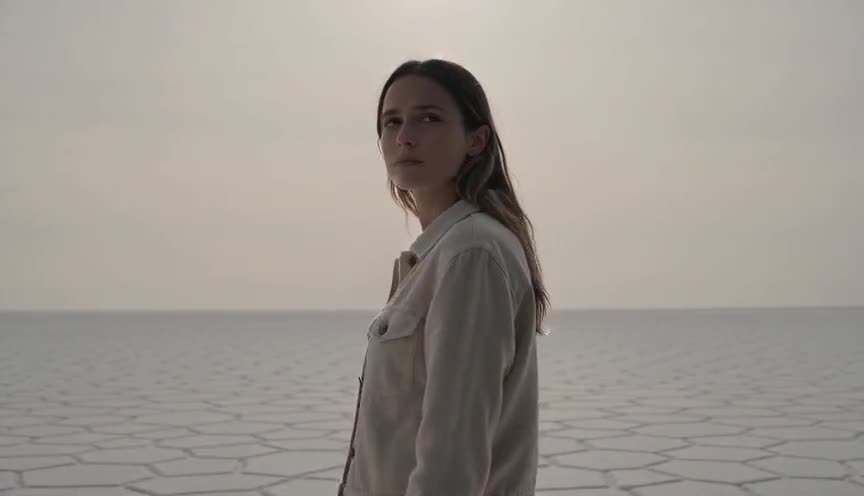
Soft light comes from a large or diffused source and wraps around the face with gradual shadow edges. Hard light does the opposite: it cuts, defines and exposes rather than flatters.
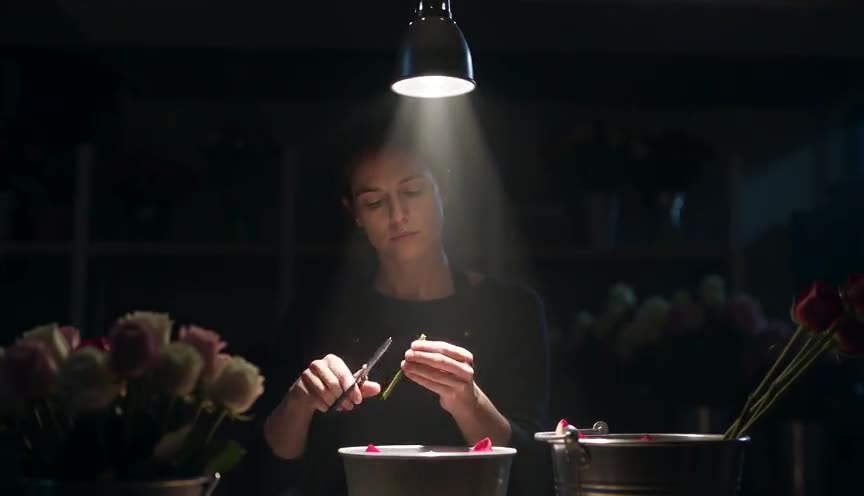
Chiaroscuro is a compositional approach built on strong light and dark masses, often using hard light as its raw material. Hard light describes the source quality; chiaroscuro describes how that quality is arranged across the whole frame.
In film
Double Indemnity (1944)
Hard light through venetian blinds carves striped shadows across faces and walls, a defining image of classic film noir.
The Godfather (1972)
Gordon Willis uses a hard top light that drops Marlon Brando's eyes into shadow, making him unreadable and menacing.
Sin City (2005)
Nearly every frame relies on extreme hard light and pure black shadow to mimic the graphic novel's ink contrast.
The prompt
Name the source explicitly and keep it small: a bare bulb, a narrow window shaft, a single spotlight, direct sun. Say the shadows have sharp, defined edges and that there is little or no fill light, so blacks stay deep and the highlight to shadow jump is abrupt. Avoid words like soft, diffused, glowing or gentle, and avoid describing overcast or bounced light, which pushes the model toward soft light instead.
The exact prompt that rendered the video on this page. Keep the description of the move, change the subject and the setting.
Hard light: a static wide shot of a 1930s hotel lobby with marble floors and tall arched windows, one narrow shaft of direct sunlight cutting through a half-closed blind and striking the floor and a passing man's tailored suit. The rest of the room stays in deep shadow with no fill light, so the edge between lit and unlit areas is sharp and abrupt. As he crosses the shaft, a crisp, hard-edged shadow of the window frame sweeps across his face and the wall behind him. Camera does not move. No text.
Common mistakes
Adding fill by accident
Bouncing light back into the shadow side softens the contrast and turns hard light into medium light, killing the harsh effect the scene needs.
Using too large a source
A big softbox or an overcast sky produces gradual shadow edges even at close range; hard light needs a source that stays small relative to the subject.
Ignoring the shadow shape
Hard light is as much about what the shadow looks like as the light itself; forgetting to design blinds, branches or window mullions wastes the technique's graphic potential.
Frequently asked questions
What is hard light?
Hard light is light from a small or distant source that creates shadows with sharp, well-defined edges and strong contrast between bright and dark areas, rather than a gentle gradient.
What is the difference between hard light and low-key lighting?
Hard light describes the quality of the source and its shadow edges. Low-key lighting describes an overall dark, high-contrast look for a scene, which often uses hard light but is not the same concept.
Does hard light always mean bright light?
No. A single bare bulb in a dim room is still hard light because the source is small, even though the overall exposure can be low. Hardness is about shadow edge quality, not overall brightness.
Can AI video tools render hard light convincingly?
Yes, models like those used on Imaginode respond well to explicit cues: name a small source, describe sharp shadow edges and say there is little or no fill light, and the render will show strong, graphic contrast.