Three-point lighting
Also calledClassic lighting setup, Key-fill-back lighting
Three-point lighting is a setup that shapes a subject with three light sources: a key light for direction, a fill light to soften shadows, and a backlight to separate the subject from the background. It gives the viewer a face and body that read as three-dimensional instead of flat.
What it tells
Directors reach for three-point lighting when they need a subject to feel present and legible without drawing attention to the lighting itself. The key gives the face shape and mood, the fill controls how harsh or gentle that shape reads, and the backlight keeps the subject from melting into the background. It is the invisible scaffolding under most dialogue scenes, interviews and portraits, doing its job precisely when nobody notices it.
How it is shot
The key light sits roughly 30 to 45 degrees off the camera axis and slightly above eye level, set as the brightest source and usually the hardest in quality. The fill light sits on the opposite side, softer and dimmer, typically at a 2:1 to 4:1 ratio against the key, to lift shadow density without erasing it. The backlight (or rim/kicker) sits behind the subject, often higher and narrower, to trace an edge of light along hair and shoulders that pulls the subject off the backdrop. On set this means a key light with a softbox or open-face fixture, a bounce board or a second, weaker fixture for fill, and a small Fresnel or LED panel behind and above for the rim.
When to use it
- Shooting a seated interview where the subject must stay clearly readable against a busy background
- Lighting a dialogue scene where faces need volume without a heavy dramatic mood
- Filming a product or portrait where separation from the backdrop matters more than atmosphere
- Building a controlled look on location where natural light alone leaves the subject flat
Not to be confused with
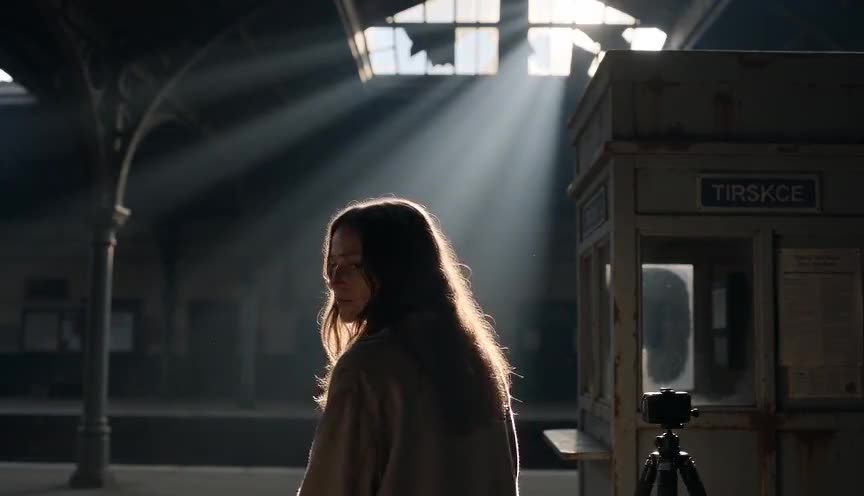
Key light is just one of the three sources in this setup, the main light that defines direction and shape. Three-point lighting is the full arrangement of key, fill and backlight working together.
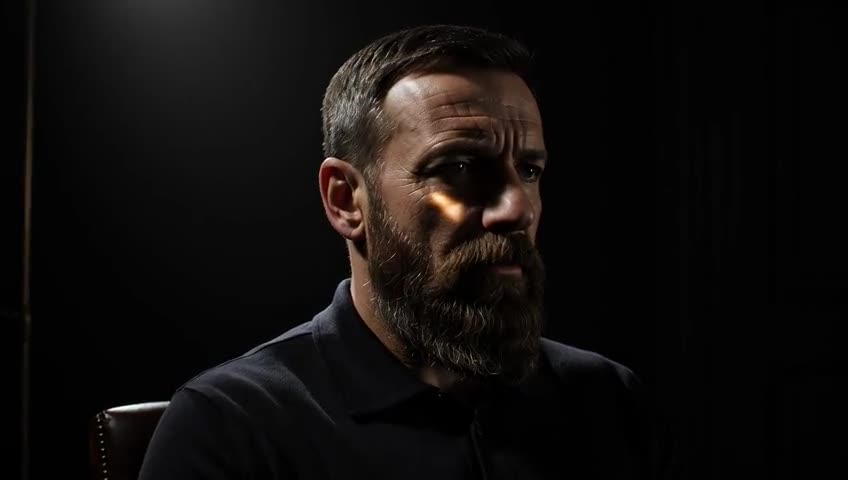
Rembrandt lighting is a specific key light position (the triangle of light under one eye) used inside a three-point rig. Three-point lighting is the broader system that Rembrandt lighting can sit within.
In film
Citizen Kane (1941)
Studio-era cinematography built on disciplined three-point setups to keep faces sculpted even in deep, shadow-heavy compositions.
Casablanca (1942)
Classic Hollywood glamour lighting relies on textbook key, fill and backlight to keep every close-up polished and dimensional.
The prompt
Name all three sources explicitly and give each one a direction, a relative strength and a quality: a stronger key from one side, a softer fill from the other, and a rim or backlight behind the subject that separates them from the background. Mention color temperature contrast (warm key, cool rim) if you want extra separation. Avoid vague words like 'well lit' or 'cinematic lighting' alone, the model needs the geometry spelled out, and avoid asking for more than three distinct sources or the setup reads as generic.
The exact prompt that rendered the video on this page. Keep the description of the move, change the subject and the setting.
Three-point lighting setup, visible in a dark photo studio. A man sits on a stool facing the camera: a soft key light on one side lights his face, a dimmer fill light on the other side softens the shadows, and a back light behind him draws a bright glowing outline around his hair and shoulders, separating him from the black background. The light stands are visible at the edges of the frame. Slow push in. No text.
Common mistakes
Fill light too strong
When fill matches or exceeds the key, the face loses shape and the whole setup looks flat and shadowless, defeating the point of a three-light rig.
Skipping the backlight
Without a rim or backlight, the subject blends into a dark or busy background and the sense of depth that three-point lighting is meant to create disappears.
Same color temperature everywhere
Using identical color for key, fill and backlight makes the separation harder to read; a slight temperature contrast on the rim helps the edge stand out.
Frequently asked questions
What is three-point lighting?
It is a lighting setup that uses a key light, a fill light and a backlight to shape a subject, control shadow density and separate the subject from the background. It is the standard baseline for interviews, dialogue scenes and portraits.
Do I need exactly three lights?
No, the names describe roles, not a fixed fixture count. A bounce board can serve as fill and a window can serve as key; what matters is that the three functions (shaping, softening, separating) are present.
What ratio should key and fill be?
A common starting point is 2:1 to 4:1, meaning the key is two to four times brighter than the fill. Lower ratios look brighter and more neutral, higher ratios look more dramatic and shadowed.
How do I get three-point lighting from an AI video model?
Describe each light by direction, relative strength and color rather than saying 'cinematic lighting.' On a platform like Imaginode, naming the key, fill and backlight explicitly in the prompt gives the model the geometry it needs to render the setup correctly.