Dappled light
Also calledBroken light, Filtered light, Mottled light
Dappled light is a pattern of bright and dark patches that falls across a subject or scene when light passes through an uneven surface such as leaves, blinds or textured glass. It breaks up flat illumination and gives the viewer a sense of a specific, textured place and a passing moment rather than a controlled studio look.
What it tells
Dappled light reads as unplanned and alive, so directors use it to root a scene in nature or in a specific architectural moment, letting the world outside the frame (trees, screens, water) seem to touch the actor. It suggests memory, instability or the passing of time, since the pattern shifts with wind, movement or the sun. It also softens the line between a controlled shot and a documentary one, making staged scenes feel found rather than lit.
How it is shot
The effect comes from placing an irregular, semi-transparent or slotted object between a hard light source and the subject: real foliage, venetian blinds, chain-link fence, water reflections, or a custom-cut gobo in front of an HMI or tungsten fixture. The harder and more distant the source, the crisper the shadow edges; a softer or closer source blurs the pattern. Distance between the cutting object and the subject also matters: move it closer for sharp, small patches, farther for larger, softer ones. Outdoors, cinematographers often wait for wind to animate leaf shadow, or use a leko with a branch-shaped gobo when the sun will not cooperate. Exposure is usually set for the highlights so the dark gaps read as true shadow.
When to use it
- Establishing a forest, orchard or park scene where sunlight naturally filters through a canopy
- Suggesting a character's fractured state of mind or an unstable memory without changing the edit
- Adding texture to a flat interior by placing blinds, screens or foliage between a window and the actor
- Signaling the passage of time in a static shot as shifting patches move slowly across a face or wall
Not to be confused with
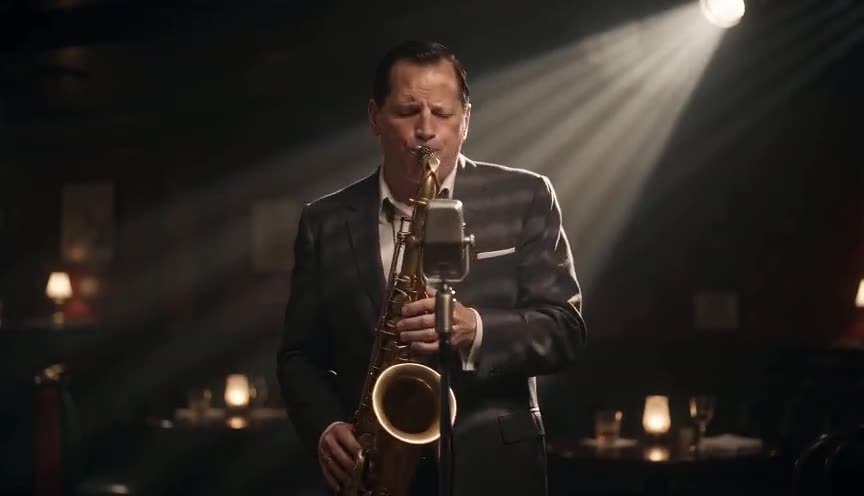
A gobo is the tool, a cut-out or textured object placed in front of a light to shape it; dappled light is the visual result, which can come from a gobo, real leaves, blinds or water and does not require a rigged fixture.
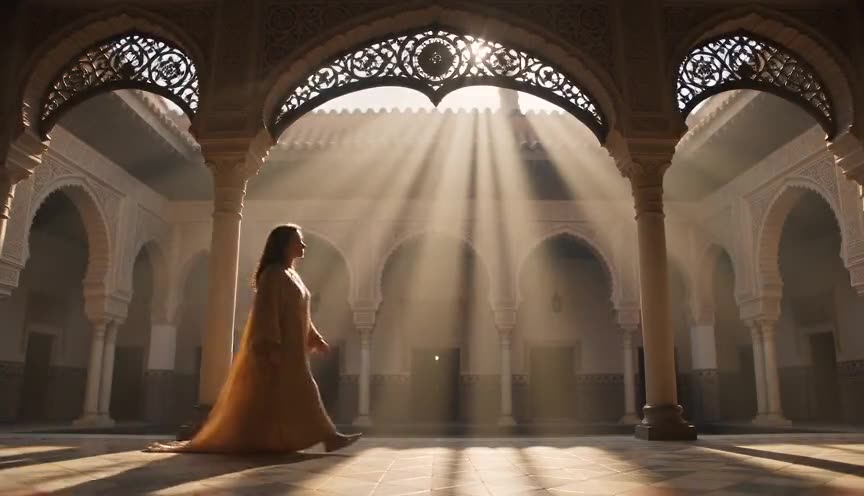
Volumetric light shows the beam itself as a visible shaft through haze or smoke; dappled light is about the broken pattern the beam leaves on a surface, with or without any visible atmosphere.
In film
In the Mood for Love (2000)
Light through window screens and blinds falls in narrow bands across the characters, echoing their restrained, half-hidden desire.
The Conformist (1970)
Venetian blind shadows stripe Clerici and surrounding interiors, turning ordinary rooms into fractured, oppressive spaces shaped by secrecy and surveillance.
Blade Runner (1982)
Light broken by blinds, windows, and fans falls across faces and walls, giving the futuristic interiors a dense film noir texture.
The prompt
Name the physical cause of the pattern (leaves, blinds, chain-link, water) and where the light source sits relative to it, since the model needs a concrete object to break the light rather than an abstract 'dappled' instruction alone. Mention that the patches move or hold still, and keep the rest of the frame evenly lit so the contrast reads clearly. Avoid vague words like 'moody' or 'artistic'; describe the shadow shapes, their size and how fast they shift.
The exact prompt that rendered the video on this page. Keep the description of the move, change the subject and the setting.
Dappled light. Close-up of a woman's face lying in the grass under a tree on a bright summer day. Sharp leaf shadows and small bright patches of sunlight cover her face and hair like a moving mosaic, and the pattern of light and shadow slides across her skin as the branches above sway in the wind. She closes her eyes and smiles. High contrast, warm sunlight, static camera. No text.
Common mistakes
Pattern too even
A perfectly repeating grid of light and shadow looks like a lighting mistake rather than natural foliage; vary the size and spacing of the gobo cuts or real leaves.
No motion source
Static dappled light on a moving subject looks flat and painted on; without wind, a fan, or camera movement, the pattern needs a reason to shift or it reads as artificial.
Losing the face
Letting a dark patch sit directly over an actor's eyes for too long kills the performance; time the movement or reposition the source so the eyes stay readable most of the shot.
Frequently asked questions
What is dappled light?
Dappled light is the broken pattern of bright and dark patches created when light passes through an uneven surface like leaves, blinds or fencing before it reaches a subject or scene, instead of falling as one even wash.
Is dappled light the same as a gobo?
No. A gobo is the physical cutout or object placed in front of a light to shape it; dappled light is the visual result, which can also come from real trees, water reflections or window screens without any rigged fixture at all.
How do cinematographers control dappled light on set?
They adjust the distance between the cutting object (branches, blinds, a custom gobo) and the subject to change patch size, and they choose a hard, distant source like an HMI or the sun to keep shadow edges crisp rather than soft.
Can AI video tools generate dappled light convincingly?
Yes, on platforms like Imaginode you get better results by naming the object that breaks the light (leaves, blinds, water) and its position relative to the source, rather than just typing the word 'dappled', since the model needs a concrete cause for the pattern.