Gobo lighting
Also calledCucoloris, Cookie lighting, Pattern projection
Gobo lighting is the practice of placing a cutout stencil (a gobo, short for 'go between') in front of a light source to project a shaped pattern, such as blinds, leaves, or windows, onto a subject or surface. It adds texture, implies location, and shapes mood without changing the actual set.
What it tells
A gobo lets a director suggest a whole world with a single light. Bars of shadow across a face read as a prison or a moral trap, dappled leaf shapes turn a studio floor into a forest, and a lattice of window light implies a room the camera never has to show. Because the pattern falls on the subject rather than being built into the set, it is cheap, fast, and endlessly repeatable, and it gives flat, ordinary light a reason to matter.
How it is shot
A metal, glass, or heat-resistant stencil is dropped into the gate of a focusable spotlight, usually an ellipsoidal (leko) or a fresnel fitted with a pattern holder. The lens focuses the beam so the pattern's edges can be razor sharp or softened by racking the lens or moving the gobo farther from the light. Distance and angle from the subject control scale: closer to the light gives a smaller, sharper pattern, closer to the subject gives a larger, softer one. Gobos can be static (window blinds, foliage) or rotated on a motor for moving effects like fire flicker, water ripple, or passing headlights, and they are often paired with haze so the beam itself becomes visible.
When to use it
- You need to imply a window, blinds, or foliage without building or shooting the real thing
- A scene calls for a feeling of confinement or surveillance, using bar-like shadows across a face
- You want texture on a plain wall or floor to break up flat, featureless lighting
- A moving pattern (fire, water, passing traffic) needs to sell motion outside the frame
Not to be confused with
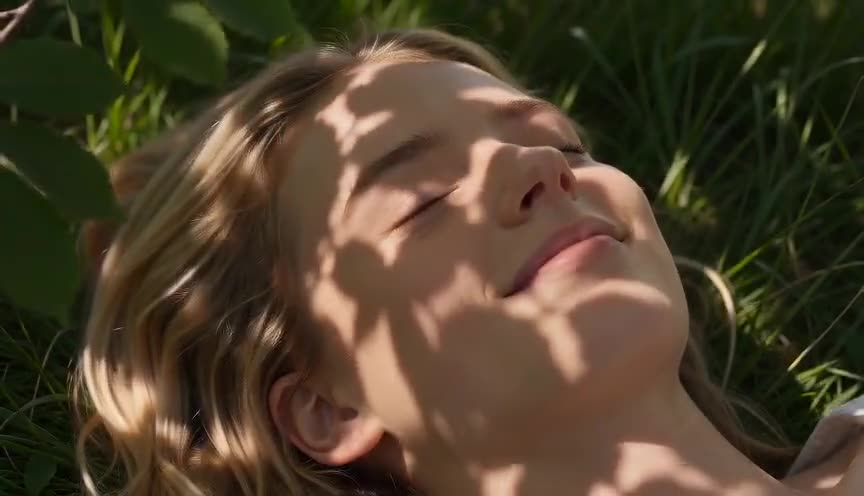
Dappled light is the natural result of sunlight through leaves; gobo lighting is the artificial, controllable version of that same effect, built with a stencil and a spotlight instead of real trees.
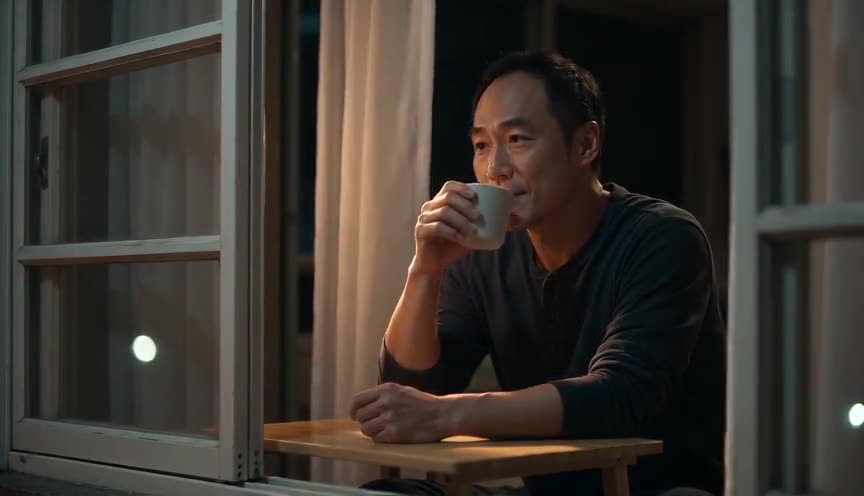
Window light comes from an actual window and its real geometry; a gobo fakes that same blind or mullion pattern with a stencil, letting the crew place the shadow anywhere regardless of the set.
In film
Double Indemnity (1944)
Venetian blind shadows fall across characters throughout, a signature noir use of gobo patterns to suggest entrapment and deceit.
Blade Runner (1982)
Blind and grid gobos slice through haze in Deckard's apartment and office scenes, reinforcing the film's noir and surveillance mood.
The prompt
Name the pattern explicitly (venetian blinds, leaf shapes, window mullions) and describe where it falls, since the model needs a concrete shape to render rather than the word 'gobo' alone. Mention haze or smoke to make the light beam and pattern edges visible, and specify hard-edged or soft-edged shadows. Avoid vague words like 'moody lighting' without describing the actual pattern, or the model will default to generic contrast instead of a shaped, projected texture.
The exact prompt that rendered the video on this page. Keep the description of the move, change the subject and the setting.
Gobo lighting in a dim jazz club: a single spotlight fitted with a venetian blind pattern throws sharp horizontal bars of light and shadow across a saxophonist standing at a microphone, cigarette haze drifting through the beam and catching the striped light. The camera stays locked on a static tripod at eye level, framing the musician in a medium shot as the blind-shadow bars stay fixed on his face and shoulders while his upper body sways gently with the music, background tables and glasses dissolving into soft darkness beyond the pattern's edge. No text.
Common mistakes
Pattern with no visible beam
Without haze or smoke, the shaped light often just looks like uneven exposure rather than a deliberate projected pattern, so the effect reads as a lighting flaw instead of a choice.
Too soft to read
Placing the gobo too far from the light source, or too close to a large diffused source, blurs the pattern into mush, losing the sharp lines that make the technique recognizable.
Pattern fighting the story
Using leaf shadows in a scene that is clearly indoors and windowless, or blinds in a room with no window, breaks the audience's sense of a coherent space.
Frequently asked questions
What is gobo lighting?
It is a lighting technique where a stencil placed in front of a spotlight projects a shaped pattern, such as blinds or leaves, onto a subject or wall, adding texture and implying a location without building it.
Why do noir films use blind-shadow gobos so often?
The horizontal bars visually suggest bars, cages, or moral traps, reinforcing themes of entrapment and secrecy that run through classic noir plots, all with a single cheap and repeatable lighting setup.
Can a gobo pattern move?
Yes, gobos can be mounted on a motorized rotator or a wheel to simulate flicker from fire, ripples from water, or the sweep of passing headlights, adding implied motion outside the frame.
How do I get a gobo look from an AI video model like on Imaginode?
Describe the exact pattern (blinds, foliage, a window grid), where it falls on the subject, and add haze so the beam is visible, since naming the concrete shape gets far more reliable results than the word gobo alone.