Window light
Also calledNatural window light, Available window light
Window light is a lighting technique that uses an opening (a window, a door, a skylight) as the main or key source of illumination on a subject. It gives the viewer a soft, directional, believable light that feels found rather than built.
What it tells
Directors reach for window light when they want a scene to feel lived-in and true, not staged. It carries the mood of the time of day (a cold gray morning, a hot amber afternoon) without any visible rig, so the audience reads the light as real and stops noticing the camera crew's hand in it. That invisibility is exactly what makes intimate, dialogue-driven scenes feel private and unforced.
How it is shot
A single window acts as a large soft source: the bigger the opening relative to the subject's distance, the softer and more wraparound the light. Placing the subject 1 to 3 meters from the glass keeps a visible falloff from lit side to shadow side; moving further back flattens it toward ambient light. A sheer curtain, diffusion frame or bounce card softens direct sun into an even key. Crews often add a black flag or negative fill on the opposite side to preserve contrast, or a white bounce to open shadows. Color temperature shifts with the hour (cool blue at midday, warm amber near sunset), so gels or timing are chosen to match the story's mood.
When to use it
- Filming an intimate dialogue scene where you want the light to feel motivated and unnoticed
- Shooting an interior that should read as a specific time of day without extra fixtures
- Building quiet, contemplative character moments where soft directional light supports stillness
- Simulating documentary or true-to-life realism in a domestic or office interior
Not to be confused with

Available light uses whatever illumination already exists in a location without adding fixtures. Window light is one specific form of that: a single opening that gives controllable, directional soft light, while available light can mean several mixed, uncontrolled sources.
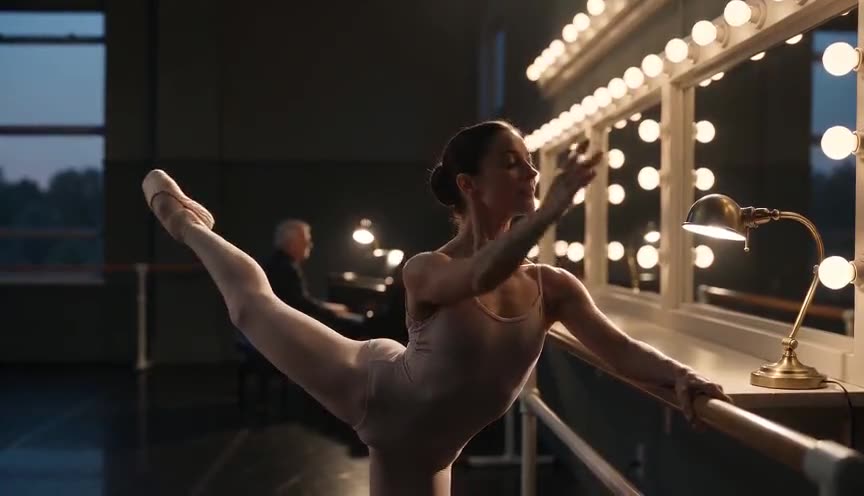
Practical lighting is any visible in-scene source, from lamps to neon signs to candles. Window light is a practical source too, but it is specifically daylight through glass, softer and more directional than most artificial practicals placed around a set.
In film
In the Mood for Love (2000)
Wong Kar-wai lets window light fall across hallways and rooms to build a quiet, aching intimacy between characters who rarely touch.
Barry Lyndon (1975)
Stanley Kubrick and John Alcott use daylight from tall windows to shape soft, directional interior scenes modeled on eighteenth-century paintings.
The prompt
Name the window explicitly and describe its distance from the subject, since that controls softness. Say whether the glow is diffused by a curtain or hits the face directly, and give a color temperature (cool morning blue, warm late-afternoon amber) so the model does not default to flat, even lighting. Avoid words like 'studio lighting' or 'ring light,' which push the model toward artificial rigs, and avoid listing multiple competing light sources that fight the window's direction.
The exact prompt that rendered the video on this page. Keep the description of the move, change the subject and the setting.
Window light: Inside a small apartment overlooking a night market in Taipei, a man in his forties sits at a low table near an open window, his face and forearms lit by warm amber light spilling up from the market stalls below, softened by a thin curtain that wraps the glow gently around one side of his face while the other side falls into soft shadow. The camera holds a static medium shot as he lifts a cup, the light flickering faintly with the movement of lanterns outside, the room behind him staying dim and unlit. No text.
Common mistakes
Adding too much fill
Piling on extra fill light kills the natural falloff from lit side to shadow side, flattening the window's directional quality into generic even lighting.
Ignoring the hour
Forgetting that window light shifts color and hardness through the day makes the shot look inconsistent or artificial, especially if it must match other shots in the scene.
Subject too far from the glass
Placing the subject several meters back from the window turns a soft directional source into flat, low-contrast ambient light, losing the shape on the face.
Frequently asked questions
What is window light?
Window light is a lighting technique where an opening, usually a window, serves as the primary source of illumination on a subject. It produces soft, directional, believable light that reads as real rather than staged.
Why do cinematographers prefer window light over artificial lights?
Because it is motivated, meaning the audience sees a logical source for the light within the scene. It also gives a soft quality that is hard to fake cheaply and changes naturally with the time of day, adding realism.
How do you control window light on set?
By adjusting subject distance from the glass, using sheers or diffusion to soften direct sun, adding negative fill or bounce cards to shape contrast, and timing the shoot for the color temperature the scene needs.
Can AI video tools generate convincing window light?
Yes, if you describe the window's position relative to the subject, the diffusion (curtain, blinds, bare glass), and the color temperature. On a platform like Imaginode, naming these specifics gets far more consistent results than a generic 'natural light' prompt.