Eye light
Also calledCatchlight, Eyelight, Obie light
An eye light is a small, focused light aimed directly at an actor's eyes to create a tiny specular highlight, called a catchlight, in the pupil. It makes the eyes read as alive and present, pulling the viewer's attention and emotional connection to the face even inside dark or moody lighting.
What it tells
Eyes carry the emotional information of a scene, and a flat, dark eye reads as dead on screen no matter how good the performance is. Directors add an eye light to keep the audience anchored in the character's gaze during confessions, interrogations, close-up reactions and love scenes. It costs almost nothing in screen time but changes how much the viewer trusts and feels for the person looking back at them.
How it is shot
A small source, often a tiny LED panel, a pen light, or a mirror bounce, sits close to the camera axis, roughly at lens height, so its reflection lands where the viewer is looking. Distance and dimmer control the size of the catchlight: too close or too bright and it becomes a visible fill light that flattens the face; too far or too dim and it disappears. On Old Hollywood sets this was the 'Obie light', mounted directly above the lens for glamour close-ups. In low-key or noir lighting the eye light is often the only source hitting the front of the face, everything else stays in shadow.
When to use it
- Extreme close-ups or close-ups where the story hinges on a single emotional look
- Low-key or backlit scenes where the face would otherwise go completely flat and dark
- Interview or confession setups where connection with the camera matters more than realism
- Villain or interrogation scenes where you want eyes visible while the rest of the face stays in shadow
Not to be confused with
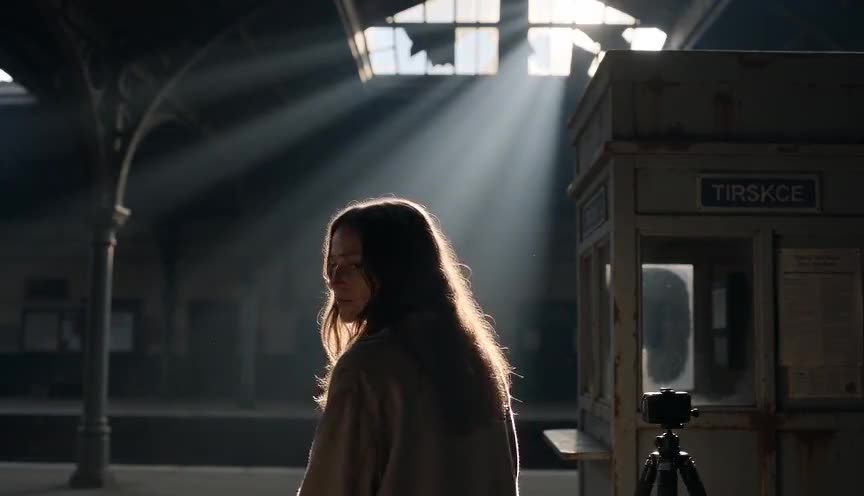
A key light shapes the whole face and body with volume and shadow, while an eye light is a narrow accent aimed only at the pupils, often added on top of a key that leaves the eyes underexposed.
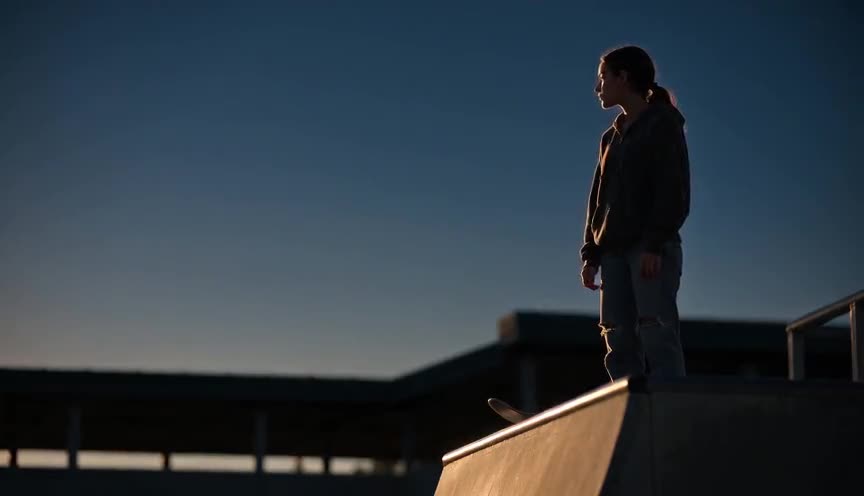
Low-key lighting is the overall dark, high-contrast look of a scene; an eye light is frequently the one small source added inside a low-key setup so the eyes still read against the surrounding shadow.
In film
The Lodger (1944)
Lucien Ballard devised the camera-mounted Obie light for Merle Oberon, softening facial imperfections while putting a bright catchlight in her eyes.
Blade Runner (1982)
Jordan Cronenweth used a directed eye light through a half-silvered mirror so replicants' eyes glow with distinctive catchlights in close-ups.
The prompt
Name the catchlight directly: describe a tiny, sharp highlight in the pupils placed near the lens axis, and keep the rest of the lighting low-key or backlit so the contrast reads clearly in a short clip. Ask for a close-up or extreme close-up so the eyes fill enough of the frame for the highlight to be visible. Avoid vague words like 'moody lighting' alone; specify the small point source, its position near the camera, and the dark surrounding tone, or the model will just add generic soft light.
The exact prompt that rendered the video on this page. Keep the description of the move, change the subject and the setting.
Eye light (catchlight). Extreme close-up of an old sailor's eyes and weathered face in a dark ship cabin. A small round light next to the camera puts a crisp bright white dot of reflection in each of his dark pupils, making his eyes shine while the rest of his face stays in soft shadow. He slowly looks up into the lens and the two sparkling catchlights come alive. Static camera, shallow depth of field. No text.
Common mistakes
Light too large or too bright
A big or overpowered source stops acting as a catchlight and starts filling the whole face, killing the contrast that made the eyes stand out in the first place.
Off-axis placement
Positioning the source too far from the lens throws the highlight to the side of the pupil, which looks like a stray reflection instead of a deliberate eye light.
Skipping it in dark scenes
In low-key or backlit setups, leaving the eyes unlit makes the face read as flat and disengaged, even if the actor's performance is strong.
Frequently asked questions
What is an eye light?
An eye light is a small, targeted light aimed at an actor's eyes to create a catchlight, a tiny bright reflection in the pupil that makes the eyes look alive and helps the viewer connect with the character's gaze.
Why is it also called an Obie light?
The name comes from Old Hollywood, where a light mounted directly above the camera lens was used to keep sparkle in an actress's eyes during close-ups, and the nickname stuck as industry slang.
Does an eye light need its own fixture?
Not always. A dedicated small LED or pen light is common, but many cinematographers get a catchlight from a bounce card, a window, or even the key light itself if it happens to sit near the camera axis.
Can an AI video model generate a visible catchlight?
Yes, if you describe it directly as a small, sharp highlight in the pupils near the camera axis, paired with a darker overall face tone. Tools like Imaginode render this reliably in close-up shots when the prompt is specific about the light's size and position.