Fill light
Also calledFill, Secondary light, Fill card
Fill light is a secondary light source, usually placed opposite the key light, that lightens the shadows the key creates without casting a second visible shadow of its own. It controls the contrast ratio on a face or object, deciding whether the image reads as soft and friendly or harsh and dramatic.
What it tells
Fill is where a cinematographer writes emotional tone into the light itself. A high fill flattens contrast into the open, reassuring look of comedies and commercials, telling the audience nothing is hidden. A low or absent fill lets shadows swallow half a face, suggesting menace, doubt, or something withheld. Directors adjust fill scene by scene, sometimes shot by shot, to steer how trustworthy or exposed a character feels without changing a line of dialogue.
How it is shot
Fill sits opposite the key, at a similar or slightly lower height, and is always softer and less intense than the key so it never competes for authorship of the shadows. Gaffers set the key-to-fill ratio, from a gentle 2:1 for high-key comedy to a stark 8:1 or higher for noir, by moving the fill farther away, dimming it, or adding diffusion. Many setups skip a second lamp entirely and bounce the key off a white or silver card, or a wall, ceiling, or reflector, which naturally softens and spreads the light. The fill should never throw its own hard-edged shadow onto the subject or background.
When to use it
- Lighting a close-up where you need visible skin detail on both sides of the face
- Shooting a corporate or commercial spot that calls for an open, trustworthy look
- Reducing raccoon-eye shadows under brows and cheekbones from a strong overhead key
- Building a specific mood by dialing fill up for warmth or down for tension in the same scene
Not to be confused with
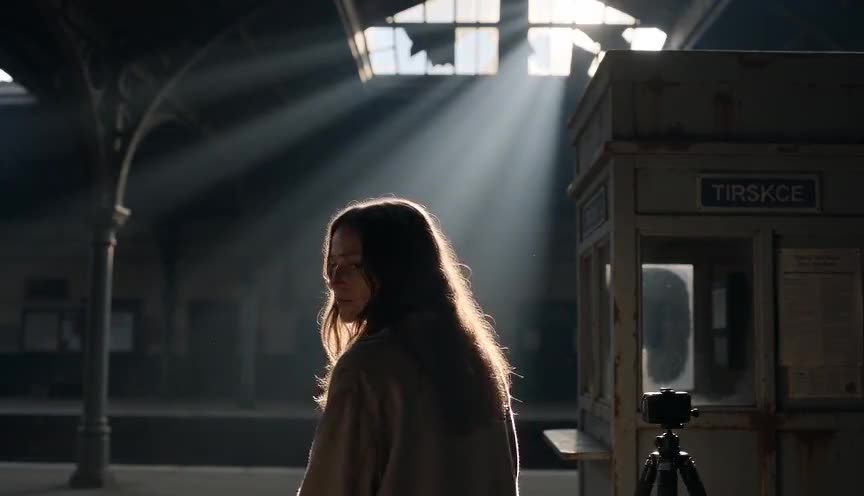
Key light is the dominant source that defines direction and shape; fill exists only to soften the shadows the key produces. Change the key and the whole look shifts; change the fill and only the contrast ratio moves.
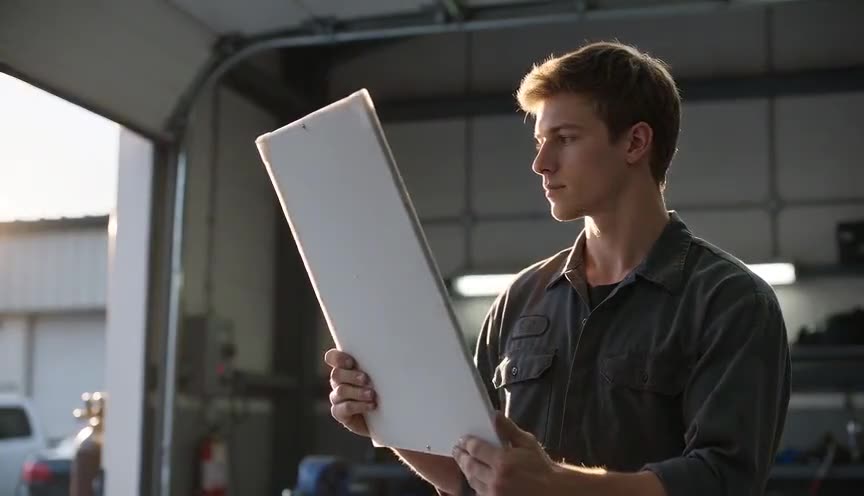
Bounce light is a technique for producing fill (or key) by reflecting light off a surface. Fill is the lighting role; bounce is one common tool used to achieve it cheaply and softly.
In film
The Godfather (1972)
Gordon Willis lit interiors with almost no fill, letting Brando's eyes fall into shadow under a hard overhead key, a deliberately withheld look.
Singin' in the Rain (1952)
Classic MGM glamour lighting uses heavy fill to keep faces bright and contrast low, the open high-key look of the studio era.
The prompt
Name the fill explicitly and describe its softness and direction relative to the key: 'a soft bounce card fills the shadow side of the face' reads more reliably than 'nice lighting.' State the ratio in plain terms (barely visible shadow vs deep, retained shadow) since models respond better to described contrast than to lighting jargon alone. Avoid vague words like moody or cinematic without backing them with a concrete light source and placement.
The exact prompt that rendered the video on this page. Keep the description of the move, change the subject and the setting.
Fill light demonstration on a Parisian rooftop at dusk. A woman in her fifties stands facing the warm orange sunset, which acts as the key light and rakes across the right side of her face, carving a hard shadow on the left. A large white bounce reflector, held just out of frame on her left, gently lifts that shadow side so both cheeks stay visible with detail, the fill softer and lower than the key. Camera is locked off, medium close-up, 50mm lens. Over four seconds the reflector angle tilts slightly closer, visibly softening the shadow density on her face while the warm key light and Paris rooftops behind her stay constant. No text.
Common mistakes
Fill as bright as the key
Setting fill intensity equal to the key erases all shadow and flattens the face into a shapeless, lifeless plane, losing the sense of dimension entirely.
A second hard shadow
Using an undiffused fill source close to the subject throws its own crisp shadow, which reads as a lighting mistake rather than an intentional double source.
Fill from the wrong angle
Placing fill on the same side as the key doubles up the highlight instead of softening the shadow, so the ratio and the shaping barely change.
Frequently asked questions
What is fill light?
Fill light is a soft secondary light, placed roughly opposite the key light, that lightens the shadows the key creates so detail survives on the darker side of a subject. It never overpowers the key and should not cast its own visible shadow.
What is a good key to fill ratio?
Around 2:1 or 3:1 reads as bright, commercial, and low contrast, while 6:1 or 8:1 reads as dramatic with deep, retained shadow. There is no universal correct ratio, only the ratio that matches the mood.
Can you use fill light without a second lamp?
Yes, bouncing the key light off a white card, foam board, wall, or ceiling is the most common way to create fill on set. It is cheaper, softer by nature, and keeps color temperature matched to the key automatically.
How do I get realistic fill light from an AI video model?
Describe the fill as a distinct, softer source with a stated direction (opposite the key, lower intensity, bounced) rather than a general lighting mood. On Imaginode, naming the fill's material (white card, soft box) and its effect on shadow density gives the model something concrete to render.