Bounce light
Also calledBounced fill, Reflected light, Bounce card lighting
Bounce light is illumination that reaches the subject after reflecting off a surface, such as a wall, ceiling, foam board or reflector, instead of hitting it directly from the source. It spreads the light out and softens shadows, giving faces and rooms a gentler, more natural look.
What it tells
Directors reach for bounce light when they want a scene to feel lived-in rather than lit. Because the light arrives indirectly, it wraps around a face without the harsh edge of a direct beam, which reads as intimacy, honesty or everyday realism. It also lets actors move without walking into hot spots or hard shadow lines, so performances stay uninterrupted and scenes keep their natural rhythm.
How it is shot
A light (HMI, LED panel or the sun) is aimed away from the subject at a reflective surface, foam core, poly board, a white ceiling, a wall or even sand, snow or foliage, and the reflected light becomes the actual source on the subject. The bigger and closer the bounce surface, the softer the light and the wider the wrap. Silver boards bounce more intensity with a slight punch, white boards give a gentler, neutral spread, and gold or warm surfaces add a color cast. Gaffers control ratio by moving the source or the board, not by adding hard light, and often use bounce as fill against a harder key to keep shadows readable but soft.
When to use it
- Lighting a close-up where you want skin to look smooth without flattening the face entirely
- Shooting in a small interior where a direct light would create hot spots or hard shadows
- Filming a documentary-style interview that needs to look natural rather than staged
- Softening midday sun outdoors by bouncing it back into a subject's shaded face
Not to be confused with
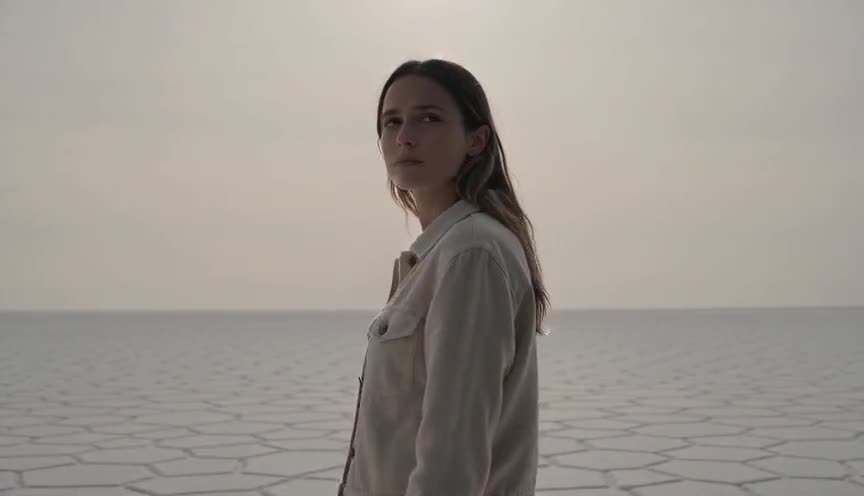
Soft light is the broader category of any diffused, large-source lighting. Bounce is one common way to get there; diffusion through a scrim or softbox is another, without necessarily reflecting off a surface first.
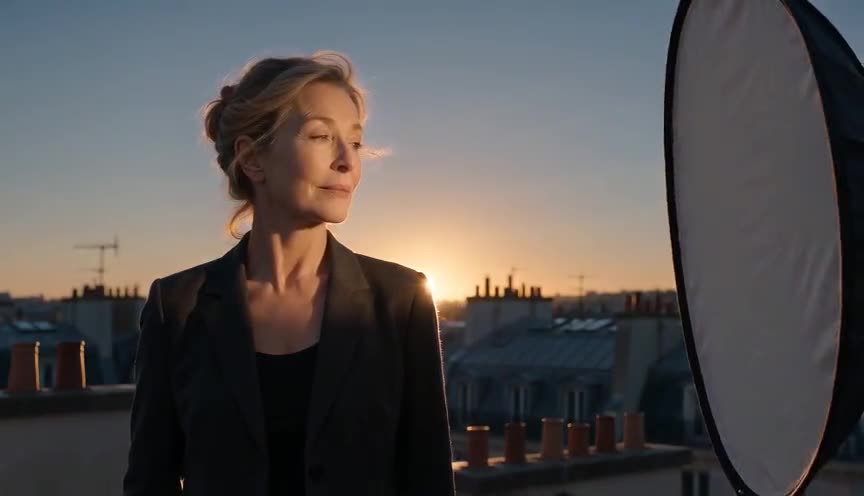
Fill light is defined by its job, reducing shadow density from the key. Bounce light is defined by its method, indirect reflection. In practice bounce is often used specifically to create the fill.
In film
Days of Heaven (1978)
Almendros relied on magic-hour skylight and reflected fill from the wheat fields, creating soft, warm faces without conventional direct studio lighting.
Moonlight (2016)
Cinematographer James Laxton used heavy bounce and soft sources to render dark skin tones with rich, even, non-harsh detail.
The Tree of Life (2011)
Emmanuel Lubezki used natural light, reflectors, and bounced sunlight to soften faces in the Texas home and yard scenes.
The prompt
Name the surface doing the bouncing (a white wall, a snowbank, a silver reflector) so the model understands the light is indirect, not a visible fixture. Use phrases like soft wrapped light, gentle even illumination and no hard shadow edges. Avoid words like spotlight, harsh beam or direct sun hitting the face, which push the model toward hard light instead. Mentioning a specific reflective material (foam board, pale sand, misty air) helps the render stay physically coherent.
The exact prompt that rendered the video on this page. Keep the description of the move, change the subject and the setting.
Bounce light. In a dim garage workshop, a young mechanic holds a large white reflector board at chest height; sunlight from the open door hits the white board and bounces up onto his face, softly filling the shadows under his eyes and chin with a warm, even glow and no hard edges. He tilts the board and the soft light on his face shifts smoothly. Static camera, medium close-up. No text.
Common mistakes
Bounce card too far away
Moving the reflective surface too far from the subject weakens the light drastically and forces you to overpower the source, losing the soft quality you wanted in the first place.
Ignoring surface color
Bouncing off a colored wall, wood floor or tinted fabric casts that color onto skin. Neutral white or silver keeps the light clean unless a color cast is intentional.
Using bounce as the only light
All-bounce lighting with no directional key can look flat and shadowless. Pair it with a defined key or backlight so the face still has shape and depth.
Frequently asked questions
What is bounce light?
Bounce light is light that reaches the subject after reflecting off a surface like a wall, ceiling or reflector board, instead of shining on it directly. The reflection spreads and softens the light, reducing harsh shadows on faces and in rooms.
What surfaces work best for bounce light?
Large, matte, light-colored surfaces work best: white foam core, poly boards, painted ceilings, and outdoors, pale sand, snow or light-colored walls. Silver reflectors bounce more intensity, while white surfaces give a gentler, more neutral spread.
Is bounce light the same as diffused light?
They overlap but are not identical. Diffusion softens light by passing it through a translucent material like a scrim, while bounce softens light by reflecting it off a surface. Both produce a soft, wrapped quality on the subject.
Can AI video tools generate a bounce light look?
Yes. Describing the reflective surface and the resulting soft, shadowless wrap around the subject, rather than naming a visible fixture, helps models like those on Imaginode render convincing bounce lighting.