Practical lighting
Also calledPracticals, In-frame lighting, Visible light sources
Practical lighting is illumination that comes from a source visible inside the frame, such as a lamp, candle, neon sign or television screen. It grounds the scene in a believable world and lets the viewer read where the light is supposed to come from without seeing the crew's rig.
What it tells
Directors reach for practical lighting when they want a scene to feel found rather than lit. A lamp on a desk or a string of bulbs above a bar tells the audience the light is part of the world the characters live in, not a construct for their benefit. This quietly builds trust: the space feels real, the mood feels earned, and any shift in that light, a flicker, a dimmer turned down, reads as something happening in the story rather than in the grid.
How it is shot
A practical source (table lamp, sconce, monitor, string lights) is placed in frame and its light is measured and often boosted. Gaffers swap house bulbs for dimmable, color-correct units (2700K to 3200K for warmth, LED tape for control), or hide small fixtures just outside frame that match the practical's color and angle to add usable output without changing the look. Dimmers and ND gel on windows balance the practical against ambient light. Exposure is usually set for the practical itself, letting surrounding areas fall into shadow, and a flicker box or dimmer curve can simulate a bulb dying or a candle guttering for effect.
When to use it
- Interior scenes where you want the room's own fixtures to feel like the only light source
- Intimate dialogue scenes that benefit from a single warm pool of light around the characters
- Night exteriors near signage, storefronts or streetlights to keep the world feeling lived-in
- Any shot where hiding the lighting rig matters more than achieving perfectly even exposure
Not to be confused with
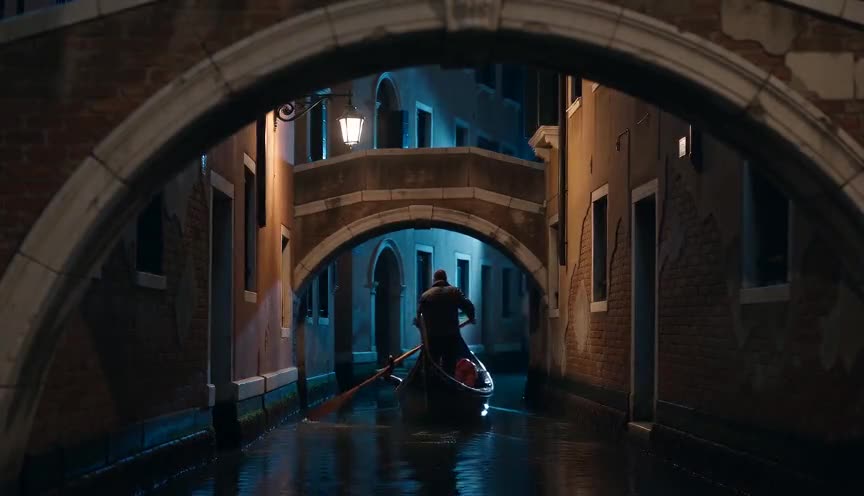
Motivated lighting mimics a source without that source needing to be visible in frame; practical lighting is the source itself, seen on camera, whether or not it is later augmented.

Available light means using whatever is already there (sun, existing bulbs) with no addition; practical lighting can start the same way but usually gets rigged and color-corrected for the camera.
In film
Barry Lyndon (1975)
Interior scenes were shot using only candlelight as the visible source, with special fast lenses built to expose properly at that low light level.
Collateral (2004)
Los Angeles night exteriors rely on neon signs, streetlights and building interiors as the actual visible light sources shaping the frame.
The prompt
Name the exact practical objects (table lamp, candle, neon sign, monitor) so the model treats them as the light origin, not decoration. Specify color temperature in words like warm tungsten or cool fluorescent, and describe where shadow should fall relative to the source. Avoid asking for flat, even brightness across the whole frame, since that erases the effect; instead ask for falloff into shadow away from the visible source.
The exact prompt that rendered the video on this page. Keep the description of the move, change the subject and the setting.
Practical lighting fills a ballet rehearsal room at dusk, using only a row of round vanity bulbs along a tall mirror and a brass desk lamp on the pianist's stand as visible sources, their warm tungsten glow spilling across the wood floor while the rest of the room falls into shadow. A static medium shot on a 50mm lens frames a woman in her thirties stretching at the barre, the bulb light catching the sheen on her skin, while a man in his sixties sits blurred near the lamp in the background. The camera holds still; only her slow stretch and a faint bulb flicker move. No text.
Common mistakes
Overpowering the source
Adding so much hidden fill that the practical no longer reads as the brightest thing in frame defeats the point; the visible fixture should still look like it is doing the work.
Mismatched color temperature
Mixing a warm tungsten practical with cool daylight fill from an unseen source breaks the illusion and looks like two different scenes lit by two different crews.
Flat exposure across the room
Lighting the whole set evenly so nothing falls into shadow removes the falloff that makes a single visible source believable and cinematic.
Frequently asked questions
What is practical lighting?
It is lighting that comes from a source you can actually see in the shot, like a lamp, candle or screen, rather than from lights hidden off camera. The visible source is often boosted or color-matched by hidden fixtures to make it strong enough for the camera.
Is practical lighting the same as available light?
No. Available light means using whatever illumination already exists with no changes, while practical lighting usually means the visible source is rigged, dimmed or color-corrected to work for the camera even though it stays in frame.
Why do cinematographers like practical lighting?
It keeps the light source honest to the world of the story, so shadows, color and mood all make sense to the eye without the audience questioning where the light comes from.
Can an AI video model generate practical lighting convincingly?
Yes, if you name the exact visible source and its color temperature in the prompt. Tools like those on Imaginode respond well to concrete cues such as candlelight or neon sign rather than vague instructions like moody lighting.