Short lighting
Also calledNarrow lighting, Short key lighting
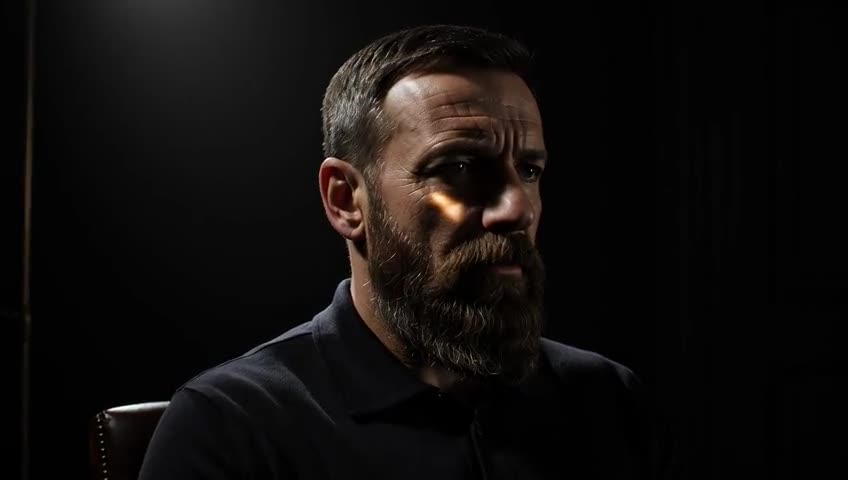
Short lighting is a portrait lighting pattern where the key light hits the side of the face turned away from the camera, so the side nearest the lens falls into shadow. It narrows a wide face, sculpts the features with strong contrast, and gives the image a moodier, more dramatic feel than lighting the near side.
What it tells
Short lighting trades flattery for character. Because the shadow falls on the side closest to the lens, the face reads narrower and more angular, which suits tension, secrecy or hard-won experience rather than warmth. Directors reach for it when a scene needs weight: an interrogation, a confession, a face aged by work or worry. The lit sliver of cheek and eye pulls focus while the shadowed half withholds information, so the viewer leans in rather than simply looking, and the lighting starts to feel like part of the character's state of mind.
How it is shot
Position the key light at roughly 30 to 45 degrees off the camera axis, on the far side of the subject's nose from the lens, and have the subject turn slightly toward the light so the near side of the face falls into shadow. Keep the key hard or medium-hard (a fresnel or a small softbox at close range) to hold the shadow edge crisp. Fill light, if used, sits close to the camera axis at low intensity, just enough to keep detail in the shadow side without erasing it, often two stops under the key. A gentle backlight or hair light can separate the subject from the background. On location, the same pattern appears naturally when a window or low sun sits behind and to the side of the subject.
When to use it
- Narrowing a round or wide face for a more angular, dramatic portrait look.
- Building tension or menace before a confrontation, interrogation or confession scene.
- Suggesting a hidden side of a character, since one half of the face stays shadowed.
- Shooting weathered or older subjects where deep shadow reads as gravity rather than harshness.
Not to be confused with
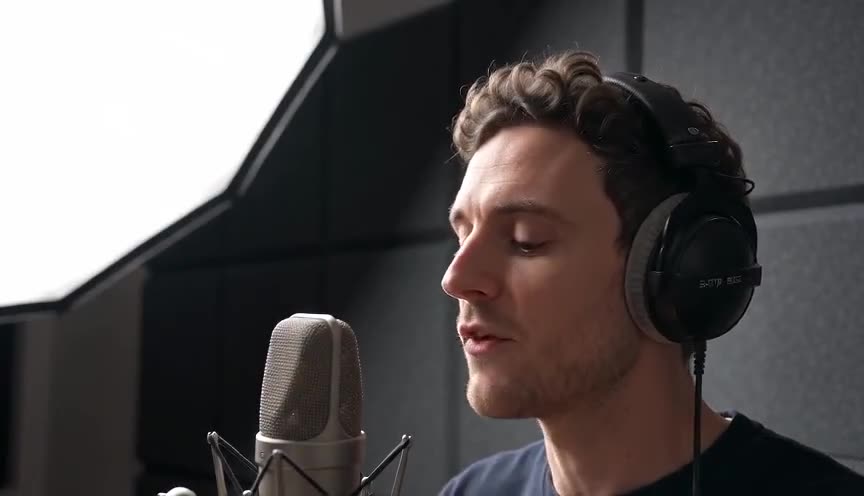
Broad lighting lights the side of the face closest to the camera, widening and softening it. Short lighting lights the far side instead, narrowing the face and adding shadow and drama.
Rembrandt lighting is a specific 45-degree key that leaves a small triangle of light under the far eye. Short lighting is the broader pattern, near side in shadow, that a Rembrandt setup often sits inside.
In film
Double Indemnity (1944)
Uses hard short lighting on its leads to narrow their faces and pull them toward shadow, reinforcing the story's moral ambiguity.
The Godfather (1972)
Gordon Willis often keys faces from the far side in Vito's office scenes, leaving the camera side dark for sculptural, secretive portraits.
The prompt
Name the light's position explicitly: describe it as coming from the side of the face away from the camera, not toward it, since models default to flattering frontal or near-side light. State the subject's head turn (three-quarter or profile) so the geometry works, and call out a hard or crisp shadow edge across the nose or cheek. Avoid vague terms like 'dramatic lighting' alone, and avoid asking for soft, wraparound light, which erases the pattern entirely.
The exact prompt that rendered the video on this page. Keep the description of the move, change the subject and the setting.
Short lighting: a weathered fisherman in his fifties stands on a wooden dock at dawn, mending a net, his face turned three-quarters away from the camera so the hard key light from the low sun behind him lights only the far side of his face, leaving the near cheek and eye in deep shadow. The camera holds a static medium close-up at eye level, thin fog drifting low over the harbor behind him, boats silhouetted in the background. The shadow edge across his nose stays sharp and unmoving for the full shot. No text.
Common mistakes
Confusing it with broad lighting
Placing the key on the near side of the face flattens and widens it instead of narrowing it, which defeats the entire purpose of the pattern.
Fill light too strong
Pumping the fill until the shadow side reads bright removes the contrast that defines short lighting and turns it into flat, characterless light.
Subject facing straight into camera
Without a slight turn toward the key, the shadow does not fall correctly across the face and the narrowing effect disappears entirely.
Frequently asked questions
What is short lighting?
Short lighting is a lighting pattern that puts the key light on the side of the face turned away from the camera, leaving the near side shadowed. It narrows the face and adds contrast and drama compared to lighting the near side.
Why is it called short lighting?
It is called short because the lit area of the face, as seen by the camera, is the smaller (shorter) side. The visible width of the illuminated face shrinks, which is what visually narrows it.
Is short lighting the same as low-key lighting?
No. Low-key refers to an overall dark, high-contrast scene, while short lighting describes which side of the face is lit. The two are often combined but are separate concepts, and short lighting can exist in an otherwise bright frame.
How do I get short lighting from an AI video model?
Describe the head's turn and state clearly that the key light comes from the side away from the camera, with a hard shadow edge on the near side. Tools like Imaginode respond well to that explicit, physical phrasing rather than mood words alone.