Underlighting
Also calledUplighting, Ghoul lighting, Campfire light, Monster lighting
Underlighting places the main light source below the subject's face rather than above it, so shadows fall upward across the forehead, nose and eye sockets. Because it contradicts how light behaves under the sun or a ceiling fixture, it reads as unnatural, unsettling or supernatural to the viewer.
What it tells
Directors reach for underlighting when they want to break the audience's sense of safety without saying a word. Because human faces are almost never lit from below in daily life, the reversed shadows trigger a low-grade alarm: something is wrong here. It is the language of campfire ghost stories, monster reveals and moral turning points, when a character does something they cannot take back. The effect works because it feels wrong before the viewer can name why.
How it is shot
Place a single hard light source, a practical lantern, a flashlight, a fire pit or a floor-mounted fixture, below and slightly in front of the subject's face, roughly at chest or waist height. Angle it upward at 30 to 60 degrees so it hits the chin, nostrils and brow while pushing shadows into the upper eye sockets and forehead. Kill or dim any overhead key and fill so the reversal stays clean; even a small bounce card above the face can wash it out. A warm color temperature (2700 to 3200K) sells firelight or lanterns, while a cooler source suggests something otherworldly. Keep the source visible or clearly implied so the light feels motivated rather than arbitrary.
When to use it
- A character tells a ghost story around a fire and needs to look unsettling to listeners and viewers.
- A villain or monster is revealed for the first time and should feel wrong before anyone speaks.
- A character crosses a moral line and the lighting should signal the shift without dialogue.
- A prop like a phone screen, lantern or dashboard is the only visible light source in a night scene.
Not to be confused with
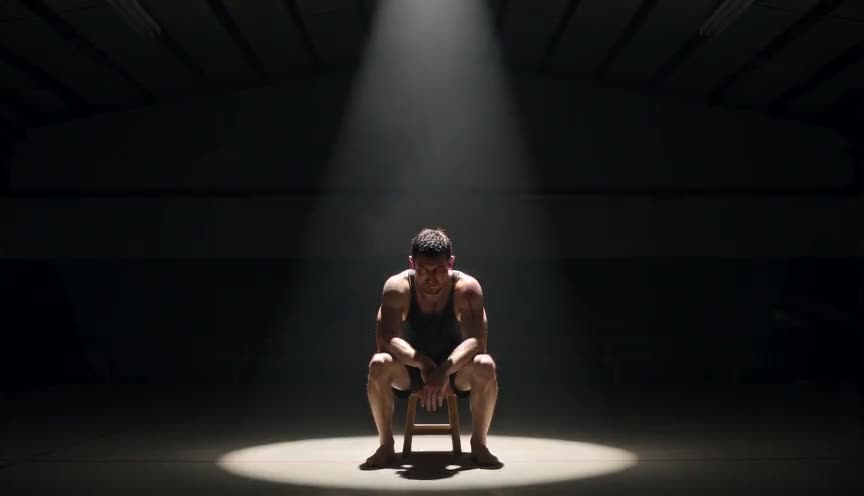
Top light drops straight down from above and carves natural-looking shadows under the brow and nose. Underlighting reverses that direction entirely, which is why it feels wrong to the eye rather than merely dramatic.
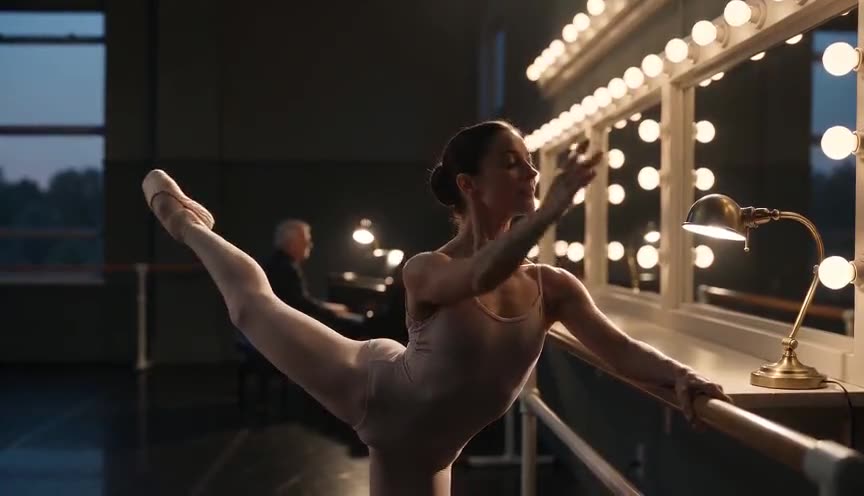
Practical lighting is about using a visible in-scene fixture as the source, lanterns, candles, screens. Underlighting is about direction: the source, practical or not, sits below the face rather than above it.
In film
The Blair Witch Project (1999)
The handheld confession scene lights the actor's face from a flashlight held below chin height, a low-budget trick now widely cited in horror.
The Lord of the Rings: The Fellowship of the Ring (2001)
Galadriel's temptation scene lights her face from below, turning a serene figure into a sudden supernatural threat through classic monster lighting.
The prompt
Name the light source and its position explicitly: a lantern on the ground, a campfire, a flashlight held at chest height. Describe the direction (light rising into the face) and the resulting shadow (upward into the eye sockets and forehead), since AI models default to soft, even, overhead lighting unless told otherwise. Avoid asking for 'scary lighting' alone; specify the physical setup instead, and keep any secondary light dim or absent so the reversal reads clearly.
The exact prompt that rendered the video on this page. Keep the description of the move, change the subject and the setting.
Underlighting: a static shot at eye level shows a hooded traveler standing still in a narrow medieval stone alley at night, a single lantern resting on the cobblestones at waist height in front of him, its warm flame throwing light upward across his chin, nose and brow while carving deep shadows into his eye sockets and the underside of the stone archway above. No other light source is visible; the rest of the alley stays in near darkness. The lantern flame flickers slightly, causing the upward shadows on his face and the wall behind him to shift and breathe, but neither the camera nor the man moves. No text.
Common mistakes
Adding overhead fill
A soft light placed above the face to help exposure cancels the upward shadows and kills the entire effect; keep overhead sources off or very dim.
Using too soft a source
A large soft box below the face wraps light evenly and looks flattering rather than eerie; underlighting needs a harder, more direct source to carve sharp upward shadows.
No visible motivation
If the viewer never sees or infers where the light is coming from, the shot feels like a lighting mistake instead of a choice; keep the source in frame or clearly implied.
Frequently asked questions
What is underlighting?
Underlighting is a technique where the main light comes from below the subject's face instead of above it, throwing shadows upward and making the face look unnatural or threatening. It is common in horror, campfire scenes and villain reveals.
Why does underlighting look scary or unsettling?
Human faces are almost never lit from below in nature or in most rooms, so the brain reads the reversed shadows as wrong before it can explain why. That mismatch between expectation and image is what creates unease.
Is underlighting only used in horror?
No. It also appears in campfire storytelling, magic tricks, interrogation scenes and any moment where a character does something secretive or transgressive, since the reversed shadows signal a break from the ordinary.
Can AI video tools generate underlighting?
Yes, models like those used on Imaginode can render underlighting if the prompt names the light's position (below the face), its type (lantern, fire, screen) and the direction of the resulting shadow, since generic prompts default to flattering overhead light.