Kaleidoscope effect
Also calledmirror effect, prism effect, kaleidoscopic shot, mirror-tunnel effect
The kaleidoscope effect splits the frame into repeating, mirrored segments that rotate around a central point, turning a normal scene into a symmetrical mosaic. It disorients the viewer's sense of a single stable image and pulls attention toward pattern, rhythm and abstraction instead of narrative space.
What it tells
Directors reach for the kaleidoscope effect when a scene needs to leave the ordinary rules of space behind: a drug trip, a spiritual vision, a fever dream, or a burst of mania or ecstatic joy. The multiplied, mirrored image reads as altered perception rather than documentary fact, so the audience accepts logic gaps it would reject in a normal shot. It also works as pure decoration in music videos and title sequences, where rhythm and color matter more than geography, giving a scene a hypnotic pull that a straight shot cannot produce.
How it is shot
In-camera, a kaleidoscope or prism attachment (a small mirror tunnel with 3, 6 or 8 facets) is mounted in front of the lens; light bounces between the mirrors before reaching the sensor, so the same source image repeats around a center point. Rotating the attachment or the whole camera live changes the pattern in real time, usually at a slow, steady speed so the eye can still read the shapes. In post, VFX artists achieve the same result with a radial mirror or kaleidoscope plugin applied to normal footage, choosing segment count and rotation speed independently, then syncing the spin to a music beat or a cut point for maximum impact.
When to use it
- A character enters a drug-induced, dreamlike or hallucinatory state and normal space should dissolve.
- A music video chorus or title sequence needs a hypnotic, rhythm-driven visual hook.
- A transition into memory, vision or fantasy needs to feel unmistakably unreal.
- A festival, ritual or celebration scene needs a burst of pure sensory overload.
Not to be confused with

Double exposure layers two whole images transparently on top of each other, while the kaleidoscope effect mirrors and repeats fragments of one image around a symmetrical axis instead of blending two sources.
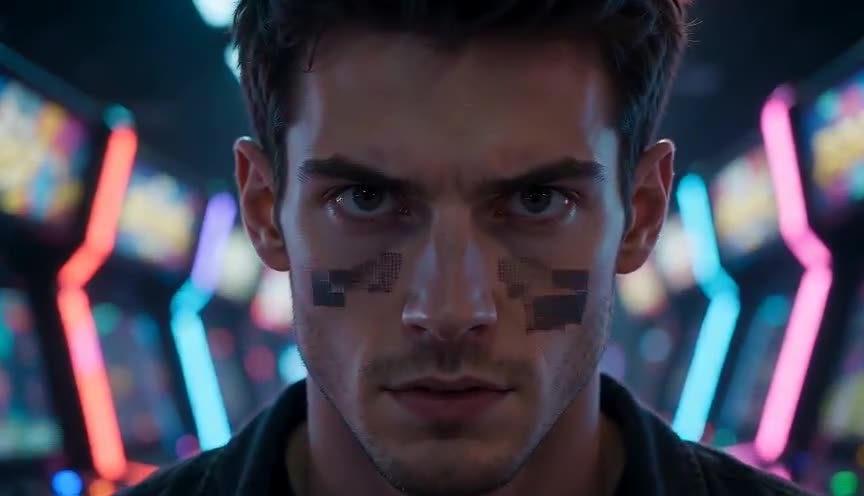
Glitch mimics broken digital signal with tearing, blocking and color shift, an effect of malfunction. The kaleidoscope effect is deliberately ornamental and symmetrical, closer to a decorative pattern than a technical failure.
In film
Enter the Void (2009)
Deploys kaleidoscopic, mirrored light patterns during trip and out-of-body sequences to dissolve normal screen space.
Doctor Strange (2016)
Creates kaleidoscopic, mirrored cityscapes in the Mirror Dimension, repeating buildings and streets into symmetrical patterns during action sequences.
The prompt
Name the mechanism, not just the mood: say 'six-way mirror prism' or 'radial kaleidoscope, eight segments' rather than 'trippy' or 'psychedelic' alone. State the rotation direction and speed (slow clockwise spin over the whole shot) so the model keeps the pattern coherent instead of dissolving into noise. Anchor the repeated content to something recognizable, like a face or an object, so viewers can tell the source image is being multiplied rather than randomly generated.
The exact prompt that rendered the video on this page. Keep the description of the move, change the subject and the setting.
Kaleidoscope effect: a locked-off camera in a recording studio films a saxophonist through a rotating six-way mirror prism attachment mounted on the lens, splitting the frame into six identical, mirrored triangular segments that meet at a bright center point. As the prism rotates slowly clockwise over four seconds, the reflected fragments of the musician, the studio's foam panels and a hanging microphone spin in unison around the fixed center, staying sharp and perfectly symmetrical while the underlying scene itself never moves. No text.
Common mistakes
Rotating too fast
A quick spin turns the pattern into an unreadable blur within a second or two, losing the hypnotic rhythm that makes the effect work.
No clear source image
Feeding the mirror rig random shapes instead of a recognizable subject leaves viewers with pretty noise instead of a meaningful, altered version of the scene.
Ignoring segment count
Ordering 'a kaleidoscope look' without specifying the number of mirrored sections gives the model an inconsistent, wobbly symmetry instead of a clean geometric repeat.
Frequently asked questions
What is the kaleidoscope effect in film?
It is a visual technique that mirrors and repeats fragments of the frame into a symmetrical, rotating pattern, most often used to show a hallucination, dream state or a burst of sensory overload.
How is the kaleidoscope effect created on set?
A prism or mirror attachment is mounted in front of the camera lens; the mirrors bounce the light so the same image repeats around a center point, and rotating the rig changes the pattern live during the shot.
Can the kaleidoscope effect be added in post-production?
Yes, VFX artists apply a radial mirror or kaleidoscope plugin to existing footage, letting them set the number of segments and rotation speed independently of what was shot on set.
Can AI video tools generate a kaleidoscope effect?
Yes, describing the mirror count, rotation speed and a clear subject gives models like the ones on Imaginode enough physical detail to render a convincing kaleidoscope pattern in a short clip.