Mixed media
Also calledMixed media animation, Collage film, Hybrid media, Live action and animation combo
Mixed media is a technique that combines two or more distinct visual formats, such as live-action footage, hand-drawn animation, stop-motion, collage or archival film, within the same frame or sequence. It breaks the illusion of a single unified reality and tells the viewer they are watching something constructed rather than simply recorded.
What it tells
Directors reach for mixed media when a single visual register cannot hold the story. It lets a film jump between memory and present, fact and fantasy, or satire and drama without cutting away, because the seam between formats does the narrative work. The clash of textures, photographic grain against flat ink lines, or archival scratches against digital color, keeps the audience aware of the film as a made object, which suits stories about storytelling itself, propaganda, dreams or comic-book logic.
How it is shot
The live-action portion is shot normally, often on a locked-off camera or a simple pan so the added elements register clearly against a stable background. The second medium (cutout animation under a rostrum camera, hand-drawn cels, stop-motion puppets, archival 16mm inserts, or painted mattes) is created separately and combined through an optical printer, a compositing program, or in-camera double exposure. Editors usually keep visible differences on purpose: mismatched frame rates, flat versus dimensional lighting, hard-edged mattes instead of feathered blends. Timing is coordinated on paper or in an animatic before shooting, since the live footage must leave clean, predictable space for the added layer.
When to use it
- Depicting a character's memory, dream or fantasy breaking into an otherwise realistic scene.
- Satirizing a subject by dropping cartoon or collage elements into a straight documentary frame.
- Bridging historical eras by cutting archival film into a scripted period reconstruction.
- Signaling that the story world runs on different physical rules than our own, like a cartoon character in a live set.
Not to be confused with
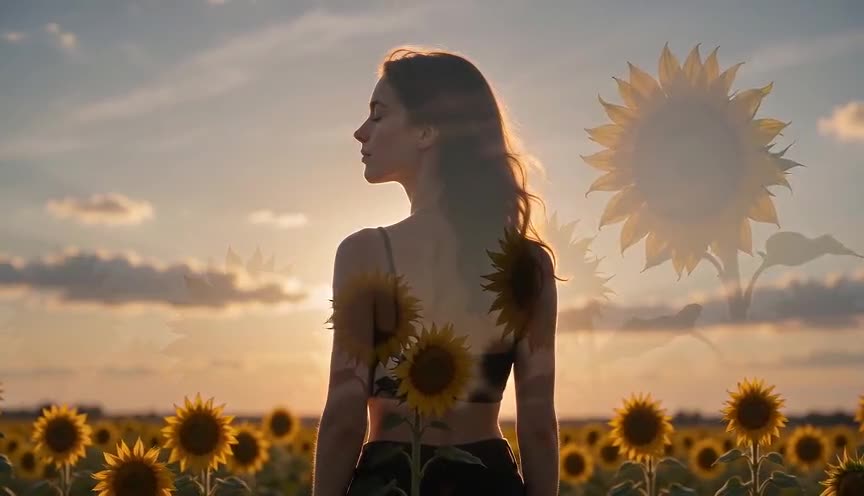
Double exposure blends two photographic images into one continuous tone. Mixed media keeps the two sources visually distinct, often combining photography with a non-photographic medium like drawing or collage on purpose.
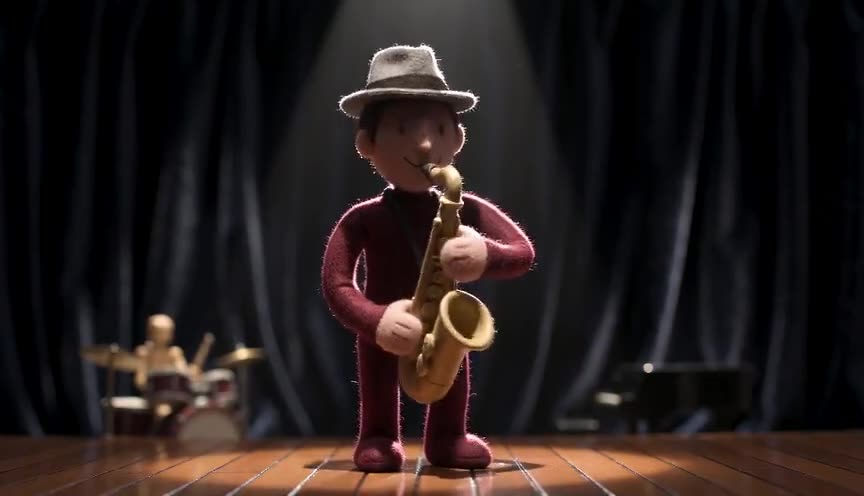
Stop motion is one specific animation method using physical objects moved frame by frame. Mixed media is the broader strategy of combining stop motion, or any other medium, with live action in the same shot.
In film
Who Framed Roger Rabbit (1988)
Hand-drawn cartoon characters interact with live actors and real sets, matched in light and shadow but kept visually distinct as ink and paint.
Sin City (2005)
Live-action performances are composited into graphic-novel style digital backgrounds, keeping high-contrast illustration and photographed actors in the same frame.
The prompt
Name both media explicitly, for example 'live-action footage' plus 'hand-drawn ink animation' or 'stop-motion paper cutouts', and ask for the seam between them to stay visible rather than blended. Mention a fixed or simple camera move so the added layer reads clearly, and specify a difference in frame rate, line quality or lighting between the two elements. Avoid words like 'seamless' or 'photorealistic' for the whole image, since that pushes the model toward one uniform look instead of a deliberate clash.
The exact prompt that rendered the video on this page. Keep the description of the move, change the subject and the setting.
Mixed media: a static locked-off wide shot inside a 1930s hotel lobby with a marble floor, brass elevator doors and a receptionist in a period uniform standing behind the desk, filmed in warm photographic light like real film footage. Composited over the same frame, a hand-drawn black-ink animation of a flock of paper birds cut from old newspaper pages flutters slowly across the ceiling, flat and two-dimensional, its motion slightly choppier than the live footage, edges left visibly overlaid rather than blended into the scene. No text.
Common mistakes
Blending too smoothly
Feathering the added medium until it matches the live footage in grain and light erases the visual contrast that gives mixed media its point, turning it into an invisible visual effect instead.
Mismatched scale or perspective
If the animated or collaged element ignores the camera's lens perspective, floor lines or horizon, it looks like a sloppy sticker rather than an inhabited part of the world.
No narrative reason for the mix
Combining formats just because it looks striking, without tying it to memory, satire, fantasy or a story-world rule, reads as a gimmick rather than a meaningful choice.
Frequently asked questions
What is mixed media in film?
It is a technique that puts two or more visual formats, such as live-action footage, animation, stop-motion or archival film, in the same frame or sequence, so the viewer sees distinct textures and mediums coexisting rather than one unified image.
Is mixed media the same as double exposure?
No. Double exposure layers two photographic images into one continuous tone. Mixed media deliberately keeps the sources visually different, often pairing photography with a non-photographic medium like drawing, cutout collage or puppetry.
Why do filmmakers keep the seams visible instead of hiding them?
Visible seams remind the audience that what they are watching is constructed, which supports stories about memory, satire, propaganda or dream logic, where a seamless illusion would undercut the point of the scene.
Can an AI video tool like Imaginode generate a mixed media shot?
Yes. Naming both media explicitly in the prompt, for example live-action footage plus hand-drawn animation, and describing the visible contrast between them, gives models like Seedance, Kling or Veo enough to render a clear mixed media clip.